Carl Rosenberg Shoah Foundation Testimony
- Date
- Format
- testimony
- Category
- Stories
- Subcategory
- Testimony
- People
- Kazimierz the Great
- Rozenberg, Rochel
- Rubi, Herma
- Mengele, Josef, 1911-1979
- Rozenberg, Chana
- Rosenberg
- Eichmann, Adolf, 1906-1962
- Barnach, Herman
- Berkovich, Benjamin
- Rosenberg, Stuart
- Rozenberg, Nusan-David
- Himmler, Heinrich, 1900-1945
- Waxberg, Aaron
- Przetycki
- Rosenberg, Carl
- Busse, Otto
- Polonski, Bluma Bojman
- Rosenberg, Maurice
- Blumestad, Regina
- Rosenberg, Rachel Bojman
- Hitler, Adolf, 1889-1945
- Rozenberg, Moshe-Shia
- Bartman, Herman
- Patton
- Tuvman, Annie Rosenberg
- Eisenhower
- Adam
- Bromberg, Yoseph
- Schumacher
- Isaac
- O'Keeffe
- Kohen, Ari
- Rozenberg, Toba
- Tobias
- Friedman, Mania Bojman
- Rozenberg, Szulim
- Rosenberg, Alfred
- Tuvman, Ken
- Tatelman, Sheryl
- Ribbentrop, Joachim ˜vonœ 1893-1946
- Places
- Israel
- Spain
- Rhodes
- Auschwitz concentration camp
- Treblinka concentration camp
- Berlin, Germany
- Stalingrad, Russia
- Munich, Germany
- Czechoslovakia
- Radom, Poland
- Lindau, Germany
- Vienna, Austria
- Poznań, Poland
- Kaufering concentration camp
- Pułtusk, Poland
- Wolanów, Poland
- Moscow, Russia
- Russia
- Warsaw, Poland
- Dachau concentration camp
- Innsbruck, Austria
- Rhön Mountains
- Blizyn forced labor camp
- Przytyk, Poland
- Landsberg am Lech, Germany
- California, Los Angeles
- Linz, Austria
- Omaha, Nebraska
- Data URI
- soh.sto000.00036.xml
- Note
- https://www.youtube.com/embed/yoHyB51nnwU?si=UUx6Oiniyfeokc5s
Thanks.
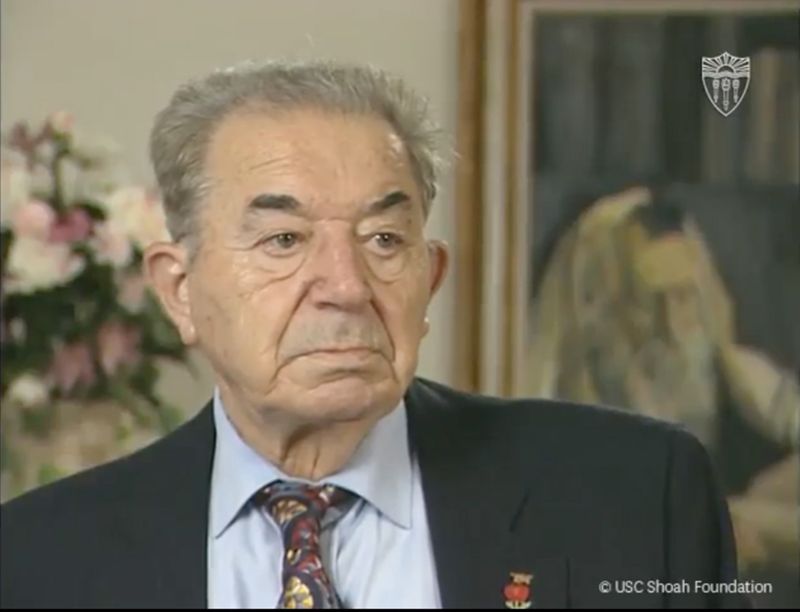
Sheryl TatelmanToday is November 24, 1995. The survivor's name is Carl Rosenberg. The interviewer is Sheryl Tatelman. We're in Omaha, Nebraska in the United States and we'll be interviewing in English. I'm Sheryl Tatelman, and I'm here with Carl Rosenberg. We'll be interviewing here in Omaha, Nebraska on November 24, 1995.
Carl RosenbergSee, I looked over there.
Sheryl TatelmanCould you tell us your name, please?
Carl RosenbergMy name is Carl Kiva Rosenberg. My name is spelled in Polish, Rozenberg. That means with a Z instead with the S.
Sheryl TatelmanAnd how do you spell it now?
Carl RosenbergR-O-S-E-N-B-E-R-G.
Sheryl TatelmanYou said your name was Carl Kiva. You have two names.
Carl RosenbergCarl Kiva came, of course, when I immigrated to the United States. A lady changed my name to a, to a C. She said that sounds European. And the S, the S was the same thing. They came to the United States. They changed me to an S instead of Z, because they told me that we don't have a Z in our alphabetic order spelling, like we have in Europe.
Sheryl TatelmanSo your name was Kiva when you were in Europe?
Carl RosenbergThat's right, Kiva.
Sheryl TatelmanWhen were you born?
Carl RosenbergI was born in this small town of Wolanów. Also, my birth was on the way between Wolanów and the city of Przytyk, because 1915 was the First World War. And the people traveled by horse and wagon. So the birth is between, oh, I can call it Przytyk, or Wolanów, because I really didn't have a city or village which I was born.
Sheryl TatelmanWhere were your parents from? Were they from Przytyk or from Wolanów?
Carl RosenbergI think from Przytyk. That because when I, when they took out my birth, birth certificate, they gave me a Przytyk. But naturally, as I was born, baby, maybe it was a few weeks old, my parents moved back to Wolanów because the time was a war zone. So they have to move, otherwise they would be killed.
Sheryl TatelmanWhat were the names of your parents?
Carl RosenbergMy father's name was Szulim Rozenberg.
Sheryl TatelmanAnd your mother?
Carl RosenbergWas Chana Rozenberg.
Sheryl TatelmanAnd did you have brothers and sisters?
Carl RosenbergYes, we had been five children, two girls and three boys. I was the second oldest.
Sheryl TatelmanAnd the names of your brothers and sisters?
Carl Rosenberg[coughs] My sister's name was Rochel, otherwise it'd be Rachel. And then it's me. I was born after, two years after her birth. So my name is Akiba in Hebrew, Akiba ben Shulam. Naturally, after me as the second child, was born a sister with the name Toba, Toba Rozenberg. After next five years, was born a boy with the name Moshe-Shia Rozenberg. Then the next two years was born Nathan, Nusan-David Rozenberg. There were five. Five.
Sheryl TatelmanAnd where did you live as a child? Where did you live as a child?
Carl RosenbergThe time we lived in Wolanów, this village or a small city with the name Wolanów.
Sheryl TatelmanAnd this was in Poland?
Carl RosenbergPoland, and uh, we, uh, that was Poland, and perhaps we lived in the middle of Poland, would take the city of Radom. It was only 12 kilometers and west, west of Radom.
Sheryl TatelmanAnd what did your parents do?
Carl RosenbergMy father was a professional shoemaker.
Sheryl TatelmanWere- did you have a wealthy family?
Carl RosenbergNo. We did, we been just what you called a middle class, for [?]. My father worked almost 15, 16 hours a day to support the family. As far, as far I do know, the family tree. My father was a dark complected African Hebrew. The origination of the family came to Poland from Spain, in the 13-and-a-half century, the time, that Poland, was a king. Kazimierz the Great, he opened up the borders, and called in the Hebrews, to Poland to develop import, exports, and other professionals, trades, that the country will grow.
Sheryl TatelmanWhat kind of a school did you go to when you were younger?
Carl RosenbergOf course, naturally, at the beginning of our education there was the Cheder, the Cheder the Hebrew school, which, uh, to, for the eight years of age they started to go to the Christian schools. Perhaps the school where we live, where we've been educated, is a Catholic Christian school.
Sheryl TatelmanIt was a Catholic school.
Carl RosenbergCatholic school. Naturally, we live, had been born in Poland. We live with the Christians door and door. That means, door, this side, the door we live here, or neighbors. We as Jews, I remember as a child, we did respect the Christians. But as Christianity is concerned, at the birth of Jesus Christ, we Jews did not believe in Christianity, in the birth of the Jesus, they hate us. They hate when the Christian mothers was born, before they were born, they lived, I mean, the child was born right away from the mothers and she hates us, the Jews.
Sheryl TatelmanIn what kinds of ways did you see that the Gentiles, the Christians didn't get along with the Jews?
Carl RosenbergThey couldn't get along, because their teaching was that we Jews killed Jesus Christ. What kinds of things did they do? They did not associate with us, they, very plainly. They did not like us because we dress different, we talk Jewish, we talk Hebrew. And we did not, the main source of hate was that we do not believe in Jesus Christ, we don't convert to Christianity.
Sheryl TatelmanWas your family an Orthodox family?
Carl RosenbergMy father, yes. My father was a very, a very Orthodox Sephardi. And the Sephards, they are even, they are very Orthodoxy. The way they live is believe in God, you eat a piece of bread with the onion, indeed they've been happy with only satisfactory of their soul, that they believed in God.
Sheryl TatelmanWhat language did you speak at home?
Carl RosenbergAt home we speak Jewish, that means Yiddish, Jewish, Hebrew, the main, and Polish. But the daily tongue, speaking, was Jewish.
Sheryl TatelmanSo mostly Yiddish in your house?
Carl RosenbergMost Yiddish in the house.
Sheryl TatelmanAnd did you, it was an Orthodox family, you observed the Sabbath?
Carl RosenbergThere was too much Orthodoxy. In other words, we never did respect that the near future that we will be killed for being a Jew by our neighbors, out of Hitler's law to kill the Jews, they succeed because of that hate in that religious travel of death.
Sheryl TatelmanWhat kind of relationship did you have with your father?
Carl RosenbergMy relationship when I grew up, I was about age 14, 15, 16. We lived in Warsaw afterwards, we moved to Warsaw, and I said to my dad daddy I could not follow your steps. Poland is a very anti-Semitic country. They hate us. Walking on the street, they beat you. They kicked you, and they call you names. You Jews, or Żydzi. Go to Israel, go to Jerusalem. This is not your country. Emigrate away from, it, from that land. This is our land. It belonged to us as Christians.
Sheryl TatelmanWhat kind of a person, what kind of people were your parents?
Carl RosenbergParents, my father was working for a living. I would say that the time that Poland was occupied by the Czar, the Russian, my father did not read or write [?]. They did all the Jewish, the Hebrew, the way they were grown up, because the Czar did not let the Jewish people come in to teach the ABC.
Sheryl TatelmanWas he educated in the, in the Jewish?
Carl RosenbergIn the Jewish Talmud, yes.
Sheryl TatelmanSo he was learned in the Talmud?
Carl RosenbergHe believed, he believed the way he was brought up from his parents. As a matter of fact, I remember my father's father, my Grandpa, was a blacksmith by profession. And he worked by a landowner. And that, he came from a family, he came from a family, I think seven. He died, at the time, was going by a disease, a plague with the name cholera. He died at night with no question. I mean, he went to sleep and died over the night, and that was all. And Grandma was left with seven children to raise.
Sheryl TatelmanWere you close to your brothers and sisters?
Carl RosenbergYes, we've been very close. I would say we've been, each other, we loved each other, we... mother and father was honored, as such, as, whatever we could do to help to raise the younger ones. Myself, I became afterwards, after my education, after school, I became a tailor by age 16. Whatever I worked, whatever I made, I brought it home for my parents to feed the children.
Sheryl TatelmanSo you started working when you were age 16? You started to work at age 16?
Carl RosenbergI started to work when I was 10 years old. Ten years old, we've been carrying water to our teacher, because the teachers were all Christian, there were no Jewish teachers. I was carrying buckets of water. Of course, his water well dried out, or something that happened that water, could not drink. So we have to, I remember, as a boy, even my younger boys helped to carry buckets of water from the city, in the city of Omaha- [laughs] the city of Wolanów. To him, he paid us ten cents a bucket of water. So we raised the money to buy books for the fall.
Sheryl TatelmanWhat was your bar mitzvah like? Your bar mitzvah?
Carl RosenbergMy bar mitzvah, in Wolanów.
Sheryl TatelmanIn Wolanów?
Carl RosenbergYes.
Sheryl TatelmanWhen did you move from Wolanów to Warsaw?
Carl RosenbergWhen I, okay, when I was, I think, around '33 or '34. 1934. I moved my family out from Wolanów to Warsaw, because I wanted the children, the boys, the girls, to be educated, to have a chance to go to Hebrew school in Warsaw.
Sheryl TatelmanSo you, there wasn't a Hebrew school in Wolanów?
Carl RosenbergThe school. I graduate in the public school, like here in the high school in the United States. And I speak all the time, read and write in a very classic, that my tongue, my Polish tongue was so pure and [clear], that you never recognized me after the years to come, that I'm Jewish.
Sheryl TatelmanAnd you moved to Warsaw?
Carl RosenbergYes.
Sheryl TatelmanWith your mother and your father and your sisters?
Carl RosenbergAll the children, four of them, myself is five. And mother and father, I rent a home for them. I worked, and I support the family. And I work, but I work afterwards, as a tailor.
Sheryl TatelmanYour father wasn't working?
Carl RosenbergHe was working, but he did not make enough shoemaking. He made just enough to support, what you call it, and a very little, a very little, he didn't make much money. By 18 years I made money, twice as much as father.
Sheryl TatelmanWhat was life like in Warsaw?
Carl RosenbergWarsaw was a very strong Jewish community. People, poor, rich, they call it medium class. But the life was there, because the Hebrew people find their love to their synagogues, to their mitzvahs, to charity, and all other. But thanks God, that I was, appreciated, I did, when I worked, I became a tailor and I find a job in the Christian section, but I'm Polish intelligent. And I made more money, really true. I made more money in the working, place that I work, and then I was serving the Christian people, they give me tips, as a tailor. So every week, I come home with an amount of money, and I give my mom. Then she said, as you know, the Jewish mothers, she asked me, tell me, Kiva, Kiva, Kiva, is this true money that you've been making? You don't do any false ways of making money? And I said, Mom, this is the true. This is from the time. I pressed their suits, I fixed them, and I took it to their home, they pay me for that what I did, and they give me a tip. So beside that, I got my salary coming, weekly. Then she believes me, that I do not do any false handling to make money.
Sheryl TatelmanWere you working for the Jewish people or the Christian people?
Carl RosenbergI worked on a job, as, the person that, he had a tailor shop, he employed me as a tailor, with the name Yoseph Bromberg. He was a religious Jew, too. He would never bill, he would never hire a man, a young man, if he would not pray and tallis and t'fillin, no, t'fillin, because you're not married, you don't have to wear a tallis. So he asked me, are you davening in the morning? You know the prayers? I do. He said, I want you to daven every morning. Otherwise, I would not hire you to work. And I worked over there, and I made good money. So I support my family. And that's all what it was. We've been happy. Being, have a family, have relations. We have friends. We've been free people. As a Polish citizen, we've been free. And our life of movement, of movement, to be here and there, and whatever it is, it was, you got to work to make a living.
Sheryl TatelmanDid you have a lot of friends?
Carl RosenbergFriends, yes, I met friends. Of course, I belonged to, I belonged to Jewish organizations, of Zionism - Zionism
Sheryl TatelmanZionist organizations?
Carl RosenbergZionist. And, uh, grew up with the feeling, as a Jew, as a Jewish person, to help the other, wherever it was possible, off of being in the streets, that we saw that an older fellow was carrying a package on his back. We stopped him and said, let me help you. Take off that thing. And I carry it for you for a time. Closer where we have to go.
Sheryl TatelmanDid you know a lot of girls? Did you date a lot of girls?
Carl RosenbergYes, we dated lot of girls. Of course, nature has its own whole stroke. The nature of a human being, it comes, yes, we love the girls. I would say, we have dated, we date girls, and I belong to Esperanto Club, and I speak Esperanto. What I want to say is this. As a tailor profession, if a girl dated me, I date a girl and came together. She asked me, what is your profession? What are you, you are making a living? I said, I am a tailor. She got home, she talked to her parents. I dated a young man. Good looking, sharp looking, smart enough for all the questions. But he said that he is a tailor, a professional tailor. The next date, she didn't show up. Because, their parents was against it to marry a tailor. You were not able to make a living in the future.
Sheryl TatelmanBut it sounds like you enjoyed being a tailor.
Carl RosenbergOf course. Not only in the future life, what's happened, in the time from the Holocaust, the tailor profession saved my life. In between, when I was alive, I helped to save the first the first number, about a thousand, to be put in a camp to work. And from that, by end of 1945 of survival, maybe 300, camp three, three and a half hundred survived.
Sheryl TatelmanWhat happened to your family in 1939, when the Germans first invaded?
Carl RosenbergWe lived in Warsaw. My family was in Warsaw. I was, at the time, 24 years of age. So I went, I was, I served the army, and then in 1939, in March, I was mobilized as the youngest reservist, reservist. I was mobilized to the army.
Sheryl TatelmanYou were in the Polish army?
Carl RosenbergThe Polish army, so, now, at, um, between March and July, I was in the reserve, in the army, in the city of Pułtusk. My regiment was still in Pułtusk, regiment seven. I served there, like all other of us, Jewish people, Jewish soldiers. Again, the anti-Semitism in the Polish soldiers, in the Polish soldiers, were so strong that they attacked us in the barracks. In other words, even so, to be a soldier and serve the country, but they still didn't want us. They didn't want to be together with us. I remember there was an outbreak in the barracks that we have to reach the rifles and carbines. We have live ammunition. It was ready. When they attacked us, we went against the wall, and we told them, if anybody gets closer, we shoot at you. Then there was the Pułtusk. There was a very serious situation at the time. They came, a military rabbi we have, he came and he was talking to us and investigating what has happened. At the time, we started to, I remember that there was such a, such a, that a pogrom, you know, we call it a pogrom, that the Christian soldiers did want to kill us right there. Well, we defended ourselves. And a high officer was called in, and with, uh, with soldiers, with his command, he came in and he forced the Christians to get out, get away. And then we was released.
Sheryl TatelmanYou were released from the army?
Carl RosenbergHuh?
Sheryl TatelmanYou mean you were released, you were released from the attack?
Carl RosenbergNo, no, from that attack. Yes.
Sheryl TatelmanAnd did you fight in the war? You fought against the Germans?
Carl RosenbergI fought the war in 1939. I was, I was called about two weeks ahead, but let's see, there was October, right, October, the June, July, October, September. September was the war, the breakout field, but we were about two weeks ahead. Before, I was called to the army and I was the Warsaw, the cohort, my regiment was in cytadela. The citadel. And the regiment, the regiment, 33, I think.
Sheryl TatelmanNovember 24, 1995 with Carl Rosenberg. You were saying that you were fighting against the Germans. You were in the Polish army.
Carl RosenbergYes.
Sheryl TatelmanHow long did you do that?
Carl RosenbergI think, the war, the Nazis, attacked Poland on September the 1st. Over the night, what they did, in the morning of September, in the morning of September 1st, without declaring war, they attacked Warsaw by air. I was a soldier. I mobilized thousands and thousands of soldiers. I lived in Warsaw, and I know the city, very strongly in all four corners. I was selected to be a patrol in the street, and then the next couple of days, we were sent out to defend our bridges, ammunition depots, and all other military, uh, military turrets. And I was very, I was very strong in way as a serviceman, as a soldier, to protect my country. As far I remember, that, I was in the Citadel again. Christian soldiers, was, they didn't very, some like they didn't want to see us even for fighting soldiers. They hate. They called us names. They called us with all other things, which it was because of their anti-Semitism. The first attack, we attacked the Germans. That was about September, about September... half of September, then by almost the end of September, about three weeks in September. The Germans came right, surrounded Warsaw. Then I was selected to fight them on the first line, face-on-face with the Germans, and that's what I went through. Facing the Germans by face-on-face, bullets against bullets. And, uh, I took a fight that day from eight o'clock in the morning, to four o'clock in the afternoon. They almost wiped us out because my company that I was, after that fight with the Germans, we attacked the Germans, infantry style, with a bayonet and a rifle and, uh, six, twelve grenades on your waistband, belt. So, my company was left very few alive soldiers. The other, on our right wing, was wiped out from the artillery. But at the time we, at the time we gathered together, there was almost, it was only about, twelve or fourteen soldiers from that group. The rest of us wounded or wiped out. I was very lucky. I was on the far left wing. And the order came, back up, take your wounded soldiers with you, carry them. But it was very hard to do both things. Because, the Germans, they overwhelmed us with their fight because they had airplanes. They sent over the airplanes flying, just like flying to one place to another went out of shot. But we tried to, I remember as a unit, to get a backup on the ground, backwards. My shirt, the jacket and the pants, I lost the grenades out of my waistband. We backed up. I remember so strongly. It's even today. When we attacked the Germans, going from north to south of Warsaw, laying in the field, in the open field, with just a foxhole, we put you, you dig out a little bit, told to put the head in the ground. By that time, when we been moving ahead against the Germans' fortifications, one soldier from the lef- right hand, the left, right hand, recieved a bullet through his helmet. And he said, in Polish, oh, Matka Boska, mother, the mother of Jesus Christ, is Matka Boska. And then I noticed that, that a mark of blood was running from under the helmet over his face down, because the bullet hit through the helmet and got into his head. So he was jerking his body, and he died. A little farther on, again, a Christian soldier, shoulder by shoulder, as fighters, he received a bullet. He received a bullet, and his bullet got through his neck, in the neck this way. And he said, oh, Jesus Christ. And all that I heard his last words, and his head fell to the ground. He was dead. I was just in the middle of the two, who received the bullets. And the bullets was whizzing over your body, over your head, left, right. Choo, choo, choo, choo. But I put my head in the ground, and that head, and the bullet passed me. But I shoot at him as well after, before. And I killed him just as well if my bullet hit him. When did you go back to Warsaw after being in the army? After, back to Warsaw is after a ceasefire. When I was a POW, they took us in the ceasefire. At the time of ceasefire, I remember that we got up. That was in the trenches, afterwards. The trenches, and the Germans got up. Because of that, they call them, they used signals, military signals, through that [?]. The, to, you know. So the signals, afterwards, we wait about a half an hour or so, and they got up from their side and we got up from our side. You wave the hand each to the other, but there was no shooting. But the order was POW, they took us to their tank. They brought tanks, you know, to secure us. And how do you call it the tank with that Volkswagen, with the machine guns open. And they took us to take us to the place, two cities. Then afterwards, I was over there, and I speak German. I didn't speak strongly or too fluently, but I speak German, the time from school. And I became an interpreter between the Germans, and the German soldiers and the Polish soldiers. So afterwards, they registered me as a tailor, because I told them I am a tailor. I have a chance, to give us passes to leave the camp. And the way I left, and I, in hiding myself for about a half a day, in being free, and then I remembered it was driving trucks. In the back of the truck, there was a board that you can sit down on it. And I got up, I catch the truck, and sit on it, and the Germans were driving, and they drove to Warsaw. When I came to Warsaw, I jumped off, because I know Warsaw, and I walked home.
Sheryl TatelmanSo you escaped from the Prisoners Of War camp?
Carl RosenbergYes, I escaped, I, afterwards, afterwards, I got away from them. I was not anymore in the, as a POW.
Sheryl TatelmanHow long were you a POW?
Carl RosenbergA short time, about two weeks or so.
Sheryl TatelmanWere there other Jewish soldiers that were POWs with you?
Carl RosenbergNo, I was the only one, which I got rid of them. I got, I got away from the Germans. So I came home. And I remember I came home, and I knocked on the door, and my mother, I knocked on the door, and I said, Mom, I'm here, and I'm alive. There's no way I can tell you that happiness, when a mother has lost a child in the war.
Sheryl TatelmanSo you went back to Warsaw, and you stayed with your family?
Carl RosenbergYes. I stayed with the family, and then I worked in different kinds of things, as a tailor for the Germans' units. And I remember afterwards, that unit was closed. Afterwards, I worked for the Gestapo. It was the Gestapo units, too. They had been dressed up in civilian clothes, the Gestapo. So I worked over there for, I don't know, two, three weeks, and at least I had food. And they didn't pay any money, but I could carry the food that they left over home, and I could free to walk. But afterwards, I got, I got away. I didn't show up to work anymore.
Sheryl TatelmanWas this in the time of the ghetto or before the ghetto?
Carl RosenbergNo, no, before the ghetto.
Sheryl TatelmanBut still you didn't receive any money?
Carl RosenbergNo. They didn't beat me or kick me or any, except they have so much food that they didn't know what to do with it. They didn't, they have to get rid of it every day and get fresh food. So the food was left over, I took it home. Bread, margarine, and all other.
Sheryl TatelmanWas it difficult to get food at that time? Was it difficult to get food at that time?
Carl RosenbergNot as bad, like later on. Not as bad. Because the country, that Warsaw, and all other had enough hidden food to live on.
Sheryl TatelmanWhat happened next?
Carl RosenbergHappened next. I did know the place I worked before by Joseph, Yoseph Bromberg. And then I was stopped over there to his shop, but everything was changed. And he could not stay in business, so he closed up the tailor shop. Then I know a young man. At my age, I had a tailor shop farther there, farther there in the street. It was Marszałkowska. The street was the name of Marszałkowska. I went far up there, and I stopped him to say hello. And he was working, and he received lots of work from the German civilians. Working over there, a man came in, with clothes, and I was working there, and another guy was working there, the tailor. So I recognized this gentleman as a student before the war in the shop, when I worked for the Brombergs. And afterwards, we got acquainted through speaking, he speaks Polish, and he was of German descent, being a Polish citizen with a German descent. And he graduated at the time. I remember he graduated from Polish technical and electric engineer, an electronic engineer. So, and I start to talk to him, and I said, aren't you the student, that I used to do the work for you, and you come in at the shop, Bromberg's. Yes, he said yes. I said, I recognize you. And from then on, he started to be friendly to us, to me, especially. And I did the work. For him, and for his girlfriend, he said, you bring over the clothes to my apartment, and I take care of you. And I did. Whenever I brought over, came over to his apartment, and he gave me food, he gave me a drink of whiskey, of vodka, and then by the end of it, it was about, and it was in September, October, November, in December. He said to me, he called me Carl. Carl, I like you. I want you to know, I am a Gestapo man. He served the Gestapo, you know. Because he speaks both languages. He said, I'm telling you, leave Warsaw. Don't stay here, because there will be a closed ghetto. And a very few of Jewish people will survive. Get away, run away. Do anything you do. Save your life. And he said, I want you to keep this a secret, that I told you. So when I got home, I told my parents. in Warsaw, my home. And I said, dad, mom, sister, I will leave home. Now go out before closing the ghetto. And the moment I came over there to my mother's place, in Wolanów, I would try to get you out from here. And I kept my promise. Farther on, made it out of the ghetto as a Christian. And I came to my journey, to my spot, where I was even born, in Wolanów, as a Christian.
Sheryl TatelmanSo you left, you left Warsaw?
Carl RosenbergYes.
Sheryl TatelmanBefore closing the ghetto. And you went to Wolanów?
Carl RosenbergWolanów. That's right.
Sheryl TatelmanDid you pretended to be a Christian?
Carl RosenbergHuh?
Sheryl TatelmanDid you pretend to be a Christian?
Carl RosenbergNo. No. I only did put on the cross on my chest to survive.
Sheryl TatelmanYou put a cross?
Carl RosenbergOf course you have to. There's no documents. You open up your shirts. If this was your legitimation, that they didn't bother you. Because you wear a cross.
Sheryl TatelmanSo on the journey.
Carl RosenbergOn the journey.
Sheryl TatelmanFrom Warsaw to Wolanów.
Carl RosenbergTo Wolanów.
Sheryl TatelmanYou wore a cross?
Carl RosenbergOf course. As a matter of fact, I remember when I came a distance from Wolanów, about two or three kilometers, I took off the cross. Because it bothers me.
Sheryl TatelmanWhy?
Carl RosenbergBut for survival, the Torah even said, for survival, you can do anything you think it will help you to survive. Do it.
Sheryl TatelmanDid you travel by yourself?
Carl RosenbergYeah, I traveled by myself. When I came on the ship, I remember, when I left Warsaw before they closed the ghetto, the Germans was watching every step of what you do in direction. And I know it. I should never turn my face back to see the Warsaw. Because the Germans, if you did such a thing, they have an occasion to stop you, and legitimate you, to see who you are. Well I have no legitimation anymore, that I'm Jewish or non-Jewish, or whatever, only the cross was Christianity.
Sheryl TatelmanSo you didn't have any papers?
Carl RosenbergNo, no papers at all.
Sheryl TatelmanAnd what happened when you got to Wolanów?
Carl RosenbergI got to Wolanów. I was free. I was just like all my uncles and aunts and my cousins, matter of fact, Rachel. She come for the family. My mother and her, my mother and her father were brothers and sisters. I stayed with them for a while. You know, I was there with them about maybe four weeks for eating, being, sleeping, you know, together. There was not, at the time, it was easy. The Germans didn't start their persecution.
Sheryl TatelmanWhen did that start?
Carl RosenbergThe persecution of us started in 19-, that was, 1940. Later on, most of it was 1941. They came in town, in a village, they came in at night, they broke in the doors by force, they broke the windows. They came in and checked the houses. Whoever was sleeping in the bed, you didn't have a labor card. They took you out and killed you. So there was, I have what you call was a very, the best luck that I registered myself in the base, where they built the base, an air base. And I set to, hiding, sleeping at night at the cemeteries, at the Christian cemeteries, that was too hard of living. So I decided to volunteer on the base. Of course, they did put on placards. For labor and bread, labor and bread, you will receive. So come over here and you will work. So that's what I did.
Sheryl TatelmanSo you worked on a German air base? It was an air base of Germans?
Carl RosenbergA German air base, of course, the war. It was in 1940- 1941. There was already, in 1939, 40, 41. But when I came to the base, it was in 1940.
Sheryl Tatelman1940?
Carl Rosenberg1940. In the beginning, 1940. They built the base. And I volunteered to work. That was my first steps of survival. When I came, I walked to the base at the time, myself, and I was figuring, what am I going to do, perhaps, if I came to the base, and if they would not hire me to work, then I have to turn back and disappear again. But when I came over there to the gate, the soldiers, the airmen, been standing, I came to the window and I told them, I want to volunteer to you in German, I want to volunteer to you for work. I am a good tailor and I am a Jew. Ich bin ein Schneider und Jude.
Sheryl TatelmanSo you told them you were Jewish?
Carl RosenbergYes. So here he says, that's both soldiers. The one said, you stay here. He picked up the phone and he called into the headquarters from the building, the base. There was there, afterwards I did find out, there was there, an oberbauführer with the name Herman [Otto] Busse. That they called him in his office. And they said, there's a man here, volunteered for work, but he said, this is a Schneider and a Jude.
Sheryl TatelmanA tailor and a Jew?
Carl RosenbergYes. So the other line, that line from there, told him to bring me over to the office. And there was, he said to him, you take him and bring him over to my office. He said, all right, I'm coming. Opened that up the gate and let me in. Rifle, he said, you march, you walk and I walk behind you. But don't try to be funny or something to do, but I kill you. I shoot you. He brought me over to the office. We walked. I was in the office and he took me right there to the oberbauführer. That being to the head man for the whole building. There was an artillery, and an air force. The trainings, you name it. You know, the Germans prepare themselves to build that. I think I remember the number. It was 10,000 workers. 10,000 workers were working process to build the base. So when he came into the door, he knocked, he said, rein, come in. Rein, come in. Come in. He opened up the door and he let me in. He got out behind me in the office and I was standing out here and a few minutes came in. We think he came in. The oberbauführer to meet me. He said to the soldier, please, you are released and go back to your post. Back where you came. You leave me, this man here. What will I tell you? A few minutes. I'm going to talk a little bit faster. I was, myself, I was just like a frozen, like a half-frozen potato. Or a vegetative. But he said to me, come here. Come here. Kommen Sie her. So he went behind his desk. And he said to me, are you scared? Because I didn't know his rank and I didn't know his name. And I said, I'm a little bit scared. But he said, I recognize your face. You know, the face changed. Then he said, please, I mean, come here. He didn't "die" me. He said Sie. Kommen Sie her. Sit down. On the chair. On the other side of his desk. Then I started to slow down the scaredness. He said, I look at your face and I do know you are Jewish. And I said, yes. In that moment, he rolled down the window in his office. And he closed the door by key. He closed the door. He said very quietly, come here. I walk.
Sheryl TatelmanNovember 24th 1995 with Carl Rosenberg. You said you met, in this, you were in a military base, you met with the oberbauführer who was the- He was in charge of the whole construction. And he told you to come into his office and be quiet.
Carl RosenbergThen, when he closed the door, closed it up, he said come here. Sit down. Come here, here, close. I am not a Nazi. Quiet. I am, put his hand on his heart, I am a Christian. Don't be scared of me. I, his conscience dictated him that he is going to help me, whatever he can in his power. From that moment, we are friends of life and death. Zwischen Leben und Tod. That means between life and death. He said to me, after, I want you to tell me what you need. Of course, I relaxed my mind, my heart, my neshumah, my soul, start to go through, but how much is true? I don't have no passport or document who I am, only what it was, in case something would happen, they would kill me. Because I was circumcised. So he said you tell me your name, I give him my name, Kiva Rosenberg, so on, the date of my birth, and so on, and he said fine. He made me out, they call it, a passport, and he stamped the hakenkreuz on it, he he signed and I am his employee, hired to work as a tailor, and anybody would stop me, could not arrested me, under, before he is acknowledged that I am under arrest. To contact him first. Afterwards. So he stamped it, he said, he is, of course, oberbauführer, you know, oberbauführer, it's a person that, that, very high with high authorities. He said from now on, you, under my orders. Shaked hands. He said, remember, even you face death, so me well as you, but this, what we, that association that we made in here, could never be mentioned to any German. Even you face the death. I promise him. He said to me, to me now, I want you to, you're leaving back, I told him I live in that village of Oma- uh, Wolanów, he said, you wait. I call my wife, and she will get you some groceries. She did. She did. She brought me, for my mother, of course, at this time, mother wasn't there, but she said, where is your mom? Where is your dad, where's your mom? And I said I don't have my mom in here, I have aunts, because my mom and father is in Warsaw. She brought the cookies, she brought flour, she bought, she gave me a bag of groceries, to take with me, and the, she wrote it down, this is given by us, by her, I have, what to call it, the right to take it. To carry with me. And I went, I left him, I blessed him, and he says tomorrow you come over to here. To my office. And he wrote it down. After we're through so many, one, two, three, four, five checkpoints. They let me in like I would be a German. But everybody was checked. Then he came in from the base to his office. In the base, I mean, you know. I walk home, believe me, I, I figure, isn't that something? I, I figure, isn't that something? What's happened? They call it in Hebrew, in Hebrew, is a word, they said, all right, yivarechecha l'derech. Be, be blessed in your road. Go. And that's happened to me. From that moment, next day, I came to the base, and he brought me his suits, and alterations, and other, and from then on, the help we got, he saved hundreds of lives. I talked to him person to person, like I sitting with you and talking. And I said, would you please, the Nazis, the Gestapo, and the SDs and all other bandits, came at night, and they checked the homes, and you have any labor card, they took you out to kill you, they killed every day, every night, people. So I, when I got back to the city, to the village of Oma- village of Wolanów, I called them, all of the young ones. Girls, men, the younger people, to be able to work. And, took them over, he made them, he made them labor cards. And then he hired them to work. So, ninety percent of the younger Jewish people were hired to work. And he recognized them, that you have to get groceries, for them, for living. So Otto Busse was the most help, the beginning of our survival. So, because people had the labor cards they were safe, from when there came raids. They have to walk, about two, about two miles, about two miles, cut a short way, could be a mile and a half or so, anyway, two miles, two and a half miles from the base to Wolanów. You've got to walk. And this, for this card, you carry with you as a lifesaver. If you're employed, they didn't bother you.
Sheryl TatelmanWas there a ghetto in Wolanów at this time?
Carl RosenbergNo. Was no ghettos. It was free. Now, later on, what he did for me, he made me a small sign in German, and I opened up a shop in Wolanów. My uncle was a tailor, Aaron Waxberg, and I opened up there, I worked over there, just worked what I took from all of them. Worked over there. The sign was in the window, this is ein Deutsche Schneiderstube, that the German Schneiderstube. German.
Sheryl TatelmanAnd Schneiderstube meant?
Carl RosenbergSchneiderstube means it's an operation, stube is a, a room. German speaks, a Schneiderstube, that room, is covered for us. Our work is done in here, and the clothing is ours, so anybody, anybody, they'll never try to get in, and, to get in and, okay, to get in to disturb you, or steal that stuff, this is a German operation home. We've been free. Now, we've worked for the Polacks, they're Christian, if I did a job I didn't want any money. They had to pay with groceries, there from the farmers. You're all farming, all the way, around, miles and miles and miles. I want flour, I asked for butter, potatoes, you, groceries that we can live. But I didn't want any money. Because the money wasn't worth too much. So you can see what happened. How that gentleman did for us, til 1941. No, 1942. It was the month of March. Of course, we did, I did read German. We got hold of a paper, a German paper. With the name of Völkischer Beobachter, one full page is written by Alfred Rosenberg, with the headlines: the Juden Frage is finished. Or, the Juden Frage is ended.
Sheryl TatelmanAnd what does that mean in English?
Carl RosenbergThe Jewish, Jewish question is finished. No more Jewish question. But we read father on, the whole page, that means the liquidation of the Jewish people from the face of this Earth. With that expla- with that words, the explanation, that Alfred Rosenberg told the world, that they are going to kill all of the Jewish people. What I did, I called the Jewish men there, what they'd been, they'd been what you call it, educated. They speak all the languages of Polish, and German, and Jewish, and whatev- and I said here, why won't, I call them to the synagogue, and we closed the doors, and we have, what you call it, a council. Reading this and trying to translate it, and seeing what is the end? So the end, we understood all together that our end is coming. But we didn't know what way. You know? Because he said the Juden Frage is ended, it's no more question. They decide there, to send me as a delegate to Busse. Do you know all about? This man, Mr. Busse. Busse. And I have, I can come anytime, in and out, with that pass. Dress up, jacket and so on, because you have to wear the armband. With Mogan David, the armband, on your arm. With the Jewish star. Of course, we have to. We have to. I got over there, I came to Busse, he took me in, I got out the paper from my pocket over here, to focus him over there. He said [?]. Take a look. What Alfred Rosenberg is writing. A full page. He said, Carl, I did read it before you, I know it. I started to ask him, please, what can you do for us. He said, I don't know. It's too, a big, a hard question, to answer that. He said oberbauführer [?]. You are a smart man. You are running such a big comp-, buildings and engineers and architects and whatever. He said, Carl, I have very little power to ask anything.
Sheryl Tatelman(sneeze)
Carl RosenbergGesundheit. But, I said, you know what, it was 1942, it was March. 1942. In 1941, it was in June 22nd 1941, June 22nd, the German army attacked Soviet Russia We saw the army going from Berlin to Warsaw, by the base. The base was built by, right by the highway. But not American highway. There was stone roads. Stone. But, there was the German divisions, division by division, division by division, passed it. After the attack, when the Germans attacked Soviet Russia, they have taken thousands of POWs. So what they did, the base opened up a camp. Barracks and barracks and barracks and barracks, with a fence. Of course to give, utilities, a kitchen and so on, and so on, but only a kitchen. And not more. No electricity and so on. They brought over the POWs three weeks afterwards. That was June 22nd, July, by end of July, you start to bring in Russian POWs in the camp. The camp.
Sheryl TatelmanIn the camp where you were working?
Carl RosenbergNo, no. At the time, I was still working at home, in Wolanów, in that, in that place there, with other tailors too, I put some other tailors to work with machines. All right. My uncle, his son, and so on. and I live by my, I live a bit, afterwards, we brought my parents from Warsaw. My brother Moses, Moise-Shia, took, he was speaking German too. My brothers were the intelligent young men, they speak German. They write German. So, we, he, he talked to a German driver, when they drive the trucks to Warsaw. And we told him, so we told Busse, to give him a, give him a, give him a, you know, an order to brought in construction, like cement and all other for the base. They were based there, for Warsaw, and he already went with him as a laborist. And then he drove into, my people which we live on Nowe Lipki 33, my father was there, my mother was there, my sister was there, my sister was there, it was Nathan, no, Nathan-David was there, he come in, and that truck driver took in all the- my family in the truck. And they covered it up, got out the ghetto, and brought them to Wolanów. 120-some miles. So I did, we have a room, we live there, my family. Mama, and Daddy, and think, you know, we start to be together. And I said to him, that was 1942. Afterwards was, no, 1942, in March. Then I said, oberbauführer, bitte. The Russians didn't last too long. 1941 from July- August to December, went through 10,000 Russians. Young people, young men, died by starvation, beating, hanging, typhus, dirt. By the end of December 1941, they liquidated the camp. Closed. Locked up. No more Russians. It was standing empty, and I said, look. First of all, that, is this is closed, but you will open it up. You have ready barracks, and everything to go in, and a kitchen, and so on. Why don't you write a letter to the headquarters, the headquarters in Poznań. This belongs to Poznań headquarters, Poznań, in German is Posen. Write a letter, and tell him that you needed badly, young people. Young men and women, and professionals. A carpenter, electrician, everything, in order to complete the job, in the base, you need them very badly, and you want an [?]. I said, okay, an [?], to do so. He put the hands on his face. He said, what? [?] Herr Oberführer, [?].
Sheryl TatelmanTell me in English?
Carl RosenbergHuh?
Sheryl TatelmanIn English? What is it in English?
Carl RosenbergIn English, you are the only one, that you can help us. To survive. You're the only one. Otherwise, all of us, after that [?] after that, uh, Rosenberg, uh, written in the in, the paper. You can see the end is we will, we have to die. He said yes. But, he told me, my heart, my soul is going to try. And he did. He wrote a letter, with a bitte, with a pleasing, that he need that people to complete the base. What they'll do, was up to them. It will be up, if they refuse, he couldn't do. Believe me, he signed it and he, he did everything to prove that he need us. Believe me. He said to me, I shall leave the office. Go home. Be quiet. Don't say a word to nobody. He wrote letters, he came in, and from them, you have to, Poznań belong to Berlin. You know, this was an office here, Berlin, it was going to Berlin to the headquarters of the German airbase. Believe me, [?] später, one week later, it came back a letter, and okayed to open up a camp. Then I came in, that was in March, April, May. They were so dirty, the barracks, God help me, be true. The walls, there was written in blood, by finger, Yan Ivanovich, the Russian POWs, before they died. they had written their name and address and profession. You know, me, he asked me, what is written over here? And I read it to him, and I said, he said, the name and name and name, and age, and I die here, and there was the blood with the finger, they've written on the white walls. Because I I did not read Russian at the time, but I could tell what it is, and I told him. Believe me, afterwards, he got in, he ordered painters and cleaners, and from top to the bottom, was, changed, and, the day that it come, June 22nd, 1942. There came placards, all over, that the Jewish, the Juden, [?] and we had taken, to move him out of here, to another, that was lying in, in in writing, that they are going to work an arbeitsplätze, be a labor, laborist. Actually, there was, the cattle train, the march to Treblinka. So, when this came, he said to me, I'm going, you go ahead, go to Wolanów. Get anybody wants to, but not listed yet, not working for the base, I give them cards, they, all of them come. And he also, he said, the proclamation said, in June, three days after that date, anybody will be found, he will be shot to death. He will be dead. So better not try to hide yourself. Get out to their cities. They want you dead.
Sheryl TatelmanThey were calling, the Germans were calling all the people up? Is that what was happening? In Wolanów, in the city of Wolanów?
Carl RosenbergYes, they got, they say that you got to move out from here, and go about 15 block- 15 miles from here, to the bigger city. To concentrate them. To a ghetto, or to a camp? Not a ghetto, not a camp. Just go there, and from there we will see what to do.
Sheryl TatelmanSo they wanted the Jewish people to move out from Wolanów?
Carl RosenbergYes.
Sheryl TatelmanFrom the city?
Carl RosenbergYes. Completely. Judenrein. No Jews. He ordered it, horse and heavy wagons, Busse, to come to the city, to Omaha, and load it in, a table, a table, you, kitchen stove, and, you know, table and covers, and whatever you could take, you couldn't take too much. But he did a great, he did such a beautiful thing, that the people which they couldn't walk, perhaps were sick or so, not very sick, he put in wagons, on wagons, and carried into the camp. So that was, one thing, at June 24, there was nobody living there anymore.
Sheryl TatelmanIn Wolanów?
Carl RosenbergYeah. Of course, all other cities, the smaller towns, have to move. And the bigger cities. There was four places. But anyway, he did the moving, can you realize, what he did? As an oberarbeitinspektor. But, everything, was [?], he got back to the camp, and that's where the Russian went, and safety. That was, Rachel's mother didn't come with us. She was left, she went to that city over there, they went to the train, and got to Treblinka.
Sheryl TatelmanSo you took the people and went to this, this camp that he had made for you?
Carl RosenbergThe camp, there was, he, he, there was there, a thousand of us. And children. Not too many, but at least 20, or 25.
Sheryl TatelmanDid this camp have a name?
Carl RosenbergYeah, it was a, the camp had a name. The camp was the Judenlager. The Jewish camp.
Sheryl TatelmanAnd it, was it near Wolanów?
Carl RosenbergIt was- Yes, it was, uh, here was the base, you know, the base, and the, the base was, about, uh two kilometers to walk, but the way the camp was this side, but behind the, behind the base, and they run out the farmers. See? They run out the farmers, the Christian farmers, out, completely, nobody was there either. Was empty houses, or empty buildings, and so on, so he, they what they did, we've been there, and then they organized, everybody got to go to work, and a job, Busse. So, this part of it, Wolanów is finished.
Sheryl TatelmanNovember 24, 1995, with Carl Rosenberg. You said you were, this man, his name was Otto Busse.
Carl RosenbergYes. He took many Jewish people, about a thousand. About a thousand. Now, we've been without food. We out of food for about eight weeks. Of course, the SS was in charge of the food supply over, occupation. So he did work with them. And two months later, the two months, we did live whatever we could, without a supply of food. But he helped. The SS did recognize us as workers, for the base, and they started to send us food, legally. Now, so, it was life was going on. Whatever had happened, at the time of Busse, of his time, was never a finger put on the Jewish people, beating, destroying, killing. Whatever had happened in Hitler's program to get rid of us. Kill us. What's happened, did the other, the Germans, they wrote to Berlin, that he's a Judenfreund, and he did all things for the Jews. What they did over there, they didn't arrest him, they didn't have no way to find out why he does it, whatever, he did the job. Took him away, in his place, to send in, a man with the name Herman Rubi, in the title of oberbauinspektor, take over his job, and what he did to him, he sent him on the first line to fight, east, against the Russian army. I mean, against the Russians. So, he took him away completely. But before he left, he took Herman, Rubi, he talked to him, and my, and my, staying by, he said, I want you, Mr. Rubi, take care of Carl. He's a true, honest worker, and you will need him. And I'll leave you to take care of him with trust. Afterwards, he left, he shaked hands with me, he wished me to live, to be free, through time. He left. Now, Rubi had a change between day and night, life and death, and killing, signals and so on, one was got to sleep, but the time after the hour to come to work, I mean, to start to work, there on the base. October, October 1942, they came, the Gestapos, and all the bandits came to him, his office, and he ordered it, they ordered it and he was okaying, take the working people back to the camp, where we live, at the camp, they digged up a big grave, that's this house, and one evening later on, later that evening, they ordered the Ukraines, and they come in, and they killed 136 people, men, women, and children, no, not children yet, men, women, and youngsters, dead. What he did was, his helpers, it was Herman Bartman, and Herman Barnach, Rubi, and about 12 Ukraines, they brought in a truck with the Ukraines with rifles, they took off from the women, they took off everything, they had like a ring, a earring, or a little neckline or a neck, whatever, they took them off, they gathered them together, they hold them, and then he ordered shooting, and they shoot them single shots, they kill them all, but I wasn't there at the killing, I was working there in my, in the shop, at the time, and I got home, I find all these people laid shot to death, just like a frontier. In that shooting, we lost three uncles, and cousins, young, youngsters, about 14, 15, 16 years old, they shot the women, the men, that this guy nicht arbeitsfähig, that's not true. They was nicht arbeitsfähig. What does that mean? Not able to work, but a report, not able to move, but it's not. Wolanów, the lager changed. Herman Bartman and Herman Barnach became daily inspectors, and they killed anybody, they find not working, or why, it didn't matter, to work that day, to kill. There was a shack over, left over, with the Russians, a shack, you know, the wind goes through, it's built up like no roof, but straw, and open, the wind can go through, with hard doors, and locking the door, and so on. One, late, late in November, [whispering] in November, that Herman Bartman, Herman Rubi, Herman Barnach was in charge of the laborists. He was the, the manager for all these people. One evening, he came over, he brought over six Polacks, the Polacks were other laborists, under his order. went in to the Frau- the women's barracks, see the men were separate, and the women were separate in barracks, a distance, walking distance. They got in, he, Barnach was in charge over them, of the Polacks in over, this, Jewish people, all of us. He ordered that any of the girls in the barracks would have rings, earring, you know, before, I have to tell you, before, I missed it. 136 people, which there was killed, women and men. They been laid dead, and Rubi, Bartman, and Barnach went with, help me out. [?] is, you know, a [?], we put in, stuff in it.
Sheryl TatelmanA box, a bag?
Carl RosenbergA box, bag, boxes, or boxes or things. They went, and they, after the people was laying dead, they cleaned up the earrings, necklines, rings, whatever they have, most of the women, and filled up the boxes with that. And this all, did belong to the government, the German government, so Rubi was in charge, collecting the jewelries, from the dead people. So, when Barnach came over to the barracks, the women barracks, he ordered them, he ordered them to come down from the barracks, leave it laying, and if, how do you call it, and the beds over there? No beds, how do you call it? [?] to the, like in Auschwitz, you sleep on...
Sheryl TatelmanLike a bunk or...
Carl RosenbergYes, of just a board. Board, yeah. Yeah. He ordered it in German language. My Morrie, my Moise-Shia was a camp policeman. He worked in the base. When he got back there, he was a policeman. Morrie was trying to stop him. He ordered the girls to get undressed. Go, he did choose them, to have raped, to rape them. To have, a pleasure with the women, the girls. Because they took off everything they have, [?], and put it in a bucket. Bu-buckets. My Morrie tried to tell him to stop to do that. Your brother Morrie? My little brother. So they attacked him, the four, the six Polacks started to beat him. And actually, they beat him so strongly, that he fell unconscious. He was laying on the ground. I was in men's, in the men's barracks. And I didn't know that Morrie went over there, he was standing on duty at the time. So I make it faster. He ordered afterwards, he said in German, [?] [?] I mean, check out, checking, checking the situation. What does it mean in English? In English it means that he ordered, the words, [?], the order. The order means, ordering his [?], the service, the service. He did it by the way, as a service. You see now what I mean? It's a government order. Then actually he picked up six girls, and the bandits raped them, and he got a bucket with all this from them. But he left. He came to the men's barracks. According to the other policemen, picked him up and brought him on the hands to the men's camp. The doctor's name was Przetycki. Dr. Przetycki came and gave him some help. He gave him a shot and so on. He was bleeding, and he was still not yet woke up. But we roped him in. Another fellow, Dr. Przetycki, ordered another fellow to have a bottle of spirytus. Do you know what spirytus is? No. It's 100% strong whiskey, malt whiskey. 100% the strongest, spirytus. They call it the English spirytus, too. Spirytus. So they rolled his body in because he started to get, to losing the temperature. He was getting cold, like ready to die. But that helped him. And put him on a bed in our men's camp. He came, that Barnach, and said, if there were any words, do not mention it in the base. Because all the people in the camp worked for Germans, and nice Germans, you know, better Germans to mention about what he did. Then he came afterwards. He shoot everybody dead, whatever is here. And he left. He got what you call it, a four-wheel drive, a car or whatever, a bicycle, you know. He got in, took him in and left. Myself, I, myself, so help me God. I asked myself, what can I do? How can I do it? I said, I'm walking now to the base. See, I have a pass. I came to the border, to the do-, to the doors, to the base, because the base was closed with iron, with iron fence, a heavy iron fence. I walked with another fellow with the name Benjamin Berkovich. Both of them walking to report.
Sheryl TatelmanAnd where did you go?
Carl RosenbergTo see Bu- to see him.
Sheryl TatelmanTo see who?
Carl RosenbergHerman Rubi, he became oberbauinspektor afterwards. He changed.
Sheryl TatelmanAnd why did you go there?
Carl RosenbergTo report this raping, and that murder. It was dark.
Sheryl TatelmanAnd did you see this, or your brother saw it?
Carl RosenbergWhat?
Sheryl TatelmanYou didn't see the murder. You didn't see the raping.
Carl RosenbergNo, I didn't, because they left. And Barnach left, I was in the men's barracks. But I came afterwards, and the woman was screaming, and yelling, and [?].
Sheryl TatelmanSo you went to Mr. Rubi. What happened next?
Carl RosenbergI have returned halfway, because you could not walk. It was dark on the highway. You would be killed. We had a chance to get killed. So we decided to return back to the barracks. Turned, because I couldn't walk on the road. I had to walk on the field. In the field, you know, the field was turned, farming.
Sheryl TatelmanWhat happened next?
Carl RosenbergI came back to home. I didn't sleep all night long. I'm thinking, what can I do? My mind, God help me, came and said, the police, the Jewish policeman there, the Lager police told me that he was saying, [?], he took the oath, I mean, he took the order, from the German government and [?]. And I said, I'm going to, and say, I have to die. I have to die. But before I die, I don't want to die like a victim to shoot me into the back. First, I have to do this. And I'm repeat in my mind that I'm going to say, [?]. In other words, he didn't say the [?]. He said, it's [?], order, but not the [?]. But I'm going to fix him. If it works, it's fine. If not, I will be dead. I die anyway. But 6 o'clock in the morning, it was dark. I got up, and I walked to the base. I got my pass, showed the pass in, let me in, and I walked into Rubi's apartment where he lived. My sister, Toba, was working and sleeping over there, because she was, how you call it, uh, a privileged person to stay there. My sister, Toba. And I said to Toba, what's happened? I told her. See, all these six checkpoints left me through, because of the pass. And I came to the door, and to his room, I knocked on the door, one, two, two, one, two, two. He woke up. He said, wer ist es?
Sheryl TatelmanWhat happened when you saw him?
Carl RosenbergWho?
Sheryl TatelmanWhat happened next?
Carl RosenbergI knocked on the door. He asked, who is it? I said, I'm the schneidermeister, Carl. Carl the schneidermeister. Herr oberbauinspektor Rubi, I want the report to you, a very important thing, what's happened last night in camp. He says, [?]. [?]. [?]. Please, I want you to listen to me. My sister, I asked Toba if she could go and tell him what I told her. She broked out and cried Carl, Kiva, [?]. I couldn't go. I'd die. I said, I do. I went. He heard. He got up. He made light, in his room. He come to the door. I said, oberbauinspektor, [?]. Banrach [?] Tell me in English. Yeah. Barach raped the girls. The [?]. And they had been robbed, gold earrings, necklines and all other. Before he started, his word was this. [?]. Tell me in English. In the name of the führer. You know what a führer is. Hitler. In the [?], that means the German nation, I take the right to protest my order. We have to follow.
Sheryl TatelmanWho said that? Mr. Rubi?
Carl RosenbergNot Rubi, Banach said that. Before he started to do the act, raping and undressing the girls. [?] camp and this is the base. But he heard that. He got up and dressed up and put the gun in right there. And this was 6 o'clock in the morning when I reported to him. Banach, in the meantime, was already on process from the woman, he handled the woman and men on process, of sending to work, them. He was carrying a rifle with a whip. A leather whip. Whipping the girls. When I reported that to him, he got up. He put on the clothes with the belt and the gun. He said, if this is not wahr, if this is not true what you say, you will be shot. About 11 o'clock. He locked me up in one of the rooms. He said, you stay here. And I will be back. At the same time, he got into the phone. I know it. At the same time, he got into the phone. He ordered the camp, the base camp police. The gendarmes, you know what I'm talking about. The camp, the base is ordered separately from the labor camp, from the Jews. He ordered it to arrested Banach. To put him under arrest. You understand? And to catch the six Polacks. The Christians. They only get hold of four. Two of them got through. Away. But the two policemen from the camp, with rifles, got through to Banach. And he got down. Put the rifles on him. He said, here, you are coming with us. You are under arrest. They took Banach away. Took away his rifle from him. And he had a bicycle. He left it there. He brought him over to Rubi. Rubi was the oberbauinspektor. A powerful man. Okay. He brought him over. Rubi walked the same direction to meet him halfway. Rubi got him on the ground. They tied him up, the two hands to the back. He said, you walk. Walk to my office. He was under arrest. And all the women there couldn't understand the situation. What's happened? Believe me, he called high authorities court in si- in times of war. There is a military court. In times for war. Like this country, they called it a military order. A military court. A military court. It took only an hour. When I reported it, it was six, eight o'clock. It opened the court. Kriegsgericht, in German it's kriegsgericht. War court. He brought in. And afterwards, he locked him up, and the Polacks. He brought over the four Polacks. Locked them up in separate rooms. And he came to me, to my room, where he locked me up, and took me out. He said, you come over here, Carl. Remember what you told me. Every word. If you, we find that you are reporting true, that you're not lying, you will be safe. But otherwise, you will be shot. In the court. You get into that room. You get into that room. Hitler. Himmler. Ribbentrop. All these German devils and all that, all the Nazis leaders, the Nazis, from Berlin, they had the pictures. Like this picture, you know. Pictures. He had to set up the court. It was judges, lawyers, how do you call it, accusers. It was eight men. Prosecuted, persecution and so. Set up. They brought in. They ordered a [?]. Which you speak German, as a gendarme. A gendarme. German and Polish. It was, uh, what you call it. A volksdeutsche. Brought them in, one by another. Bind the hand to the back, with chains. The court opened up. And Herman Rubi, the oberbauinspektor, started up. And he said. [?], he said. [?]. [?]. [?]. And Herman Barnach, ordered the girls, for raping, and took all the jewelry, whatever they can, And he said before he started. Im namen, [?] und das deutsches volkes. [?]. [?] Here. To prosecute my process. You know if you would cut their throat, their faces was changing. I mean the whole court. Military court. And I was standing, one of them. One of them lawyers. Ask. Do you want to speak in German? Or you want to speak in Polish? The [?] was there. A gendarme. It was his friend. They lived together. I mean, they're separate. But they came together, for parties. To be at parties. And they have girls. Whatever they want. And that son of a bitch was 6'2" tall gendarme. A murderer. [?]. And I start to say- So you were in the court. In the court. And you were a witness? Of course I, they brought me for the witness.
Sheryl TatelmanAnd what happened during the trial?
Carl RosenbergWait, listen. You listen to me for a moment. I got, get me the words. He says no. In German. [?], I would like to ask you. Let me speak in German. So I knocked him out. So he could. He could. He could do for him good. When I speak Polish, He can, he can use a different word and you don't know. I said to him, okay. They okayed my German. Now, [?], start to speak. I stand up, and I said, last night, so and so, so and so, so and so, hier, Herman Barnach [?] und der führer und das deutsche volk. [?]. [?], whatever, he did the raping and robbing. If I looked at, looked on their faces, they been, the anger came. So here we are. What he did. They asked him, the prosecutor, the lawyer, the lawyer, the lawyer and the non-prosecutor, asked him, Herr Barnach, is that true that, is this right, is that the true, what that man, told Mr. Rubi about you reported? He, God help me, he said, meine lieben herren, to them, to the court, I was drunk, and I do not remember nothing, what I did. He was playing that he was drunk, he would be not prosecuted, but he said, I'm sorry, all right. They ordered him out, the four, the four Polacks, they sent to concentration camp, and Barnach went, ordered, ten days in a cellar, asking questions. So, Rubi, said to me, [?], [?] bicycle, [?], go back to work.
Sheryl Tatelman1995, interview with Carl Rosenberg. You were talking to us about a trial.
Carl RosenbergYeah. So the trial was over, and I wasn't shot. He sent me back to work. And the man that you- Now, that was 19, 1944, October, August, October, November 11 1942. Bluma was arrested with sixteen men in the camp.
Sheryl TatelmanBluma was your cousin?
Carl RosenbergHuh?
Sheryl TatelmanWho was Bluma?
Carl RosenbergWell you took her name yesterday, Bluma Bojman, the younger sister of Rachel.
Sheryl TatelmanSo she was your cousin. She's your cousin.
Carl RosenbergShe's cousin. Heck, yes, she was a cousin. Don't make any difference. My mother was with us and was crying in the windows, she said, they arrested Kiva. I was laying and typhus, and typhus, I was, the last hours of typhus, woke up, I was eight days in typhus. You people don't understand, what the typhus is. So she was crying in the window, she said they put him in, in that shack. Remember I told you about the shack? WIth the sixteen men and her. She was just dressed up in a little skinny dress, that that came without shoes. There, they arrested him and locked him up in that shack. Bartman, Bartman did it. And put it, I have to fight, locked the door with the key. And I have to fight that commander, the police commander, for the keys. I walked in eight inches, ten inches of snow, from my barrack to the command, to to the police, the Jewish police command, lager police, and then I fought them, he didn't want to give me the key, and I said remember one thing, Immerglück, his name was a Immerglück. I said, Immerglück, if you don't give me the key, tomorrow you will be shot. I scared him. Took out the key, he gave me, and I said give me, I want six policemen with me. I was, after typhus, hardly could walk and had no strength. But we walked back, in the snow, he came in my apartment. He died here in California, Los Angeles. Was, that time, my friend, I mean, I grow up with him. And, came to that shack, I said, we have to take out Bluma, the girl. She was 14 years old or so, not dressed, just gonna freeze, I said, you fellas came to me, I made a plan with him, you stay here hold the door, call in Bluma to come to talk to me. So Bluma came, and I talked to her, say come closer, come closer, stay here. We opened up the lock with the key, and pull out, we opened up the door, that far open, and squeeze her out, the rest of them wants to follow, come out, we fought. The men fought. We want to go out but I took her out. She didn't have any shoes. But I took her out, lock the door, press the door down, lock the thing, and get lost. I took Bluma to my home there, was a farmer house, nice and warm. We keep her cover and hide her in an attic. I saved her life. And a half hour later came a truck, with two Ukraines, and rifles, he, that, Immerglück, was, came, and opened up the door, the men had to run out, the moment you ran out, pop pop pop pop pop pop pop pop. One was hiding over there, underneath, in that empty place. Bartman pulled out a gun, boom. And killed him, shoot him, he fell down just like a, dropped like, anyway. One of sixteen men was a young man, father was a rabbi. Run, he tried to run away in snow, eight inches of snow. Bartman got the rifle, a long way, distance, to shoot, you know, a long, a long shot, he got him, he got through a bullet in his leg. and he was bleeding, and running, then he fell in the snow with a mark of blood. Fell in the snow. They brought him back, the police, their camp police, the Jewish people, the Jewish men, got after and brought him back. Almost a dead one, and frozen. And then he got through, they put a bullet in his head, so it was over. So what I want to prove to you, that, that sixteen men was killed. I saved Bluma. Now, next, we lived there. After I got rid of Barnach, he sent Barnach away on the eastern frontier and the German war zone, they didn't give him death, but he sent away to die over there. But four weeks later, four weeks later, Rubi called me in, I got into his office and picked up a card, he says, [unclear] you know what's happened to Barnach? I said no. Here's the card, he's dead. Shot, killed over there, on the Russian frontier. This was the end of Barnach. You can see, me as a Jew, that I offer my life and got rid of him, so the rest of them can survive. I don't talk about myself. And then came the time, whatever's happened, was 1942 in December. January. Think it's in December, typhus, a typhus break out in the camp. And they locked up all of them. It about 800, 780, changing dying, the typhus took a toll. Dying of typhus. So, but they closed, when they closed the camp, they closed the tailor shop. Rubi ordered me to come to work to him, into his apartment. I mean, that, that office there, offices apartment. So, I worked over there for him, for Rubi, and I brought a machine, a sew machine, the thread, the irons and everything. Rubi told me, at night, I shall not go to the bathroom, because all the Germans were drinking beer and whiskey, and whatever, they got drunk. So he don't want them to see me, because they would kill me. I could not use the bathroom, as such, only at night when he fell asleep, I went to the bathroom. That was December 1942 or January I couldn't, I was working over there. Here's the radio. Here's the radio. Hello, hello, hello, here's the radio, Moscow. Moscow? Moscow? I heard through the radio, the cannon shooting. Boom, boom. The radio was bringing over the shooting. And a German soldier spoke to his mother from there, Stalingrad. They camped in Stalingrad. Then, a few minutes later after this, in that, here I heard: Achtung, Achtung, Achtung Hier kommt der führer. Here comes the führer. You know, hier kommt Adolf Hitler der führer en deutschen Reichstag. That was his last speech when he made to the German nation. And he [unclear], you know [unclear], a statement, a [unclear] from government. They came to the, he came to the radio and said, Hitler spoke, [German]. [German]. Then he said, I remember the words, here, he said, [German] [German]. [German]. You understand what he said? No. Do you want that your daughters will be prostitutes? Do you want that your daughters will be prostitutes? To the Allies army? No. Nien. You know, all of them. Then go on the krieg. Fight the war. So they okayed it, for him to fight the war. But I heard him talking, and my blood was chilling, and asking, I know that he is losing the war. I know that. That Stalingrad was a loss. Anyway. This is the end, what's happened. I heard Hitler speaking through the, through the radio. A single Jew. Now, 1943, in April, came Eichmann, Eichmann's orders to liquidate us.
Sheryl TatelmanLet me ask you, how long did you stay in that camp?
Carl RosenbergIn what camp?
Sheryl TatelmanThe camp where you were, where you were working?
Carl RosenbergTo April 1943, I'm getting to the address, the date. 1943, in April. He came, and he ordered all the Jews, from all army, navy, or airport, they are taking over. The SS. And we moved us, matter of fact, Rubi helped us, to get trucks to Radom, about 12 kilometers, from the camp. We closed the Wolanów camp completely. In the meantime, I know I'm not going to make it. Between time, we lost, Gestapo and SS come over there, and picked up 35 Jewish women with children. They searched the camp, and they picked up the kids, so the women, he said to the women, you don't have to go with the kids. We want you to work and live. But the kids have to be taken. And the Jewish women speaked out and said no, we want to die with our children. They took them away and they killed them. Children and the women. Now, farther on, Blizyn, transferred to Blizyn.
Sheryl TatelmanHow were you transferred?
Carl RosenbergHow they transferred us? Rubi helped us, to give us truck, because the Ukraines would kill us walking. So I asked him a favor, he did the last favor. He gave us trucks, and we rode it in to Radom. In Radom, to the train station. And they loaded us in, in cattle cars, and traveled about 40 miles to the camp of Blizyn. Now Blizyn was, Blizyn was the most, what Blizyn was is impossible to tell you at the moment. But, they killed you, it was concentrated, 5,000 of us. Professionals, tailors, shoemakers, barbers, I mean, carpenters, women separate and we separate. We got, I think, most of them, there was about 2,000 women and 3,000 men. Also, was hidden, children we took into the camp, they were there. Anyway, for a breaking a needle as a tailor, we were tailoring uniforms, for the SS, for breaking a needles, they declare you sabotage. They took you out, uphill, you were shot to death. They told us, that he did break needles, did damage, therefore, his trial, he was shot to death. When they find a bobbin in your pocket, by accident, a bobbin, thread, the bobbin thread, they whip you five whips, or the most of them, shot to death. This was Blizyn. The oberbauführer, Neil, my gosh obersturmbannführer, obersturmbannführer, the SS, was Neil, a German. He, he was the most unhuman, was a creature, with such, such a bloody thirst of killing. He whipped the women, naked. I watched, I watched. Women, girls. Drop over the bench, and they whipped, the Ukraines, for two counts, [unclear]. But anyway, one of the girls survived, some of them didn't. Because when you're naked and the whip, hit, she was laying this way, the whip was whipping her stomach, and whipping, the whole part of the women swell up. They couldn't urinate. But one survived, some Jewish doctor, he helped her. Afterwards, he took her away, and drove. So, it's impossible. Now, the Blizyn, after, it's a lot to talk about in Blizyn. When they arrested you they have a cellar, and then you were in the kitchen, perhaps, you find a few potatoes on you. Put them in the cellar. The cellar was with rats, and other animals, they bite you, there in the dark. They brought up, there was other fellows, Jewish, they ran away, they catched them and brought them in the cellar, the next day there was an appell, in reading, the act of death, by shooting. They shooting to death the Ukraines. One was, one was halfway dead, was still living, so the SS man got out the gun, and shoot into his head, I saw the bullet hitting his head, then he died. Blizyn was the end of it, it's impossible to tell you, all the words. But, 1944, the Russian army beat the Germans and the Germans retreat, it was only 40 kilometers in Russian, and Polish army, in Poland, Blizyn is Poland. Another thing. Time being in Blizyn, murder. They took, I remember this very well, they took a Christian man, they got him as a partisan, brought him over, laid him down on a wagon, tied the hands and the legs, and then he took us, all of it, about 400, not working at that time, because we worked only 8 hours, 10 hours a day, then, we were not working, they came into the barracks, run you out, we have to walk by the wagon, he was laying in that position, we have to spit on him. Ptew. Each of us has to spit on his face, and drown him in that water, from the spit. The Germans. Now, the liquidation of Blizyn, the Germans got time, to bring in cattle cars, load us in, men separate, women separate, we didn't know where we're going. Destiny was Auschwitz. Now, Auschwitz, we didn't know what Auschwitz, we didn't know what existed. But, we find out, the selection, Mengele, that murderer, that angel of death, and the Nazis with the high ranks, with the officers, with the hakenkreuz, were standing, and the German SS men, when they loaded you down, we, we came out, to Auschwitz with a feel of smelling, smelled like barbecue, [unclear] strong enough to burn your nostrils. But, they came and lined us up, we go through like sheep, under that, under Mengele, Mengele was in charge, he went through, right, left, right, left. They call you left, this way, the right was standing, that way. The same day, til we'd been standing there another place. Same day, that people was gassed. ready for the ovens. We saw four chimneys afterwards, burning a flame, was coming out, from the dead bodies. But us, we didn't know, because we didn't know where we are going, do we wait for the gas chamber? Because you have so many hundreds, thousands of people to burn, do we go to the other gas chamber or do we go to the shower? It was about midnight. Actually, it was to give us a shower. You wouldn't believe it. To go into the shower, the first people, the four, five, six people, didn't want to go in. So they whipped them with whips, and they opened, they, uh, start up to shoot in the air with the guns. To scare you. They start to walk, they walk into the shower room. So we walk, we walked too. Finished, the shower, out the shower, to the barracks. We changed, they gave us the striped suits. They took everything away. As a matter of fact, I remember, I remember one thing. That one of the SS came in, and they said that you could not urinate there, where they're standing. Because it was just a shack, again, open for the air. And, anybody have some money with us, brought from Blizyn, so they stack and they are taking them, they are coming back. To get the money. He was the one who went by, and picked up every dollar, or every German mark or Polish money. That was Germany. Afterwards, from there, they wake us up at midnight one time, and they carry us out, about 800, we went to the gas chamber. To get lost. Gas chamber. And the time, and the electric doors opened up, to get into the gas, the gas chambers, burning place, the fire, the ovens, they let us in. In the moment, we were standing, and the ober- the German, the commander, ordered us to stand up in lines. Here comes a motorcyc-, a heavy military motorcyc, with the machine gun on the top, and they opened up the gates for him, and he came in, and he go right through to the commander, where he was charged to get rid of us, the gas chamber. And they read an order from the arbeitsminister. Arbeits secretary. Arbeit, arbeit, like all other ministers, labor minister and things. And he read that, not to kill us, send them back to the barracks, they need us to work. That son of a bitch, the German, the SS man, that [unclear] obersturmbannführer, because they were big ranks, was standing and biting his fingernails, why did he couldn't, get rid, of get us to the gas chambers. But, an order is an order. He ordered us, [German]. Lined us up, to go into the gas chamber. But that order saved our life, and they walked us back to the barracks. Whatever, the time, with Mengele, is not time to speak of, because I will never make it. But, from there, it's worth to know about, because I still live through all this. They got infected. All the men in barrack, got infected in the penis. Was swelling, you couldn't walk, you couldn't walk because it was swollen, and you couldn't. Such a painful thing in life. Such, we got infected. From what? The barrack with the bathroom, where we have to go to the bath, there was rolling white germs [worms], you know the white one, like you see here in United States, in the garbage cans. Was rolling, and they forced you to sit on it. Otherwise they passed by, if you end up, had your feet on the wooden part, they hit you over the head and threw you in the junk. That's all that he needs. Kill you and drop you in that hole. Swimming around. So, we are forced to sit on it, and that germ [worm] got into you, your opening, and that, infected, swelling, the whole portion, the whole thing, over here. Was swollen, couldn't walk, they couldn't walk. So we think that time, that this was it. They will take us out to the gas chamber. Now, they, they ordered, they called attention to Dr. Mengele. You know what he did? You know what he did? He sent a medication, medication, like a cream. And he told us to rub in, with the cream. It took hour by hour, and start to be released from the swelling. And then we can urinate. We couldn't urinate. Was impossible. So afterwards, he ordered daytime in the sunshine, naked, naked, to sit on the sun, let the sun to help to heal that. We were thinking he'll go get up to whole, the full barrack of 800, 850, was 900 sometime, more or less, but he didn't. You can see, how much of a murderer he was. He saved us, to live, to go to work. After the holidays, we, Mengele took, Mengele took two selections. Erev Rosh Hashanah, in the morning, and Erev Yom Kippur. He choose us. He was standing in front of me, between, and he ordered to stay like a [unclear], like a, just like an [unclear]. He looked into my eyes, and I was thinking, that he's going to select me. He selected, he went through one man on my right hand, then he go this way, he picked, he passed me. He didn't took me, to send you there. You know, the other side of the thing. He picked up two men, on each side of my end, and walked away. Then, came an order, from higher authorities from him, to ask, he was called. So he dropped the whole thing, just, he left us, he left with the SS men, with the guns. Survived. I mean, we survived that. It was the last selection. Now, all we lived in the barracks, Rosh Hashanah, Yom Kippur, we had services. We had [unclear], when he prayed, we hungered all day long, we didn't eat it. Had nothing to eat but the soup. That they give us a day. He said his name was [unclear]. When he prayed, he spoke to God. He said I'm offering myself, God, take me but save them. You, he blew shofar, we got a little shofar, to blow, shofar, shofar. To blow. [musical noises] Happy holiday. You keep [unclear], And we saved the soup, we put it on the floor, to save the little bit of soup, that was like, that was like a, how you call it, frozen. We ate that, if you're hungry you eat everything. After all [unclear], [unclear] perhaps, all the Jewish holidays, after [unclear]. They took us to a shower, showered us up, and from the shower, around in the cattle cars. But I remember, which I want to remark: being in Auschwitz. I recognized my mother, naked, across the barbed wire, was 500, 550, or 600 women, naked, running naked, whipped them with whips, to run faster, and down, and let them kneel down on gravel, with the stone, little gravels. Gravels? Is that what you call it? Underneath.
Sheryl TatelmanNovember 24, 1995, with Carl Rosenberg. You were talking about Auschwitz. When did you leave Auschwitz?
Carl RosenbergWe leave Auschwitz the last day of our holidays. They call it [Simcat Torah]. The day at night, of [Simcat Torah], they took us to the shower, marched to the shower, and from the shower, no more to the barracks, in the cattle train. They were standing there waiting for us. And what year was that? 1944. Okay. October. I mean, the end of, I know, I remember. Because when we came to Dachau, there were about three, four days in October. We traveled to Dachau. And in that load of people, there was, which I knew, there was 5,000 of us. It was all Jews from the whole European continent. All from, the most of them, it was, what I remember, the Algerian. The Algerian didn't speak German. They were skinny, and dark, all faces. And also, the Jews from the island of Rhodes brought to Auschwitz. They didn't speak Jewish. They speak Hebrew and Greek. Greek or Italian, some, a language. But with the Jewish language, with the Hebrew language, we communicate with them. Finally, the camp, all in the train. Now, the train, the cattle cars were so packed that we could not stand in it anymore. Because the pressure for the human beings, bodies, men alone, couldn't resist. The air was too tight. Urinating and going through, the human waste was a terrible smell, and no air circulation. Between Auschwitz, we traveled through Vienna. Then we know that we are in Austria. The Wien Bahnhof redesigns. Except there, we stayed there for a while, and they brought over a bucket of water. But in between time, the ones that they could not take that pressure, died from the pressure.
Sheryl TatelmanFrom the pressure of so many people?
Carl RosenbergPeople. They died in the wagon, in the cattle wagon. What we did, after we were sure was dead, we lined them up, body on body, to the ceiling. That we, the living, would have more room, have more room to even sit. When sitting position, we moved in, each one and the other sitting on the floor. But you get tired. I mean, you could not sit there, so we get up. But at the same time, the whole night, the Algiers in the rotation, the ruts, the ruts died. Afterwards, from Vienna was transferred from Austria to Linz. Linz. And what's the next one? To Linz. Another German station. When we came to Linz, they changed the railroad line. Because the other one was smaller, and the Germans were larger, or something like that. So they changed locomotives. And somehow they changed us on the smaller line. I know there was something. Anyway, we came to Dachau.
Sheryl TatelmanHow long did it take you to get to Dachau?
Carl RosenbergFrom Auschwitz to Dachau, about 48 hours.
Sheryl TatelmanDid they give you anything to eat?
Carl RosenbergJust a piece of bread, and they change water, give us water. But they put it afterwards, they put it back into urinating. So the SS, whoever, they opened up the rail, the doors, they said, lebst du noch? Are you still living? What's the matter with you? You're not dying all? Left, let him go to hell. They closed the doors and traveled. We came to Dachau. When we came to Dachau, a German bandit, a SS obersturmmbann- a big shot, got up on steps. Oh, my zipper. Got up on the steps and lined up by coming down from the train. They'd been standing with whips, and they call you out. Schnell, Raus, out, out, Schnell. And you didn't make it, Schnell, jumped down, you was hit. They hit us, beat us. Also, whatever was happening. Afterwards, we got up, lined us up, and he had a speech, that bandit, the German. He says, you are here in Dachau. And in Dachau, nobody can leave Dachau alive. You have only a chance to live, when you be honest with the Reich, you're honest with the German Reich, and you work honestly, you not go cheat of labor, you have a chance to live, but you never get out of here alive. Then, they load us in afterwards. They load us in another train, again, and it did drive us to Kaufering, 80 kilometers from Dachau. The mother camp is Dachau, came to Kaufering. I came into Kaufering, then there was a little bit easier. The German SS was older fellows, they mobilized them older in his 60s, 55, 60, so they'd been in charge of us as guard, guarding. We got onto the train over there, there was Kaufering concentration camp. And he told us that here is the camp, [unclear], the German soldiers, the plain soldiers. The [unclear] here is Lithuanian Jews. In that part, in that camp, they brought over the Lithuanian, rest of the Jews there. When we got out, there was midnight. When we woke them up, they was very thirsty. We didn't have any water enough. The body was so dry. When we came up there, they woke up the inmates, the Lithuanians, to come out with little things to drink. They pumped water and you drink. One cup, another cup, a third cup. They was thirsty. We asked him, is here, gas chambers, and ovens? He said, no, not in here. But I remember, they told us, we die here without gas chambers, hard work and hunger. So we went there. The next day, the morning, we woke up. We got out. They took us out and lined us up. The train, what they brought us, was 5,000. We waited to take the dead, and the weak, and the sick, for the Lithuanian people. Loaded in, in that cattle cars, rolled into Auschwitz. So the same train that brought you from Auschwitz, it brought some people back from this camp, which was part of Dachau. Yes. back to Auschwitz. It was Kaufering, 80 kilometers from Dachau. It was Kaufering. Kaufering. The city up there is Landsberg am Lech. Landsberg am Lech, where Hitler had written the book, Mein Kampf. And the jail was over there, when we passed by, the soldiers, the SS, said, [German]. Adolf was sitting over here on the fourth floor. It was in 1923 or 24. He tried to overrun the Bavarian government. So they got a court and put it him jail. All right. Dachau, in my opinion, the situation was that I wrote down in here with a nail, with a nail, with a sharp nail, I find over there. That I will live here two weeks. And that's all. Because I saw the dead. The numbers of dying bodies lined up in the morning in the front of the barrack door. Because there was a sonderkommando to clean the dead bodies and put them, and bag them and carry them away to be buried. Our situation at Dachau was very critical. We built a place there with the name Moher. We built an underground factory of building aeroplanes. Very heavy construction work. No shoes. Just that you know where the Holland shoes are?
Sheryl TatelmanLike a wooden shoe.
Carl RosenbergThe wooden shoes. And only what we have is that uniform. The striped.
Sheryl TatelmanThe one from Auschwitz? You had the same from Auschwitz?
Carl RosenbergAnd the cold. I didn't even know that the Germans have a Siberia. Over there, there was cold that you freeze. You have to walk to that [Moher]. A big German construction firm built it with the name Moher. So the starving, they brought over there at the time, the last transport of the Hungarian Jews. Boys and girls, mens and women. And they brought over the last transport of Czechoslovakian government. The Christians, they'd been there. They were about a full barrack. A barrack was about four or five hundred in a barrack. And all that people, of the Czechoslovakian, died. To suicide. They threw themselves under the train to kill them. To kill. They couldn't take it. Myself, it happened by a dream. The dream was leaving where I was selected to work as a tailor. The oberfeldwebel are German. We were in charge of 200, 230 German SS to serve the, all the camps around. And I was at camp seven. And he was over there with his wife and a boy. And he, there was happened, that they took us. They want volunteers to work. So I said, what in the hell? They beat each one up. If the volunteers, he couldn't get the number. He want twenty men. So he said, you, you, you, you, you done. He came to the door. Boom, boom, boom, boom. Over your body, your head or neck, whatever, or back. I said, I don't want to get hurt. I got done. I said, I am coming. To volunteer. So that's what happened. When I was hurt, we volunteered. We had to work to set up channels, wooden channels. And they had to make a dry, dry, dry the laundry. Channels, and ropes. I digging the hole to put the channel in, that wooden channel. The Hungarian was too sick. He couldn't hardly put the rake and the shovel and dig out a little bit of dirt. But I said to them, you stay here. Let me have, I got the shovel, and I digged out the dirt so we can put in the channels. And at the same time, the oberfeldwebel in charge, he called the father of the company. He looked out the window and he said, he was watching that other people couldn't dig if you have no strength. He had no strength to put on his body and dig the, dig, dig out the dirt. But I did for them. Then he got interested. He got a lieutenant. With the name, with the name, with the, okay, I lost. Anyway, with the name, so and so. And he was an older German, about in the 60s. But we wasn't, he was the lieutenant to the oberfeldwebel, to the commander of all the SS. Now, there was a commander, the real commander, it was Obersturbannführer Schumacher. But the oberfeltwebel was in charge as assistant of the SS men. But he was not an SS man. He was a Wehrmacht. Being, fighting the Russian frontier was wounded to be given all the crosses and everything. And he watched. And then he said to him, Tobias. His name was Tobias. He said, Tobias, come with me there. He brought him, and he marched. I mean, he walked. He walked aside to a beautiful, dry, clean, beautiful walk. He came to me. And I was still digging. It was the law, when an SS, any German in uniform, you have to leave the digging, standing straight, looking. And he came. He says to me, why are you digging and they are standing and watching you? I said, I know, I know. I know the ranks. I said, Herr oberfeldwebel, ich bin [German]. I'm stronger. I'm stronger than them. So I have to, okay. He said, was ist dein name? What is your name? I said, Herr oberfeldwebel. Ich bin ein Schneidermeister. Schneidermeister? It's true. If you're not a Schneidermeister, you're saying to me that you're a Schneidermeister, you get your whips. Okay, if I lied. Anyway. He took me. He wrote down my number and name. And he left. Then, when we got finished at the line, I helped him. And then took us back to the barracks. Two weeks later of that, he had to write for an okay to open up a tailor shop. He did. He received an okay to open up a tailor shop. They didn't need a tailor. I worked over there, and he was the one that I survived. He helped me to survive. He ordered it. I remember the first hours I was dirty. Hot water, soap, and a handtuch. You know what a handtuch is. A towel. And I washed up. I couldn't tell you the feeling for a human being. Hot water and soap to wash your body. The lice was eating our bodies. Lice. He helped me in everything. He set up the shop. Here, a couple of weeks in the morning, he was listed to go to work. He said, afterwards, he came. He said, number so and so and so and so. The name is Carl Rosenberg. Schneidermeister. [German]. I mean, come out. From there, he took me there to the laundry room. He said, give him a hot water and a razor. Let him shave. We'll watch him. He will not cut his throat. He changed clothes and so on. I lived there til... I lived there, but lots of things happened between time. But he watched me. To 1945, December. In January, January the 1st, an SS man over there, count us out, and he speak to us, in German, that I wish you that you will be free. It's 1945. We free people. He could not suffer any longer as you did up to today. But he looked around from all the side so nobody can hear him. Then what we find out, that he was a Christian child from... How do you call it? [unclear]. [unclear]. A Christian child from the wedlock. Out of wedlock. Out of wedlock. Out of wedlock. And the Jewish family raised him. He was raised, not circumcised, and as a Jew. So he stepped into the SS, in order to help the people that raised him. And he did. Then they came. Where I was, was a father and two sons, which he followed them. And he helped them to survive. And they survived the war, too. But I'm going back. There was no way that we can survive. They living in the dirt, and the graves. The dirt, the lice, in the barrack. And they died, 40, 50 a day from a barrack. Here, got help. The American airplanes, January 13, 14. I remember the Russian opened up the attack on the Germans there in Poland. And the American airplanes was flying free, back and forth, and they bombed Germany to the ground. They burned it. How do I know? Afterwards, they closed the tailor shop and put in another camp. But they took us to work to Munich. The Munich, the houses were leveled. What do you call it? The MPW? The MPW? No. The MBW, the Bayern making the cars. For three blocks. The MB...
Sheryl TatelmanBMW?
Carl RosenbergThe BMW that was laid down and burned out. Only what you saw is smoked out, black as hell, no windows, no doors standing, are burned down. The three blocks were bombed by the American air. And they killed them off. [unclear] The Germans was calling the Amerikaner piraten. Pirates, American pirates. That's what they did. This was not enough. They should have an atomic bomb and drop an atomic bomb over Germany. The United States didn't done that. 1945, around April, they closed up all the camps in Kaufering, and they marched us to Dachau, marched by foot. When we came to Dachau-
Sheryl TatelmanHow far away? It was about 70 kilometers, you said?
Carl Rosenberg80 kilometers.
Sheryl Tatelman80 kilometers?
Carl Rosenberg80 kilometers.
Sheryl TatelmanHow long did it take you to make the march?
Carl RosenbergAbout 48 hours. And also, all these people of us, and us marching, did, the SS men. It wasn't that bad. They didn't kill us. But, we came to Dachau, marched into Dachau. We've been there in Dachau for April, March, April, 20, 21, 22, three, four, five. April 28, April 28, [unclear] there came an order, lined us up, but we slept outside. There were no room for us in the barracks in Dachau. And raining at night, as April, spring, would rain all night long on us. We were wet. In the morning, our order moving. And they lined us up, and marched us from Dachau to Innsbruck by foot. I went through Munich. We walked almost between day and night. So I saw Munich laying in rubbles. It was so good for me. I said, now if I die, at least I see. That Germans, and Germany, lost the war, and at least they are paying for it, paid the American, English. The American bombed them at daytime and English at nighttime, lining back and forth. On the march to Innsbruck, anybody got sick. I mean, weak. He couldn't march any farther. He shot him. Now, I'm coming to the end. I was liberated. We were liberated. I'll make it short. That was on May the second. They left us on the top of the steps to walk on the mountain. We slipped. The last night from May, the first, May was thirty-one days, or thirty? I think thirty. May 30th? Is that what you said? May, May. The month of May is, April 28th, 29, 30, right? So we, locate us on the top of that mountain, laying in the snow. At night, it snowed, terribly, a heavy, heavy snow laying on us. You know, we laying, just the thing. But we lived with the snow. The snow, I remember, gave us moisture. And there have oxygen there in snow, some kind. It kept us alive. Til the next morning, I heard, laying there in the snow, I heard German language speaking. And there was a general, a German general with his officers, and the S, the guard, the German guard. Where is the commander? Finishing up. Okay. The commander, they arrested the commander and the general put him in, under arrest took away the guns. And he ordered us up from the mountain there, then left us in a garage, in a barn, a farmer's barn. And we sleep overnight in the barn. At night, we heard so much artillery, shooting. We couldn't fall sleep. I mean, it's impossible standing to sleep. The SS left us, locked the thing. In the morning, we heard the noise from the tanks. Here come the American. Three tanks. Right, sir. We break out the things. Here, American! American tanks are coming to us, close, and it stopped. But because we run out, we run out, we break out the things there, with what's holding in that barn. And we run to the highway. He stopped the tank, he lift up that hood. He speaks. You are frei. Ich bin Amerikaner. Here [unclear], right here, six kilometers from here, is our army. He radioed it to the army, that we are dying here. Here we are. American, American, the white star. We saw the tanks with the white star, and we waved. Hear the – he did. He spoke German, like a lot of German. American was to be raised with German parents. He speaks German. He said, you are frei. You are frei. Don't move closer. You know what they did? They lift up the lid, the two other tanks, and they tried- they threw oranges, apple, and such. So much packages of cookies. We fell, one over the other. And I still remember today, if I watched it, playing Nebraska and Oklahoma tonight. We fell, each of us, on the other. The bottom one was almost dying because he couldn't, that was the time of freeing.
Sheryl TatelmanNovember 24, 1995, with Carl Rosenberg.
Carl RosenbergI will now, I'm speaking, my liberation, when the generals, general, that way, the three American tanks liberated us, we appreciate that the general....
Sheryl TatelmanGeneral Patton?
Carl RosenbergPatton. General Patton, as a general, he was the greatest humanitarian in the second World War, in all the wars with human beings, which I thank them, and we, all of them survivors, thank them, when the three tanks with the white star approached us, and he declared that we are free, and that they are going to fight, they have to fight the Germans to the mountain of the Rhön. And then they left, they left us, and they left. After the liberation, I was very weak, I weighed 105 pound, I picked up a rifle from the grass, and I said, I'm going to shoot the Germans now. But I couldn't, I didn't have strength enough to carry a rifle. I fell to the ground, I got up. But survivors are fast. Some of them are dying minutes before and minutes after, that they knew that they are coming, they will be liberated any hour, any minute. So the captain from the tank radioed the headquarters, to Eisenhower's headquarters, he ordered it, there was a beautiful resort on the mountains, that the SS murderers was living with gold-plated plumbing, marbles, the luxury is, I couldn't describe it. So he ordered that murderers out, and us in. Eisenhower sent a company with PM. We tried to come, walk there, and help. It wasn't too far to walk. But the big one, the very sick one, the ambulances, the American Red Cross picked him up. But I remember that some of us picked up a chair, he hit that murderer over the head with the chair, and he didn't want to leave.
Sheryl TatelmanHit who over the head? Hit who? Which murderer?
Carl RosenbergThe murderers, they didn't want to leave. The SS. So we got the [pistol], we got the [luger]. Now, the P, I've been, the P was May, June, in July. We've been the P people, and to live, I live in Munich, by a woman, a woman's home, named Mrs. O'Keeffe. She takes care of me, I couldn't swallow anything except, except the Haberflocken, how do you call it? Haberflocken, that mean, I got seven, I got seven wounds in my stomach, der Darm, in German, it's Darm, stomach. And I, whatever I swallow, I have pain, pained. But I spent six weeks in the hospital afterwards. We decide not to go back to Poland, we stayed in Germany, and afterwards I moved in to Landsberg am Lech. Ober Bavaria, back where I was in Kaufering. Well, I stayed in Landsberg am Lech. I got my way of life, and Rachel, and Mania, and Bluma, they came from Czechoslovakia because they found out that I am alive, and I am here in Landsberg am Lech camp. So they came to us, came to me, I welcomed them. I work, I dress them up, you name it. The girls, I was just as a father to them. But naturally, Rachel was the one which I love. I love her and I could not, I didn't even put my hand on her or touch her. But I dated with her, we went, shows, kinos, and I taught her, the human being, as such. Takes her out, she decides to marry me. She married me.
Sheryl TatelmanWhen did you get married?
Carl Rosenberg1946, June, in Landsberg am Lech. I have an Orthodox wedding, and everything that was life, I appreciate. I remember when Eisenhower came to us and speak in the camp, and he said, to us, you are now having a choice, help the United States to win the Cold War against Russia. So we should not be spies to the Russians. I remember his words, his translator was American, Lieutenant Colonel, a Jewish fellow, one of the best. So, what shall I talk? Now, we came to Landsberg am Lech, she came to Landsberg am Lech, and a year later we married, born, Maurice was born in 1948, as Israel was born, the same, born April 18. I have one thing to say, that girl, my Rachel, she is a loving woman. When Maurice was born, two years later, because she made an agreement with me, she doesn't want children. Not at all. Of course, I promise, if you want to get pregnant, have a child, I'll leave it to you. But later on, she walked into the camp, she saw that mothers are carrying wagons with babies, she started to change her mind. She said, now, let's have a child. Afterwards, she got pregnant and Maurice was born. When we came to the United States, we emigrated to the United States, that was on October 1949, I stayed four and a half years in Germany. But I hate the German's land. I hate the Germans. My pain, my suffering, my loss of my family is still with me. And I hope that Germany, someday, will come to a day after tomorrow, and they will be paying, what they did to our nation, and race. We lost, not six million, we lost seven million of us. They didn't count the pregnant woman, the girls, that they murdered in Germany. And I appreciate the United States. I established myself as a tailor, and I did the work for officers in the base of Omaha. I mentioned generals, but it's not necessary. The names, the most of them, was General Russell Dougherty, that he was a four-star general. He came to us, he kept Rachel. She's a little one, and he's a six footer, over six foot. She hold, he hold her up like a baby. He was, to us, like a family person. I did the work by him, he paid me very well, and I made not only a living, I made enough to educate my three children, which I promise when I live, I want them to be academics, and they are. I could not tell you anymore about, because I run out speaking with my children, but I survive, and we have a family, continue our life. What are the names of your children? My Moshe-Shia Rosenberg, Annie Rosenberg, and Stuart Rosenberg. They're all three wonderful American citizens, they have no problem with courts or speeding, little speeding tickets. They are lovely children. The, Stuart married a girl with the name, a family of Rosenbergs from Detroit. The other family are lovely, master people with knowledge and people with education. So what shall I say? It is a blessing. I would say all Americans are blessed to live under a constitution of freedom. The United States did a great job. One of the greatest, they destroyed the Germans with bombing and destruction, because they deserved it. So thank God for that. God bless America. [singing] God bless America, my land- sweet land.
Sheryl TatelmanWhat was it like for you when you first came to the United States?
Carl RosenbergWhat I did like?
Sheryl TatelmanWhat was it like for you?
Carl RosenbergMy life, very well, it's very good. I lived and built a home for my children. After my death, if I die, I want them to live in their generation to be free people. This country is the strongest and the best freedom-loving country. What else?
Sheryl TatelmanThank you very much for participating in the project.
Carl RosenbergThank you. I would like to say one more word. Please, Mr. Spielberg should be interested to look in. That I have more time. I have more time to tell my story, which has to be messed up on the shortage of time. Now I want you to see the tattoo in 1944 in Auschwitz. Number is B-2533. Also, I remember, my brother was with me, standing, my hand. He was B-2534. He did not survive. To the right, the oldest brother, Moshe-Shia Rosenberg. To the left is Nathan-David Rosenberg. The picture was taken around 1938 or 1939, before the war outbreak. And Morrie was shot to death in 1943, around March. Stuart died. He was in Auschwitz with me when he was taken away. He died in Germany, near Bavaria, Lindau. He died over there, as I was told, from other survivors. And [unclear], he was buried over there someplace, which I never did. I never did have the heart to go back and look at his grave.
Sheryl TatelmanHow did you get this picture?
Carl RosenbergThe pictures is so, my cousin, Regina Blumestad, took the pictures. Naturally, she left afterwards, 1939, about October, she left to Russia. She lived in Russia and came back to Europe, Poland, and then they came to us and they left us the pictures. Now, naturally, the picture is me. I'm Carl Rosenberg, and Rachel Rosenberg.
Sheryl TatelmanWhen was the picture taken?
Carl RosenbergThat picture was taken in 1946, in Germany. Now, that picture is Rachel Rosenberg, my wife, and our first child born in Germany, Moshe-Shia Rosenberg. That picture was taken in Omaha, Nebraska, United States of America. Now, I recognize this is the building, that I had my first tailor shop on 35th and Leavenworth. standing are the family and Bluma, Bluma Polonski.
Sheryl TatelmanAnd when was the picture taken?
Carl Rosenberg1950. Okay, now, I do recognize my son, the older son, Maurice Rosenberg, Stuart Rosenberg sitting, Annie Rosenberg sitting, Rachel, and myself. Now, this picture is my family. It's Maurice, Stuart, Annie and the baby, Adam, Annie and her husband, and myself. That is my grandson, Isaac. This picture is given to me from the Israel bond committee for activity, collecting money for Israel, and buying Israel bonds. I recognize that it is the book I have written, As God is my Witness of the Holocaust, from the beginning to the end. By Carl Rosenberg. I would like to express myself and my wife, Rachel, that she is a wonderful woman, and taking care of us and my children, and I married a girl she is eight years younger. Now, in my old age, I'm 81, but she takes care of me. I love her, love, strength, and soul.
Rachel RosenbergAnd I want to thank Ari and Sheryl for the most courageous job you did. You're gentle, you're wonderful, you helped me a lot in my telling this story. You did an incredible job, and I thank you, and I want to thank Stephen. Stephen, I love you. I have every picture I ever see in the news. I cut up and I frame, and God bless you for doing. It was very hard for me to tell the story, but I'm glad I did. And I thank you for your effort to doing what you did. And my dear children, I love you. You're my pride and joy. You're educated, and you're just wonderful, and thank God, I have a wonderful, good family. And I'm happy to be alive, and happy to be in Omaha. I've got everything my heart ever desires. And thank you. Thank you, Ari, and Sheryl, again. I will say that people, that love is a very strong, very strong will, continue living, when you love a person, to be, at the side of the partner of life, another human being. Did you see that kiss?