Pola Amster Shoah Foundation Testimony
- Date
- Format
- testimony
- Category
- Stories
- Subcategory
- Testimony
- Repository
- USC Shoah Foundation
- People
- Amster, Natan
- Zygmunt
- Amster, Freddie
- Glass
- Nachman, Ben
- Amster, Pola
- Amster, James Etan
- Schmidt
- Ester, Chaia
- Amster, Ashley Amanda
- Kowalska
- Lydick
- Pepper
- Jakob
- Rothenberg, Chava Ester
- Cohn
- Places
- Poland
- New Orleans, Louisiana
- Germany
- Lublin, Poland
- Israel
- Plaszów Concentration Camp
- Ukraine
- Czechoslovakia
- Treblinka, Polad
- Aushwitz-Birkenau Concentration Camp
- Majdanek Concentration Camp
- Częstochowa, Poland
- Brooklyn, New York
- Skarżysko-Kamienna, Poland
- Treblinka Concentration Camp
- Pińczów, Poland
- Krakow, Poland
- Dallas, Texas
- Carlsbad, Czechoslovakia
- Winnipeg, Canada
- Omaha, Nebraska
- New York, New York
- Plaszów, Poland
- Canada
- Data URI
- soh.sto000.00122.xml
- Note
- https://www.youtube.com/watch?v=SbU9mjclXxk
From the collection of the USC Shoah Foundation
Interviews are from the archive of the
USC Shoah Foundation - The Institute for Visual History and Education
For more information:
https://sfi.usc.edu
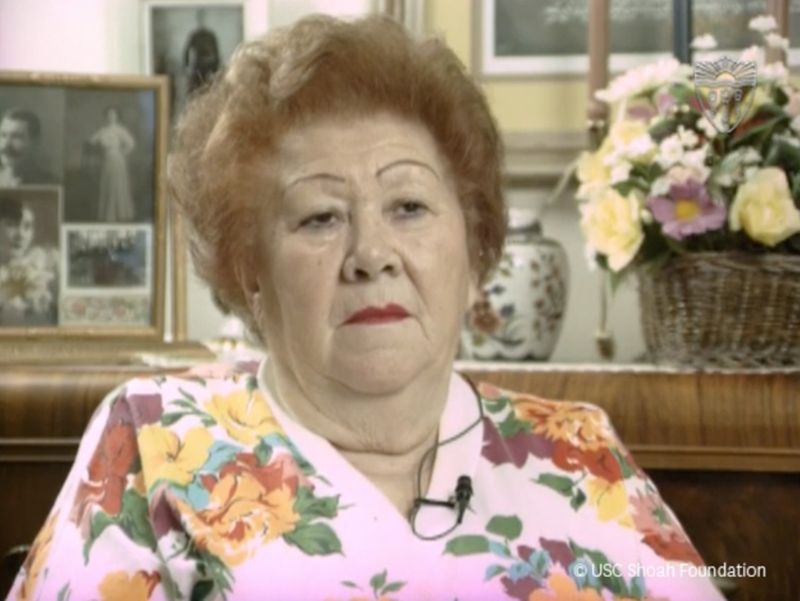 Ben Nachman
November 4th, 1996, interview with survivor Pola Amster, A-M-S-T-E-R, maiden name Cymrot, C-Y-M-R-O-T. My name is Ben Nachman, N-A-C-H-M-A-N, interview conducted in Omaha, Nebraska, United States of America, in English. Can you give me your name, please?
Pola AmsterMy name is Pola Amster, A-M-S-T-E-R, P-O-L-A.
Ben NachmanAnd where were you born, Pola?
Pola AmsterIn Krakow.
Ben NachmanIn Poland.
Pola AmsterPoland.
Ben NachmanAnd when were you born?
Pola AmsterIn 9, 7-9-[19]23.
Ben NachmanHow old are you today?
Pola Amster72.
Ben NachmanCan you tell me a little bit about growing up in Krakow?
Pola AmsterWell, I really had a good childhood. I grew up with my mother and stepfather. I went to school. I was working after school. And then I went back home and stayed home, we are, young kid.
Ben NachmanDid you have brothers and sisters?
Pola AmsterYes, I had two brothers and one sister.
Ben NachmanAnd you mentioned that you lived with your mother and your stepfather.
Pola AmsterYes.
Ben NachmanHad your father passed away prior to this?
Pola AmsterWell, he got killed through the Germans. So do my mother. So do the rest of the family.
Ben NachmanWhat kind of work did your father do?
Pola AmsterWhat can I explain? He had a factory. He used to make candelabras, silver from brass and copper, and all things to churches and synagogues.
Ben NachmanDid the family have a good economic life?
Pola AmsterYes, very good.
Ben NachmanDid you grow up in a religious family?
Pola AmsterNot too much.
Ben NachmanYou did go to the synagogue?
Pola AmsterYes.
Ben NachmanDid you receive a Jewish education?
Pola AmsterNo.
Ben NachmanHow much schooling did you have?
Pola AmsterFour publics.
Ben NachmanFour years?
Pola AmsterFour years.
Ben NachmanAnd the reason you finished was because of the war?
Pola AmsterWell, it wasn't about the war, but, you know, we couldn't afford that. I had a stepfather. It's not America. You have to buy everything what school needs. And I was a young kid, said I couldn't afford, and my mother didn't give me the money.
Ben NachmanDid you have a large family living in the area?
Pola AmsterNo. In little towns.
Ben NachmanWere you able to visit them from time to time?
Pola AmsterJust my sister. She used to live in that city where I was in concentration camp. So every year during summer vacation, I went to my sister.
Ben NachmanWas she married?
Pola AmsterYes.
Ben NachmanDid she have a family?
Pola AmsterYeah, two sons and a husband.
Ben NachmanHow were conditions in Poland during the early years?
Pola AmsterNot bad. We had a good life. Not everybody was rich. Not everybody was poor. But if I talk about myself, I have a good life. I had a good life.
Ben NachmanDid you grow up in a predominantly Jewish area?
Pola AmsterIn a . . . just like you would call a ghetto.
Ben NachmanSo your life pretty much revolved around Jewish
Pola Amsterpeople? Exactly.
Ben NachmanHow were you treated by the Polish people during this time?
Pola AmsterWe never was treated good as human beings by them. We didn't consider by them as Polacks. Even we were born in Poland. We were considered Jews.
Ben NachmanDid things change as you got closer to the war?
Pola AmsterNo. It was much worse. Much worse.
Ben NachmanHow did things change during that period?
Pola AmsterWell, we wasn't allowed to go to movies. I remember my stepfather wanted to take out some money from the bank, and they closed the window. Everybody before them got the money except him. It was bad. It was very bad.
Ben NachmanAnd how were things once the Germans started to come into Poland?
Pola AmsterWe were very afraid. But to tell you the truth, we never thought it's going to be that bad. We had so bad enough with the Polish people that we thought it's going to be better. Instead, it was worse. That's what I can tell you. It was worse. They took us to work, and then they closed up the concentration camp, and this was this for five years. And we worked for him, and not enough food, and scared every minute of it, and they beat you for no reason whatsoever.
Ben NachmanDo you remember how soon after the Germans invaded Poland, did they arrive in Krakow?
Pola AmsterAfter what?
Ben NachmanAfter the Germans invaded Poland. How soon did they arrive in Krakow?
Pola AmsterThe Germans? They arrived in 1939, and they bent over there until the last of the minute in Krakow, until the Germans occupied and won the war from them. Then they went.
Ben NachmanWhat things started to happen once the Germans arrived?
Pola AmsterPanic. We really didn't know what to expect from them until they started to shoot for no reason, whatever. Not everybody had restrooms in the houses. The restrooms were on the porches outside, and when they saw somebody, they shoot them. They always said that when they don't shoot, they don't have an appetite to eat. This was the starting, the appetite, when they started to shoot. That's what it is. That's really true.
Ben NachmanDid your food conditions change when the Germans came in?
Pola AmsterWell, we didn't have no food. I had to, my stepfather, just before the war, he went to what is it called? Carlsbad. Carlsbad. I can't remember.
Ben NachmanIn Czechoslovakia?
Pola AmsterNo- Czechoslovakia. That's right. To Carlsbad. They had ba- baths. He was a heavy set, fat guy, and he had the money for it. So every year, he went over there to those baths, and he couldn't come back. So if he couldn't come back, we didn't have no food. Somehow, you know, in the middle of the night, I said to my mother, I was going to a bakery, and we had to stay the whole night through until morning they opened to have the bread. But, you know, it was like that. A bad situation. If it comes to a Jewish kid, they said they don't have no bread. So I had to go home to my mother without bread. And somehow, I don't know, we just stayed alive. That's it.
Ben NachmanWas your father still able to maintain his business?
Pola AmsterNo. Not at all. When Hitler came over, they closed up everything.
Ben NachmanAnd you mentioned that he was in Carlsbad.
Pola AmsterYeah.
Ben NachmanDid he eventually get to return to Krakow?
Pola AmsterHe returned to Krakow when the train started to work. He returned. And unfortunately, they knew the rich Jews, so they took him out and killed him. Most of them.
Ben NachmanDid that happen pretty soon after the Germans came to Krakow?
Pola AmsterNot too long later. Not too long. Not too long. The first day, they were told from the Polish people, who is rich, who has business, so they took out most of the Jews and killed them, you know. As a matter of fact, he got three of them in his head, and he still was alive.
Ben NachmanDid they shoot him in front of the family?
Pola AmsterIn front of the family. My mother saw it.
Ben NachmanWas this done in your home?
Pola AmsterOutside.
Ben NachmanWhat became of the family after you lost your father?
Pola AmsterWe went. My mother and I, we went to my sister. No train, no nothing. We were walking. We walked two weeks. And to a little town that we knew, it was called Pińczów. And Pińczów was a bridge. When you go through, the Pińczów was Skarżysko. The name that we were in concentration camp. But unfortunately, they bombed that bridge. We came to that little village, and we couldn't go through. So we stayed a few days with a Jewish family, and we went back two weeks again on our feet. We came back. Nothing was inside. Empty house. They took out everything.
Ben NachmanWho did?
Pola AmsterI can't tell you. I wasn't there.
Ben NachmanDid you have any idea? Could it have been neighbors?
Pola AmsterI thought it was the janitor. Not neighbors. Most of the neighbors were Jews, and everybody has with themselves to do. They were worried about themselves, not about us. But the most, what we were thinking was the janitor.
Ben NachmanWhat did you do at that time?
Pola AmsterNothing at all. We were afraid to open our mouth. She could have done a lot bad for us. So it's better not to talk.
Ben NachmanWere you able to stay in the apartment?
Pola AmsterNot too long. I went with my sister straight to Skarżysko. Over there, the Germans were still there, but it wasn't so bad. She still was in her house with my brother in law and with her two sons, and we were sleeping with them. Since 19-, the beginning, the very last of 1939, and we went to, we stayed with her until they took us to concentration camp. They didn't took my sister with the mother and the rest of the family. They took him to Treblinka. I was the only one survivor that survived in concentration camp. They went. Nothing left.
Ben NachmanYou say they took your mother at this time?
Pola AmsterThey took mother. They took my sister, my brother-in-law, and two nephews.
Ben NachmanWere you there when they came to take them away?
Pola AmsterNo. No. I was already in concentration camp.
Ben NachmanHow did you learn of what had happened to your mother and your sister and family?
Pola AmsterWell, the Polish people, they came to work over there, and they went, so we knew all the news from them, you know.
Ben NachmanWhere was the rest of your family at this time?
Pola AmsterMy family? I don't have no family. The family now is my husband and my kids.
Ben NachmanNo, I meant your family still in Poland.
Pola AmsterIn Poland, I don't have no family. Nobody.
Ben NachmanWhen did they take you to the concentration camp?
Pola AmsterIn the very beginning of 1940. Very beginning of 1940.
Ben NachmanAnd where did you go?
Pola AmsterTo Skarżysko-Kamienna.
Ben NachmanAnd how far was that from Krakow?
Pola AmsterAbout 12 hours to ride with a train.
Ben NachmanAnd what type of a camp was it?
Pola AmsterThat was ammunition factory. You know what's amunicja? That's what I was working there.
Ben NachmanWas this a camp of both men and women?
Pola AmsterYes.
Ben NachmanCould you tell me something about how you lived while you were in that camp?
Pola AmsterWell, we worked from 8 o'clock in the morning. When we got up, they gave us coffee. That coffee was from the skin from beets. If somebody wanted, they drink that. If not, they didn't. Then we went to work. We worked til about 1 o'clock. They gave us one slice of bread. Sliced of bread and I think a little soup that I never tasted. And 5 years no soup because they told me the soups are from dead horses. So that's what I had. One slice of bread a day. And I survived.
Ben NachmanWas there any other food given to you later in the day?
Pola AmsterIn the evening, one slice of bread.
Ben NachmanHow were your living conditions at this camp?
Pola AmsterWell, we were sleeping in barracks on bunk beds. One was down, one was up. The barracks, the boards were very far apart from each other. When the winter came and snow, you had snow between the boards. This was our living. And the bunk beds, we had straw on it. But I had never been on the snow. I didn't want the bugs to bite me. So I was sleeping on the boards and covered myself with my winter coat. That's what it is.
Ben NachmanHow were you treated in the camp?
Pola AmsterJust like, just like animals. The animals and the jungles, they are not treated like that because nobody, everybody cares about them. They didn't care about us, you know. We wasn't human beings. If they want the dog to bite you, they never called the dog, dog. They said in German, mensch, zu reistem hunt. It means dog, tear off the dog. The dog was the human being and we were dogs. That's what they used to say.
Ben NachmanDid you have roll call while you were in this camp?
Pola AmsterI beg your pardon?
Ben NachmanRoll call.
Pola AmsterRoll call. What is this?
Ben NachmanThey would get you out and count and see who was there in the morning.
Pola AmsterYeah. Oh, yeah. Every morning. Every morning and months a week was really the main thing, the main thing that used to came, the Germans, with those things on their heads. The people that they died, what they called the skeletons. Oh, yeah. They had heads with the skeleton on horses with white gloves and they used to take out, they used to count to ten, one, two, three, four, five, six, seven, eight, nine, ten, raus, out. And that's the way it was and then they shoot me. They shoot the kids, you know. Every morning the same. Just like I said before, they never had an appetite to eat before they were shooting kids. This was, they developed an appetite with them.
Ben NachmanWere most of the guards in the camp German?
Pola AmsterNo. Ukraines. Much worse than the Germans. They were just guards to watch us, not to kill, but they killed, you know. I heard in those things I was calling for about a half hour, a half a night. Can I go to the bathroom, can I go - he heard me. He didn't answer it. And then I decided I went to the back of the barracks. He caught me. And with this machine gun, he hit me three, four times. As a matter of fact, I have an empty space here. If I don't cover with my hair, you can see it. And so, you know, I was crying and yelling. The kids came out and they was yelling for that Jewish commandant and they stopped him. So I went in and I was bleeding. In the morning I went to work. That's the way it was.
Ben NachmanYou mentioned the Jewish commandant. What was his position in the camp?
Pola AmsterWell, he was, he was watching us to keep everybody in place. That somebody don't run away or we don't fight or things like that, you know. He was just like the German, you know. If somebody need to get a whipping, he whipped him. But not too much, you know. Whatever he saw that's German. He whipped us... If he wouldn't do that to us, he would do that to him. It wasn't that bad. We could have lived with that.
Ben NachmanDo you remember his name?
Pola AmsterYes, I remember. His name was Jakob. Then we had another one when he sent them away someplace else to a bigger concentration camp because he was the one that beat a lot, so he was good. So we had one that his name was Zygmunt to the last minute. And he wasn't bad, you know, to the last they killed him.
Ben NachmanWas he Jewish also?
Pola AmsterYeah, they all Jewish commandants. And we had Polish Jewish policemen over there, yeah.
Ben NachmanOf this Jakob and Zygmunt, did you happen to know their last names?
Pola AmsterNo. No, I wasn't interested.
Ben NachmanWere you ever beaten other than the time you were beaten by the guard?
Pola AmsterMany times. Many times. Once I was beaten, he, what can I, how can I explain to you? This was the, if I would tell you in German, would you understand? The Obermeister Lydick, his name I remember. I was working at a [unclear] factory, and he said that something, I did sabotage. So he took me to a back room with a stick from a table, and he gave me 25 on the back. But I couldn't go back to work. They took me on a little, what you take, the sick guys, what you call it, the stretcher - on the stretchers. They took me to the barracks back in the back, in the bed. But I couldn't stay over that, more than three days. The third day they would shoot me, so they sent me back to work. This was the first time. The second time, it was something from work, too. The machine wasn't good. So I was the fault that Ammon Yatsion thinks is sabotage. And this was my trouble. And then the night shift. I worked a week night and a week date. The night was just terrible. I couldn't keep open mine eyes 12 o'clock. Even I wasn't sleeping, just looking down, he thought I was sleeping. He punched me with his fist and my eyes constantly. Every night the same. Every night the same. And I survived.
Ben NachmanWas this a Ukrainian guard?
Pola AmsterYes. No, no, excuse me. This was a German guy that used to work on that night. His name was Meister. Meister. How can I explain Meister? He was the Meister that watched us the night, Schmidt. His name was Meister Schmidt. Every name I remember. How could I forget that? How could I forget that?
Ben NachmanHow many days a week did you have to work in this camp?
Pola AmsterFrom morning til Friday.
Ben NachmanAnd what did you do on the days you didn't go to work?
Pola AmsterWe were in the barracks. Everybody has something to do to sew up something or talk to each other. We didn't have no fun and play with each other. We were on our bunk beds sitting and talking. That's what was, this was our life. You know, we were just resting sometimes, you know, most of the times. You have different kind of kids. Somebody wants to go down and somebody, I was sitting on the bunk bed. Didn't talk to nobody. I didn't see nobody.
Ben NachmanHow were the sanitary facilities in the camp? As far as showers?
Pola AmsterWell, we had showers. Yeah, everybody could go to a shower every day after work.
Ben NachmanAnd what kind of clothing did you have?
Pola AmsterThey used to give us clothing from the people what they killed them. They took out the clothing and we were wearing their clothing. We had to, you know.
Ben NachmanWas the camp a long distance away from where you did your work?
Pola AmsterNot to, no. We worked, but it wasn't too long, no. About 15 minutes the most to work.
Ben NachmanWere there mostly Jewish prisoners in this camp?
Pola AmsterMost. No, no, no Gentiles. They had the Polish people. They used to work over there. If they didn't show up, they put them to a jail, but they didn't beat them. They put them two, three days because they didn't show up. But it was it.
Ben NachmanHow were you treated by the Polish prisoners?
Pola AmsterWell, we didn't have nothing to do with them. We never saw them. We knew we saw them the way they walked with them to that prison, but we was never close to them. What they used to watch us. Well, at the work, we had those... The Polish people, Polish girls, and the Polish, how can I say? They were the foremens. Even the womens, we had women foremens and men foremens. The only thing what we saw them.
Ben Nachman-with Mrs. Pola Amster. Mrs. Amster, how long in all were you in this camp?
Pola AmsterFive years.
Ben NachmanFive years. Is this the camp that you were liberated from when the war ended?
Pola AmsterNo, I was liberated from Częstochowa.
Ben NachmanHow long were you at this at Częstochowa?
Pola AmsterAbout a year and a half before the liberation.
Ben NachmanWhile you were still in the first camp, were you mixed with men and women as far as prisoners were concerned?
Pola AmsterWell, prisoners, in the concentration camp, in the barracks, we were not altogether separated, women separated and men separated, but when we came together on that plot, we were all together. We could talk to each other, but we wasn't sleeping with each other, no.
Ben NachmanWere you with anyone from home or anyone that you knew?
Pola AmsterYeah, I had cousins. I had lots of cousins. I had friends from Kraków that we used to sleep in the same room.
Ben NachmanIn general, how would you describe how you were treated in that camp?
Pola AmsterIt's really hard to describe. It's not a good feeling. You couldn't feel good, you know, because you was never good treated, never good treated. You was a prisoner by them, so you always was afraid. You was afraid for the daylight that somebody would arrive and for no reason whatsoever start to beat on you or kill you. So it wasn't a good feeling. You always was afraid.
Ben NachmanWhile you were in this camp, were you hearing anything about what was going on, back in Kraków, about your family?
Pola AmsterNot too often. Very little, very little, you know.
Ben NachmanWere you hearing anything at all about what was going on in Europe in the war?
Pola AmsterNo, no, I wasn't. I didn't.
Ben NachmanHow did you know that you were going to be transferred out of this camp then?
Pola AmsterBecause we were told and we were three years in Skarżysko-Kamienna, and then we heard that the Russians are not far. So that's why they transferred us farther to the German borders. That's the only one what we heard what they're going to do to us. And we did. It was really not supposed to take so long to transfer us from Skarżysko to Częstochowa. They had us on a closed, cattle wagons with Clorox in it that nobody would really survive. But somehow when they stopped and they opened the doors or they threw, and the Clorox, by the way, wasn't liquid. It was just like big clumps and it was stinking like Clorox. Instead, we should have been over there in six days or seven. Instead, they was going around with that train for two weeks and it was winter time. When I arrived over there, they took me off on stretchers straight to the infirmary because I really had a fever and they said that I have TB. And I was three days over there, but when they saw that the Germans came to look around, they took the clothes on me and sit me down by a desk that I was there doing something, that he wouldn't kill me. But I still had TB, but in the concentration camp I was two weeks. It just happened that I was very lucky that they didn't send me to work. And the two weeks I got a little bit to me, but I still was sick. And I was sick when I arrived to Omaha and my doctor was Dr. Pepper. He was a TB doctor. And so that's the way it was.
Ben NachmanWhen you were on this train, when you left the first camp, were you given any food on this train?
Pola AmsterNo, no. When we were stopping the train, when the conductor stopped the train for his own use, to go out or to eat something, the German people, they used to throw up something, a sliced bread or something. What could you eat? We had been in that train just like sardines. We couldn't stay. We were laying on each other. So whoever caught that little piece of bread had something to eat. But we were over there maybe 400 peoples in a cattle train like that. Whoever was in the open one, they could breath, but just unluckily we were in the closed ones, you know, when they transferred us from one concentration camp to another.
Ben NachmanAnd you said it took how long to go to the second camp?
Pola AmsterAbout nine or ten hours to go to the second. It shouldn't. The most four, five days.
Ben NachmanSo it took about nine or ten days to go? You said you were thrown some food by the German people.
Pola AmsterYeah.
Ben NachmanWere they German people?
Pola AmsterThey were German people. They were German people. If nobody sees them, they just try to help out a little bit. Not everybody is bad, you know.
Ben NachmanThe infirmary that you were in when you arrived in the second camp, who were the doctors that treated you in this infirmary?
Pola AmsterFrom camp, they were doctors before the war. I knew that doctor from Skarżysko. My sister used to be there, live there. I used to be in Skarżysko every year. I knew that doctor, and he treated, they were Jewish doctors. Whoever was a doctor before the war, they took him to the infirmary, you know.
Ben NachmanIn the second camp, were you also guarded by Ukrainians?
Pola AmsterYes, yeah.
Ben NachmanWere there Polish prisoners as well as Jewish prisoners?
Pola AmsterNo.
Ben NachmanPrimarily Jewish?
Pola AmsterJust, just Jewish, no Polish prisoners.
Ben NachmanWhat was your job then in this second camp after you recovered?
Pola AmsterThe same. This was a munitionsfabrik factory, and I was working that time by a machine that was spraying the dirty oil and everything. But Częstochowa concentration camp was not that horrible. It was bad, but not that horrible. We were more free. They didn't, they didn't whipped us so much. The soup was a little better. So it was relief a little bit, you know.
Ben NachmanWere your working hours the same?
Pola AmsterYes, the same hours.
Ben NachmanYou didn't work on Saturdays or Sundays?
Pola AmsterNo.
Ben NachmanWere there a lot of German guards in the camp?
Pola AmsterThey used to come in very often, very often, to look around, to see. They used even to come in the showers where we were naked to look at us. Whoever had some pimples that they were afraid that it's, and you can get infected from it, they shoot you right away, you know. You had to be clean. How could you be? They all were clean, but they all had some kind of disease on them, like I never had.
Ben NachmanWere these German doctors that would come in and look at the people?
Pola AmsterWell, I don't know. I don't know. Maybe they were doctors, and maybe they didn't. They wasn't. Maybe they wasn't. But to shoot, you don't have to have no doctors over there. Everybody was very pleased to shoot, you know.
Ben NachmanWhen they would take these people out, did they take them out somewhere to kill them?
Pola AmsterFrom where?
Ben NachmanFrom the shower?
Pola AmsterYes. No, not from the shower. No, they used to take us out when we used to be on that, what you mentioned, that ring, what we used to stay. But not from there, you know. If they wanted to shoot, they wasn't too shy. They used to shoot over there.
Ben NachmanWere they selecting people out of your work group?
Pola AmsterYes, always, always.
Ben NachmanWhat criteria did they use to select people? You mentioned before that they would just count.
Pola AmsterThey didn't have no prior. No, they didn't. They really took out beautiful, healthy kids just for their own pleasure. Never had no reasons at all.
Ben NachmanWere these mostly young people that were with you at this work camp?
Pola AmsterYoung people, just young people. They didn't even kept old people. The old people, they sent it to crematoriums, you know. They always used to say, the young, they need to work.
Ben NachmanDuring this time, had you ever heard of Auschwitz?
Pola AmsterYes, yeah, we did, always. Yeah.
Ben NachmanWhat did you use to hear about Auschwitz?
Pola AmsterThat it's a very bad and camp with what they used to kill a lot and they used to burn and to gas. They had the gas chambers. First they gassed them and they burned them, you know. That's what we heard.
Ben NachmanDid you hear of Treblinka during this time?
Pola AmsterYeah, we heard from Treblinka, but from Treblinka, never nobody came back. From Auschwitz, from time to time, we had somebody in our camp that escaped. But not Treblinka and another one, what was it called?
Ben NachmanMajdanek?
Pola AmsterMajdanek.
Ben NachmanYou did have someone that escaped that came to your work camp from those camps.
Pola AmsterNo, not from Majdanek and Treblinka, just from Auschwitz, yeah.
Ben NachmanLater, as the war was further along, were you hearing any rumors at this time of the Germans being defeated in certain battlefields?
Pola AmsterYeah, we did, we did. We did and we just hoped to God that it's going to end, that we're going to stay alive, you know. To the end, we always used to say to each other, they're going to kill us out. If they're going to leave that camp, nobody would stay alive. But they didn't have the time. The Russians were over there, so they didn't have no time. It's the opposite way the Russians started to kill them, you know.
Ben NachmanWere you still in the second camp when the Russians arrived?
Pola AmsterYeah.
Ben NachmanYou were liberated then in this camp?
Pola AmsterYeah, yeah.
Ben NachmanHow were you treated by the Russians?
Pola AmsterVery good, very good. How, what can I tell you? They were men, you know what I mean? But I accept that, you know, if somebody could help themselves and to escape this, they think, otherwise, you know, they try to help us. Just simple like that.
Ben NachmanWhat happened to the guards during this period of time?
Pola AmsterWe didn't see no guards when the Russians came. You know. Either they captured them and they killed them, you know. They killed a lot of them, you know, in front of us. We kind of went away from the camp when they said to go wherever we want to, but we didn't have where to go. If we want to go to Kraków, they were still fighting. So they helped us a lot. They gave us to the Polish houses and they gave them a... They told them to clean up the rooms, to put some straw, and to let us sleep and to feed us. And that's the way they did it, you know. They feed us. The two or some weeks, if we could, when we couldn't go back to Kraków. Yeah, they feed us.
Ben NachmanHow soon after the Russians arrived were you allowed outside of the camp?
Pola AmsterRight away. Right away. But most of them were afraid for the, for the Polish police, you know. If they didn't finish us up, the Germans, that they will. So we were hiding wherever we could, you know. But they came in, the Polish policemen, and they called us stupid Jews. The war is over. Why don't you go over? Out. So if we were afraid or not, we went out. They didn't done nothing to us. We went wherever we could, you know.
Ben NachmanHow did you work your way back to Kraków?
Pola AmsterWell, I will tell you. From Plaszów, many kucyk, you know what's a kucyk? A kucyk is that he was driving the Germans on a buggy, whatever you call that, with horses, wherever he told them to. This is a kucyk. When they closed up Plaszów, they came to Skarżysko and from there to Częstochowa, to the very last. But three weeks before the end, when the end came, one guy from Kraków took from the stall the wagon and two horses. So the Polish police said, hey, where are you going? He says, I'm going wherever I can. You said the war is over. You called us the stupid Jews. So why shouldn't I? But leave this alone. He says, he took this from me. Now I can take that from him. So he didn't said nothing, the policemen. He took seven girls from Kraków and we went, na Kraków. The rest of them, whoever could, they had some rides. Most of them, they fell down and died, you know, most of them. They came out, but they died. But he had the wagon with the two horses, and he came to Kraków with the two horses. He sold the two horses. He had money to live on. He was smart.
Ben NachmanThe seven girls that went back with you, were there anyone there that you went into the camp originally with?
Pola AmsterOh, with all of them I was in the camp, yeah, with all of them. He knew us. He knew us.
Ben NachmanHow long did it take you to get to Kraków?
Pola AmsterOh, gosh, that's a hard question. I don't really know. It took quite a while, you know, from Częstochowa to Kraków. I don't know. We were sleeping in schools. They stopped in schools and they feed us and things. It took a while until we arrived to Kraków, you know. In Kraków we went to the JCCs, and then, you know, I met my husband, and then we got married. That was in 1945 already.
Ben NachmanWhen you were freed by the Russians, did your food supply improve in the camp while you were still in the camp?
Pola AmsterBy the Russians? In camp they couldn't do nothing with the food. They didn't even went into the camp, you know, because everybody's afraid for themselves. It was a big camp, and magazines, what they had the food, they didn't even went in. They thought that the Germans are in hiding or something. But when we were out, they tried to help us a lot, a lot.
Ben NachmanDid you have food for your trip back to Kraków?
Pola AmsterYes, we did. We wasn't hun- Who could eat so much? If somebody, you know, it was really true. We tried to talk to those kids and boys, don't eat too much, but they didn't help. They eat and they eat, they died, you know.
Ben NachmanThe war was still going on, wasn't it, when you got back to Kraków?
Pola AmsterNot too long. A few days, not too long at all, because the Russians, they said to us, now you can go, they stopped fighting. They already, already liberated Kraków, the Russians, so we went over there. But I really didn't see no Germans in Poland after the war when I went over there. We saw Russians, and we start to learn Russian, and that's it.
Ben NachmanTell me what your feelings were when you first arrived back in Kraków.
Pola AmsterOh, it was a very good feeling. I don't know. I didn't remember anything that I ever was in a concentration camp. We went to the JCC, we had kids, we had boys, and they feed us, and they clothed us. It was empty because you didn't have no father and mother. You didn't have your own home, but right away everybody was looking to get married. So this was, you know, you got married, and three months after we went to Germany.
Ben NachmanWhat took place when you went back to visit your old home?
Pola AmsterI didn't want to visit my home. I went to that janitor because I remember what my mother said to us, and she was listening, and she said, listen, Mrs. So-and-so. I remember her name, but I leave everything, and if somebody of my kids would stay alive, please give them whatever you can. Everything she left. You know what she gave me? A diamond brooch and a gold watch. That's what I have for my mother. I still have that. And she had everything, and she said the German took everything. And I said, Mrs. Kowalska, I said, it's okay, whatever you gave me, I'm happy with it. So that's it, you know.
Ben NachmanHow did she treat you when she first saw you come back?
Pola AmsterI never needed her to treat me. I never wanted to talk to her anymore that I needed. She gave me back what my mother left, and I said goodbye and things like that. She asked me, don't you want to go into your house? I said, no. I didn't want in. She said, the policeman is living over there. If you want some whatever you want, he would give you. I said, I don't want nothing. And I didn't want inside. Now I'm sorry.
Ben NachmanWere you starting to hear at this time what had happened to the Jewish people?
Pola AmsterYeah. We all heard. We all knew very well. Soon we came all out. In concentration camp, I don't know. We heard, but we were so afraid for our life that we never mind. We never asked too many questions. One German guy came from the city and said, you know, Pola, that your brother-in-law and mother and sister and the kids, they are not alive anymore? That's what he told me. And I couldn't even cry. Never let one tear. He went, why? He went to the army together with my brother-in-law, that guy. He was a Volksdeutsch. You know what a Volksdeutsch is? Half Polish and half German. That's a Volksdeutsch. And he was in the army together with my brother-in-law. And he came. And he was over there, the, a foreman, in the factory. And he came once and he said, you know, they are not, you don't have them anymore. I looked at him. I didn't cry. Didn't say the word, didn't cry.
Ben NachmanHow long did you remain in Kraków?
Pola AmsterThree months.
Ben NachmanAnd you were being helped by the Jewish agencies there?
Pola AmsterWell, I went over there because most of them, they were helped, you know. Well, I didn't need no help from them that time because my husband already had horses to sell, you know. He bought, he had some horses that they loaned him. They said, if you sell, they knew him from before the war. If you sell them, you gave me back the money. So they trusted him. And, you know, he gave them the money and they gave him a profit. So, you know, I didn't even ask for nothing over there. I didn't took no food. I just went to find out if somebody came from the family to write the name that I can find him. That's all.
Ben NachmanAnd you didn't hear him from any relatives at this time?
Pola AmsterJust one cousin showed up that I took him with me, that I took her with me, and then she went to Argentina to her father.
Ben NachmanWhen you got to Kraków, is this where you met your future husband? And he was from where?
Pola AmsterHe is from, he was from under Krakow, a little town, from a farm. They came from a farm.
Ben NachmanHow long after you got back to Kraków did you marry?
Pola AmsterThree months.
Ben NachmanDid you make any plans then of what you're going to do for the future?
Pola AmsterYeah, I always said I won't stay in Poland and I won't stay in Germany. I don't want in the bloody countries. So from Poland we couldn't go no place. Either you could go, they let you go to, I don't even remember, to Israel. But I didn't want to go to Israel because I had a letter from my uncle. I had in Israel not to come. It was a hard time for everybody over there in 1945 that they always fight and things like that. They didn't have no place for me over there. So if I wanted to come to Germany, the only thing for us was left to go to America, I mean, to go to Germany. I went my quarter, five years, and then the UNRWA, everything helped us. And we came to America after five years. Five years we went to Germany. I had my son in Germany. Halt!
Ben NachmanMrs. Pola Amster. Mrs. Amster, how did you go from Poland to Germany?
Pola AmsterFrom Poland to Germany, we had to escape. We were waiting until- under dark will come. And we went on the trains that they used to carry coal on them. And we went on the coal, and we just snooped up together with my husband way up to the end. And the conductor was lighting his flashlight, and somehow he got blind and didn't saw us. And we heard the whistle blow, and the train went. The train went, and they stopped on some places, but most of them, nobody was looking to find us. We came, and then he stopped in Germany, and somehow I think it was dark, too. And we went down, and we couldn't talk German, but we talked Jewish to the Germans. And somehow we understood, and we tried for them to understand something that we want to go to... to a office that we can. To let us know that we are in Germany, and to give us some papers that we belong, how do you call that?
Ben NachmanDisplaced person.
Pola AmsterThat we are displaced person, that we want to stay, then we want to work, and things like that. So they did. [unclear] They filled out the application for us, and I still have them. Where we're born, from where we come, where we've been in concentration camp, and things like that. And we were over there for five years, and it was everything okay. I just don't want it to be things that were, what you may call, that the Cuban came, and they are not going to the city hall.
Ben NachmanTo register?
Pola AmsterTo register, yeah. We registered over there. We were registered. We didn't want to be just like that.
Ben NachmanWas this in the American zone?
Pola AmsterYeah, that was in our, that was in American zone. Yeah, that's right.
Ben NachmanDid you live then in a displaced person's camp?
Pola AmsterNo, private.
Ben NachmanWere you able to work while you were in Germany?
Pola AmsterI wasn't. My husband was working, and he made a living. And we had rent apartment from a German guy. We had our child, you know, not in the hospital. He wasn't too happy with us. A very cruel guy. He always said that, can I tell you in German? [unclear] How can I explain? I, as an old Nazi guy, I'm not afraid for nobody. He let me know that the very first day I went over there. And, you know, he was very mean. They, they, the Jewish community center somehow, he said that he wants to kill my baby. So they, they, they went to the police and told us they put them to jail, and then a half an hour later he was back over there. A mean guy, but I stayed over there five years, and somehow he didn't done nothing. You know, he, he just threatened us, you know. He doesn't like no Jews. That's all.
Ben NachmanHow were you treated by the other Germans?
Pola AmsterWell, most of them, they were pretty good. They were pretty good, you know. We didn't have no trouble. I think that my, our luck was that only guy that we, we went over there and we had very, very bad over there. But we survived, and the rest of the Germans, they, they tried to be very good to us. Yeah.
Ben NachmanDid you apply then to come to this country?
Pola AmsterOh, of course, right away.
Ben NachmanDid you have any family living in this country?
Pola AmsterI, I had family, but instead to go to send us from Germany to New York, they send us to New Orleans. So that was my, I had in New York and Brooklyn two or three uncles, my mother's brothers. And when, when I come here, they somehow, one cousin from Winnipeg, he was from Poland. He wrote him that I am alive, and he wrote, they wrote letters, and they sent me from time to time at twenty-five dollar bill and things like that. But otherwise, you know, was unlucky. I wanted to go on New York, so they sent me to New Orleans.
Ben NachmanDid you remain in New Orleans?
Pola AmsterA few hours, just a few hours, and they, they sent us to, really they want to send us to Joplin, Missouri, okay? But one of my husband's brothers, two of them, they went Omaha already. So, you know, Mr. Veret, Alice Shulim, and they went to the JCC to him, and they said, we have a brother coming here. I really don't know where he's going to go to New York or someplace else, but Veret was smart enough. He called New York, and they say they don't have a family Amster. So they called New Orleans, and they answered that they had a family Amster with a little boy, and they paged us to get dressed, that we will go to Omaha. But my husband said the baggage, the suitcases, everything is to go to Joplin, Missouri. So they said, why, you wouldn't want to go to Joplin, Missouri? Don't you want to go to Omaha, Nebraska? And he says, oh, my gosh, sure, I have two brothers. I want to go over there. And that's what happened. We went to Omaha, Nebraska, and we stayed to Omaha in Omaha, Nebraska.
Ben NachmanAnd you had one child born while still in Germany.
Pola AmsterYeah.
Ben NachmanAnd your other children, you have a son and a daughter.
Pola AmsterIn Omaha.
Ben NachmanBorn in Omaha.
Pola AmsterIn Omaha.
Ben NachmanAnd what did your husband do when you first came to Omaha?
Pola AmsterMy husband first worked by Cudahy's packing house. Then he called for Mor- salt, not salt. What was the glass, Mr. Glass? First he was in two packing houses. Then he works for the kosher butcher shop for Mr. Glass. For 18 years.
Ben NachmanAnd did you work while you were here?
Pola AmsterYeah. I worked as a janitor. I took a place, you know, by Herman Cohn. And I used to give care of 12 apartment house as a janitor. Just to have free, the apartment.
Ben NachmanSo now you have three children and how many grandchildren?
Pola AmsterThree. One is not married, so I have three from two.
Ben NachmanIf you could look back and leave a message, taking into account the way your life has been and what you have lived through, what would be your message?
Pola AmsterMy message would be that I would never want to stay alive to see that what I saw. And my only message was, why not my mother? Live with me? Because I didn't have no father.
Ben NachmanI want to thank you, Mrs. Amster, for giving us this opportunity to come in and visit with you about your life.
Pola AmsterOkay.
Ben NachmanMrs. Amster, can you tell me who this is in this photograph?
Pola AmsterThat's my mother and father.
Ben NachmanWas this their wedding photograph?
Pola AmsterI think so. I'm not sure.
Ben NachmanAnd how did you manage to get this picture?
Pola AmsterFrom my uncle. They sent him probably from Poland to New York to her brothers. And somehow they sent me here to Omaha.
Ben NachmanMrs. Amster, who is this in this photograph?
Pola AmsterThat's my wonderful, sweet sister.
Ben NachmanWhat was her name?
Pola AmsterChaia Ester.
Ben NachmanAnd when was this photograph taken?
Pola AmsterTaken when she was 17 years old and was engaged in this picture in Krakow.
Ben NachmanShe ended up being married, and how many children did she have?
Pola AmsterTwo. They all perished in the Holocaust. All perished in the Holocaust, together with her.
Ben NachmanCan you tell me about this photograph?
Pola AmsterYes. On the left is my little brother, then is my brother-in-law, and inside is the little baby named Natan, then is my sister, and then my cousin.
Ben NachmanWhere did you get this photograph?
Pola AmsterFrom my uncle from New York, he sent me to Omaha.
Ben NachmanDid all these people perish in the Holocaust?
Pola AmsterAll of them.
Ben NachmanMrs. Amster, can you tell me about this photograph?
Pola AmsterYes. This is a wedding picture from my husband and me, and it was taken in Krakow in 1945, and the day was August the 26th.
Ben NachmanWhere did you get the dress that you're wearing?
Pola AmsterWell, I bought the material, and a lady was making for me.
Ben NachmanDid you have some friends at the wedding?
Pola AmsterLots of friends.
Ben NachmanAny family at all?
Pola AmsterNo. Except his brothers.
Ben NachmanCan you tell me who this is in this photograph?
Pola AmsterThis is my oldest son. He was born the 27th of April, 1946, in Germany. He lives in Dallas, Texas, and he is a salesman.
Ben NachmanWhat is his name?
Pola AmsterNatan Amster.
Ben NachmanCan you tell me who this is?
Pola AmsterThis is my youngest son, Freddie Amster. He is born August the 25th, 1951, in Omaha, Nebraska. He is very successful in his business. He is in pallets business in Omaha. What else you wanted?
Ben NachmanCan you tell me who this pretty young lady is?
Pola AmsterYeah, that pretty young lady is my sweet daughter. She is a graduate from Denver Colorado College. She started Hebrew. She was a graduate with a diploma as a Hebrew teacher. Then she promoted to be in central agency a principal. She decided it's too much for her. So she went to horse business. She took a government loan to go to an academy that it names Trige Point Myotherapist. It's for horses and riders. She is really a horse trainer. She healed every animal, whoever comes to her. She is a lecture. She is a speaker. She is a teacher. Most important thing, intelligent, educated, good child.
Ben NachmanCan you tell me who this is?
Pola AmsterShe is my granddaughter that we just adore her. She is very smart and talented. Her name is Chava Esther Rothenberg. Now she lives in Connecticut. She goes to seventh grade and she works in a pharmacist.
Ben NachmanCan you tell me who this is?
Pola AmsterThis is my grandson, my only grandson. His name is James Etan Amster. He lives in Dallas, Texas. On this picture he used to go to Hebrew academy. Now he just quit.
Ben NachmanCan you tell me who this little girl is?
Pola AmsterThis is my youngest granddaughter. Her name is Ashley Amanda Amster. She was born the 27th of June, 19, I think, 83. That's right. She lives in Dallas, Texas. She goes to school.
Ben NachmanWho are these two men in this photograph?
Pola AmsterThat's my husband and my son. They started business. My husband started first. And then Freddie took over and he is very successful in his business. He is very proud to have his father on his picture. This was featured in the Midlands Business Journal. Yes. Very nice.