Erman Family Interview
- Format
- testimony
- Category
- Stories
- Subcategory
- Testimony
- People
- Daniel, Alexander
- Siegler, Ruth Scheuer
- Alice
- Shoyer, Ernest
- Rockman, Caroline
- Hertz, Morris
- Kahn, Gunter
- Adler, Betty Erman Denenburg
- Rockman, Oliver
- Erman, Fran
- Miller, Lori Erman
- Dotan, Beth
- Rutherford
- Shoyer, Ruth
- Harf, Sophie
- Hertz, Ruth
- Thelman
- Feats, Peter
- Erman, Joe
- Erman, Babette
- Daniel, Frieda Shoyer
- Erman, Morris
- Scheuer, Jakob
- Erman, Mike
- Emmy
- Daniel, Clara Shoyer
- Rockman, Jonathan
- Gerda
- Kauffman
- Rockman, Stacey Erman
- Lisa
- Walter
- Erman, Milton
- Rosenstock, Dave
- Places
- Scottsdale, Arizona
- Israel
- Auschwitz concentration camp
- Wiesbaden, Germany
- Berlin, Germany
- Theresienstadt concentration camp
- Drove, Germany
- Ellis Island, New York
- England
- Poland
- Oberkail, Germany
- Kansas City, Missouri
- New York
- Maysville, Missouri
- Dachau concentration camp
- Weatherby, Missouri
- St. Joseph, Missouri
- Iowa
- Chicago, Illinois
- The Netherlands
- Gerolstein, Germany
- Belgium
- Paraguay
- Sinzenich, Germany
- San Diego, California
- Eifel, Germany
- Cuming County, Nebraska
- Newark, New Jersey
- Omaha, Nebraska
- Palo Alto, California
- Data URI
- soh.sto000.00166.xml
- Note
- https://mediahub.unl.edu/media/25594
 Beth Dotan
Hear that there's a lot of legacy going on in this family and. . .
Joe ErmanI was originally when this thing came up kind of confused because I never really, and we talked about this, we don't really know where our parents fit in as survivors because to me a survivor means, if you think about a survivor somebody that came out of the camps and they didn't come out of the camps, their family members that were in the camps that most of them didn't come out. Uh, I guess they are survivors because we're here and we're proof that they survived.
I can't imagine to me the thing that's harder to understand about what they went through is not what happened there, but when they came here I mean, we're in middle of war with the country that they came from they didn't speak English. They were Germans. They spoke German and everywhere they went they were Germans.
I mean, can you imagine in this little town in Missouri when this German family showed up with that what must have been going through everybody's mind.
Milt ErmanI actually actually asked dad about that once because I knew that they were considered, they were formerly enemy aliens during the war, and they couldn't have a camera or binoculars or I think a radio.
Joe ErmanYou remember that?
Mike ErmanOh, yeah, and they got they gave it back after the war. I had it until sometime, I- it's gone It was a big tube radio.
Milt ErmanSo I asked dad about it and he said that they that they understood they realized that they were refugees and that they were . . .
Mike ErmanI don't think there was any... In fact, they were welcomed in this rural, Missouri area. But but you know when you think about it Lori has you'll see I'll remind me to show you Sunday at Lori's house she has An immigrant identification card framed on the wall in my name.
Betty Erman Denenburg AdlerHmm.
Mike ErmanI was a little kid.
Beth DotanLet's do this, um because-
Milt ErmanI know, we should start beginning-
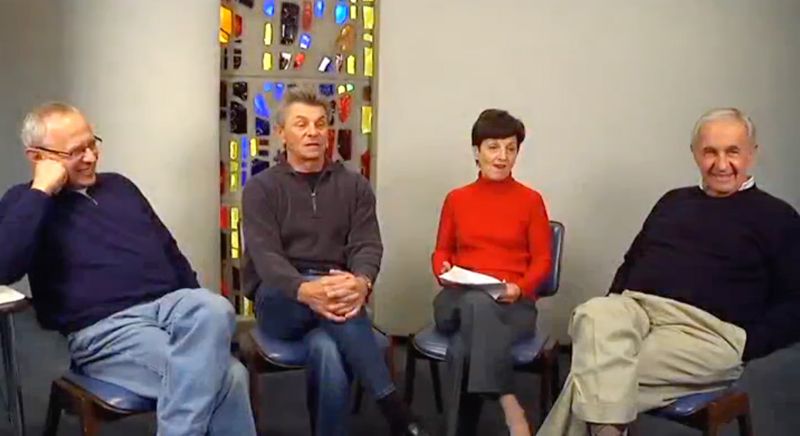
Beth DotanNo, it's perfect. And this is all just gonna flow I'm not gonna be asking too many questions. But what I do need to have you do I'm going to state my name and where we are at the moment and then if each of you could state your, Your names and where you're living today That would be great. So we're here today in Omaha, Nebraska before the Bat Mitzvah the latest family gathering. My name is Beth Selden Dotan and I am the director of the Institute for Holocaust Education and I am with the Erman family. And I don't know if you want to go, which way from age, but I'll let you start wherever you want.
Mike ErmanOkay. I'm Mike Erman I'm, as you just heard, the oldest I was the only one born in Germany, but I came with my parents as an infant to rural, Missouri and I live in Omaha.
Betty Erman Denenburg AdlerI'm Betty Erman Denenburg Adler and I am the first member of my family born in this country. I was born on a farm in Maysville, Missouri I currently live in Palo Alto, California. Although sometimes I still feel that Omaha is my home even though I left here when I went away to college and only came back for the summers and then left permanently
Mike ErmanYou weren't here that much.
Betty Erman Denenburg AdlerYeah, that was in 1959, 50 years ago, and, then when I got married I moved away permanently.
Joe ErmanI'm Joe Erman and I'm the fourth of five born and raised in Omaha lived most of my life here except when I was away at school and little time in the service and I was born On the north side of Omaha, which was now the black ghetto I guess it used to be a Jewish ghetto, but my earliest memories for being in South Omaha, but when we were Young children, I think I was in kindergarten We moved to Dundee area and you know from that point on is most of my memories growing up as a little American boy And I think that's what our parents wanted from us was to be assimilated.
Milt ErmanAssimilated as Americans but very much conscious of our Jewish identity. We should mention our sister Fran who couldn't be here today, who should be sitting in between these two and who was also born on the farm and, uh
Betty Erman Denenburg Adlerdifferent farm, though.
Milt ErmanDifferent farm.
Joe ErmanWasn't she born in the car?
Mike ErmanDifferent one every year.
Joe ErmanWhich one of you was born in the car?
Milton ErmanNo she was born on the kitchen table.
Betty Erman Denenburg AdlerBorn at home. I think I was born at home too, but Fran didn't have the benefit of a doctor.
Milton ErmanYeah. The car, the car couldn't make it up the road, stuck in the mud, right?
Mike ErmanFor anyway didn't get there in time. Dad delivered Fran.
Milton ErmanYeah, and that's why she's always late.
Beth DotanWhat town was that?
Joe ErmanThat was in... Maysville?
Betty Erman Denenburg AdlerThat was Weatherby. Weatherby, Missouri.
Beth DotanAnd, do you have a year, do you remember what year she was born?
Betty Erman Denenburg Adler'43. June 43
Milt ErmanI'm Milt Erman. I'm the youngest I was born In Omaha in 1948. We were already living on the south side on Hoctor Boulevard, then I don't, I have no memories of that we moved to Dundee to 51st Street and grew up there actually lived in that house, I think When I was away the summer before starting college That's when mom and dad moved out of that house to their apartment. So all of my ties and associations with Omaha really relate to that and to Beth El Synagogue that was our religious home which was just a few blocks away. I live now in San Diego. I've been away from Omaha also since I graduated high school and enjoy coming back and still feel strong ties here as well.
Mike ErmanI think, uh, Ruth Siegler who you asked about earlier came here to babysit with us when Milt was born.
Milt ErmanYeah, she's always, she's always given me some credit for well, and that's how she was that's how she was introduced to Walter to her husband so that it was my parents, this was the relatives from different sides of the family and uh got them together but, but still again, this is one of our mother's cousins who with her sister Grew up in a town very close to our mothers and with her family Was initially interned in Holland and in camps in Holland and then, Theresienstadt and Auschwitz and she and her sister survived. Her parents and brother did not.
Betty Erman Denenburg AdlerWell, I was going to say our parents were repaying a debt because Ruth's father introduced our parents to each other so this I guess this kind of thing has gone on for generations and generations. Probably not just in the Jewish community.
Milt ErmanWell, I think also that was part we at some point we want to get back to talking about what we know about their life in Germany and part of what was. There was that they were, our father was from from Gerolstein, which was a larger town. Our mother was-
Mike ErmanLarger than what?
Milt ErmanWell larger than Drove. Gerolstein. Yeah, Gerolstein now, for the people to go to Trader Joe's, That's you know, Gerolsteiner Spudel Wasser this the, the, the sparkling water there is from Gerolstein It's sort of a res- a spa almost but. . . And I was actually looking at distances. It's about 50 miles away from from Drove But they, the Jewish community obviously main ties and maintain ties and-
Mike ErmanIs it that far?
Milt ErmanYeah 80 kilometers.
Beth DotanWhat part of Germany is that?
Mike ErmanSouth of Cologne an area known as the Rhineland.
Milt ErmanAnd the Eifel people know that, also it's really, it's not far from the from the Belgian border that was right near where the the Battle of the, the bulge was fought later, but very scenic and in picturesque and you know as we found out later, I mean they were this is an area where Jews had lived in relative freedom for several hundred years prior to "The Hitler Time" as mom used to always refer to.
Betty Erman Denenburg AdlerOur mother was able to trace her, her family not quite every generation, but there was a relative that she knew of who lived in Drove in 1768 and we have most of the, her name was Sophie Harf, and we have most of the generations in between on some papers that you and I, that we've managed to put together years ago. I'm sure we gave you a copy.
Joe ErmanI have a copy, of the family tree?
Beth DotanCould you, um, tell us about your mom tell her tell us her name, her maiden name and about the town of Drove and what she told you about growing up there?
Betty Erman Denenburg AdlerOkay Drove?
Milt ErmanNo.
Betty Erman Denenburg AdlerDrove by Düren?
Milt ErmanNo, what was her- How would you say what her maiden name was?
Betty Erman Denenburg AdlerDaniel? Frieda Daniel. Frieda Daniel she was
Milt ErmanShe was Gaborna,
Betty Erman Denenburg AdlerGaborna
Milt Ermannow see that was you know Gaborna is nay in German, but mom, mom would say oh, you know, she was Gaborna Shoyer So you're a good boy.
Betty Erman Denenburg AdlerWell, yeah, but her and her mother was a Shoyer which how she was, she was related to this cousin whose maiden name was Ruth Shoyer that we're all still pretty close to.
Mike ErmanShe'll be here today.
Betty Erman Denenburg AdlerYeah, so mom was born in Drove and
Joe ErmanIn 1910.
Betty Erman Denenburg Adlerin 1910 she didn't tell a lot of stories that I know from from when she was very young. She had one brother her father was a house painter and both of her parents had large families. And almost all of them were killed by the Nazis very few got out. Only one cousin who went to England was able to get her parents out all the other aunts and uncles.
Milt ErmanOf that generation I think there were 12 sets of aunts and uncles and one got out and that was-
Joe Ermanwhen you say get out,
Betty Erman Denenburg AdlerThat was the terminology she used.
Joe ErmanShe would never say they died in the camps or were killed by the Nazis it's all she could manage.
Betty Erman Denenburg AdlerThey never got out was how she would say it
Joe Ermanand that was the end of it.
Mike ErmanWell, there was a there was a reluctance to talk about the past for many years and that Dimmed some with time and towards the end of her life. I think she talked more about the past But for most of all of our growing up years very little mention of family history before they left Germany very little mention of their life's experience in Germany. They I think they wanted to put that behind them.
I our dad hated Germany and everything about it. Wouldn't want to buy anything made in Germany
Betty Erman Denenburg AdlerIt's not entirely true because when we got married Gunter Kahn was stationed in Germany and he bought us Rosenthal China, and mom and dad thought that was just the best.
Joe ErmanI had a German car I remember that was your fault.
Betty Erman Denenburg AdlerAnd, and back to mom's childhood when her brother was four years younger so he was born in 1914 and when war broke out the First World War what her father was called to serve in the war and her parents, her mother took the two children and went back to live with her parents in a town near very close called since Sinzenich, so they stayed there during the war and Mom's uncles were also serving and they all sent her postcards, which she kept for many years and there's still-
Joe ErmanDo you have those?
Milt ErmanNo I have them. I have I'm supposed to be cataloging them.
Betty Erman Denenburg AdlerAnd when they came back I guess the Russians had occupied their house and mom said they left the house a mess. You know, I and I'm sure that happened again all over when enemy troops Occupied a village and it really was a village. It was a one-street little town.
Milt ErmanYeah. And we you know, we don't I mean we we know what what I do know is it's interesting because we think of you know early 20th century, but it was It was a when we visit it was a relatively comfortable Town and comfortable living and I mean from what we know, I guess they were what we would call middle class and had a strong Jewish identity and there was there were there was a synagogue in the town a few
Joe ErmanYeah, we probably should say that when was that five years ago? We had a chance to go back as a family. We had never done that and gone to all the most of the places where our parents had lived and we were with some cousins in the places where their parents had lived. And there are all these lives are intertwined and there's a lot of stories that we didn't hear until - We had two first cousins. One of our first cousins and my first cousin was on this trip with us. Were on this trip and both of them had grown up and had left Germany as what teenagers? So they had they had vivid memories of things that came back but they didn't come back until they were there in a certain spot and it was opened their eyes to a lot of things.
Mike ErmanHow old was Ruth when she was sent to, to the camp
Milt ErmanThey were, they were, they, they were in - They had gone to Holland.
Mike ErmanYes.
Milt ErmanAnd I think she was perhaps I don't know ten or ten or eleven perhaps
Betty Erman Denenburg AdlerNot much older than that.
Joe ErmanThey were she was like 15.
Mike ErmanShe's 82 now. So she was born probably in 26 or 7 and so they that would have been,
Milt Erman30-
Mike Ermanthey escaped to Holland probably in 41 or 2
Betty Erman Denenburg Adler39 I think.
Milt ErmanThey I think they were in I think they were in Holland when it was whenever when it was overrun,
Mike ErmanYes, which was when?
Milt Erman30-
Joe Erman38
Betty Erman Denenburg Adlercould have been 39
Joe Ermanit was 39.
Milt ErmanIt was 39. Yeah, so and they again, we're getting off.
Mike ErmanShe was 13 14.
Milt ErmanYeah,
Mike Ermanand her sister also was a couple years older. Was the brother Ernest was he older?
Betty Erman Denenburg AdlerI think he was the oldest
Milt ErmanBut you were saying then Betty, so that mom, so mom was in Sinzenich. Which is was was Ruth's hometown with the Shoyers.
Betty Erman Denenburg AdlerThat's her grandparents were the Shoyers and their son I don't know if if Ruth's parents were, I guess they were probably weren't married yet, she wasn't born til 1926, but I don't know but her father was also away in the army.
Joe ErmanWe're talking about since tradtion this we may these things keep coming back from this trip. You talked about the life in these small towns and I remember Ruth talking about running home from school there was a park in the cemetery. She said every day she would run and she would see the the monseigneur whatever the parish priest was and she would stop running and say good afternoon father and and he would say good good afternoon have you said your Shema today? Have you said you're Shema today and this came from the priest.
So this was an example of how assimilated these-
Betty Erman Denenburg AdlerThey were they were very well accepted.
They've that they had friends in the whole community. Photos that mom had were her school friends and they were not Jewish. There there were two or three Jewish families in the town and Ruth too when we went back her school friends insisted that she stay with them and a group of them got together and they were not Jewish. I don't think any of them.
Mike ErmanAllegedly and Fran mentions this in her email the on Kristallnacht they were ordered to burn the synagogue in Drove and the locals refused so they had to bring in outsiders to do it.
Joe ErmanThe priest I thought.
Milt ErmanThere were other things too like mom mentioned I think when she got engaged that one of the traditions was I think they went from house to house and
Betty Erman Denenburg Adlerwell they would decorate the doorway of the bride with flowers was the tradition in the town and she said they still did it for her in 1937 when they were engaged and this was already after the there were the Nuremberg laws, and a lot of Antisemitism.
Milt ErmanAnd they and there was then some you know some I guess the the girls who participated got visits from from the Nazis but the notion was that it was that It was the sense of this having been sort of the outsiders that were pushing this on the locals.
Mike ErmanYou know you mentioned the Nuremberg laws. I, I never remember any mention of mom's dad being unable to get work as a house painter and in the bigger cities it was forbidden to do business with Jews.
Beth DotanLet's talk about your mother's parents a little bit.
Mike ErmanWe don't know much.
Betty Erman Denenburg AdlerHer father was a house painter. Yes name his name was Alex- Alexander Daniel. I don't think they had middle names. Alexander Daniel and Her father was, and her mother was Clara Shoyer Daniel
Milt ErmanAnd he also he was a house painter, but they also think he also had little paint shop sold, you know, so made also his brushes mixed mixed paints and things so and in a small town, I doubt that was it was another house painter.
Mike ErmanIt was in like a barn adjoining the house, 'cause we saw it. Yeah, it wasn't no longer a paint shop, but but it was in the house
Joe ErmanWe really don't- see yeah again they didn't talk about those things and we almost had to pry things out of them. Yeah, and it was only later on when they would even do that.
Milt Ermanand I think it was it was very painful I think for her to talk it was I mean, maybe we should say a little bit about the fact that they were there and my parents were able to get out and people don't appreciate I guess as well that It wasn't a simple matter of choosing to leave you had to have your exit visa you had to have sponsors. You had to be able to to have a country that was willing to take you.
Mike ErmanThe sponsors were only required to get in someplace getting out of Germany was not they were glad to be rid of them.
Milt ErmanYeah, so that so that if my memory of the stories is right, I think that mom and dad's departure was delayed a bit because of Mike's arrival and having to get his paperwork all in order. They were able to get him over partly through relationships with our Missouri ties with dad's our father's first cousin Morris Hertz who had come over earlier from the same area and was living also in rural Missouri
Beth DotanLet me, we'll come back to this point but tell us why don't we start now with your father and tell us his name and the town he was in a little bit about his family.
Mike ErmanWell his name was Morris Erman originally was Moritz. M O R I T Z he Americanized it or thought he had to Morris and the family name was spelled with two Ns. E R M A N N when he immigrated he dropped an N and of course there were no records. It was whatever you put down. So that's- Actually, he changed it when he became a citizen. They asked him to write his name and he wrote Morris Erman but during the war he was known as Moritz and I think they still spelled it with two Ns and interestingly we were the last to leave of my father's seven siblings, eight children. My mother's side were not as lucky. So most of the people on dad's side survived the war. Scattered a bit.
He was born June of 1905.
Beth DotanIn what town?
Mike ErmanIn Gerolstein.
Betty Erman Denenburg AdlerThe family also had lived in Oberkail.
Mike ErmanYes. Oh he may have been born in Oberkail.
Which is probably walking distance, you know, you're talking three or four kilometers between these towns or five.
Joe ErmanYou know getting back to dad and his side of family where all got out basically "got out" the term they use, they're still very reluctant to talk about the old days.
Our father was a cattle dealer. His father was a cattle, you know, probably for generations they were cattle dealers, which means he had traveled a lot. When he was young and I don't think that's something people did he traveled in business. He went and bought and sold cattle and I think back in those days he also spread the news so to speak. There was it was a way where families could keep in contact because they knew he was going someplace. They say tell this to my cousin or whatever
Milt ErmanBut here I think there was a there was a movie I think that you had seen. I never saw it. It was in
Betty Erman Denenburg Adlerthis Jewish film festival about ten years ago had a movie called Vieh Yuda V I E H which I guess means cattle Yuda and it told a story very similar to our father's about a young man just before the Second World War who traveled around the country buying and selling cattle and you know how he got caught up in in in the early days of the war. Which now a couple of things that I wanted to mention mom and dad and mom once told me that they almost went to South America Dad had a cousin in Paraguay and they were almost ready to leave for South America when their papers came through for the United States. And then another thing dad was when the eighth child was born to the family the last one the mother died in childbirth or shortly after
Mike Erman1915
Betty Erman Denenburg AdlerIn 1915 and then their father had to go to serve in the German army. So the children were all sent to various relatives. The family was split up at that time and our dad went to live with this cousin Morris Hertz and his family. Which was the cousin in Missouri that he was so close to and that we remain so close to over the years.
Milt ErmanBut I was going to say also about the the notion of Jews in that area as as cattle dealers cattle buyers. It was a it was a Jewish tradition. It was a Jewish profession. Didn't involve owning land which had been forbidden certainly earlier and and it was also I think served as Joe was saying a way of sort of spreading spreading news and making matches and almost a little bit of a sort of the kind of the traveling salesman. But there were pictures of that our dad had of when he was after his father had passed away, I guess and he was responsible for helping to take care of the family with his motorcycle, which is how he got around from from town to town and I once remember kidding him about it that I should be able to have one and he told me no that you know, this was that was for business then it was for transportation. That was the only way that he could get around but . . .
Mike ErmanYou mentioned the movie Vieh Yuda the profession was called Vieh Adler.
Betty Erman Denenburg AdlerYeah.
Mike ErmanCattle dealer.
Beth DotanAnd and were they specifically Jewish cattle dealers, and and was this going for- ?
Mike ErmanI don't think we know I
Betty Erman Denenburg AdlerI doubt that it was just Jews, but there were a lot of Jews.
Mike ErmanIt wasn't unusual. They were if a farmer had a cow that wouldn't give milk or wouldn't give enough, it was time to to get rid of the cows send it to the slaughterhouse or wherever and and these people performed that function. They buy one from this guy one from that guy and assemble enough to go sell them to a slaughterhouse or or whatever and that's how they made their living.
Beth DotanWere they secular Jews or were they religious in any respect?
Mike ErmanNo, they were religious Jews. They lived . . . They they were secular. . .
Milt ErmanThey were religious in in German rural terms in the sense they were kosher they kept Shabbos. They did not have Payes or beards or wear a kippuh. They were, they would be, I they would, I they would just as, probably as much as the maybe not as much as the Jews say in Berlin, they wouldn't have identified themselves as Germans of the Mosaic Persuasion, but they were very very much German in their history, you know, they the history the history of the family in Germany, you know goes went back several hundred years We've been our family has been in this country, you know for 70 years now. So
Mike ErmanThey wore a Kippuh at dinner.
Milt ErmanYeah.
Mike ErmanAnd he said Shacharit and read Tefillin every morning and [?] every night
Milt ErmanWore [?] where you know wore the, yeah the end wore the tzitzit
Mike ErmanHe had them.
I don't maybe I don't remember.
Milt ErmanOkay. I remember you had-
Beth DotanDid he keep these traditions throughout his life?
Betty Erman Denenburg AdlerAbsolutely.
Milt ErmanYeah.
Mike ErmanI'm sorry
Beth DotanHe kept these traditions throughout his lifetime?
Mike ErmanOh sure. Yeah.
Milt ErmanBut when when my wife who was then I guess my girlfriend, fiance when she first visited Omaha, they were living in the apartment. I remember she woke up early and went out and was sort of startled she came, you know, came into my, and asked me later I walked out your your dad had these things on he was laying Tefillin and she had never seen it so he played Tefillin every morning.
Mike ErmanWe said [unclear] after meals and we'd have our [unclear],
Joe ErmanWe walked to the synagogue on the weekends. One of the reasons what moved to 51st Street was the proximity to Beth El.
Mike ErmanWhen we lived in South Omaha, interestingly, we drove to Beth El that we drove on Shabbos, but on the High Holidays, we walked to the south Omaha schul. My dad wouldn't ride on the high holidays.
Milt ErmanWe should mention also something we wouldn't what part of the my understanding a large part of the reason for wanting to, to move to Omaha was to have you know, Mike was getting to be an age where he should be in in Talmad Toruh, in Hebrew school and being part of a Jewish community where the kids could grow up and and have a Jewish education.
Mike ErmanI don't really know how we chose Omaha over other places he obviously because there was a stockyards.
Betty Erman Denenburg AdlerI think
Mike ErmanUncle Bernard and Aunt Molly were here was the only reason I could say to choose Omaha over say Kansas City or St. Joe. St. Joe was maybe too small for the Jewish life dad wanted, but then at that time I think there were three synagogues there.
Joe ErmanAnd he got some kind of relationship with Dave Rosenstock.
Mike ErmanI don't know. I don't think til he got here.
Joe ErmanI thought maybe there was something he'd done some business-
Milt ErmanSo we should say that that that dad had been a cattle dealer in Germany when He came to the States, they moved to very rural Missouri, which we've already alluded to and he was a tenant farmer. And-
Joe ErmanMm-hmm. And couldn't afford a tractor plowed with a mule or horse or something
Milt ErmanYeah, and actually you should make you I think you have still have that that ledger book of his don't you?
Mike ErmanSure
Milt ErmanIt's here?
Betty Erman Denenburg AdlerOn the table over there.
Milt ErmanReally? I mean to me that's when you talk about a legacy that the sort of legacy that we grew up with that sort of exemplifies it because it's you know it. And it's it's it's in English, isn't it?
Mike ErmanM-hmm. It's mostly.
Milt ErmanWell, I know but it's like, you know sold sold one when you know one, you know chicken, you know bought one dozen eggs. It was his ledger book from you know, really what they were able to build starting with nothing and and then moving from one farm to another and my recollection the story I didn't live it so this is all what I remember being told was, you know going from a farmhouse with a pump outside to the next one with a pump in the kitchen, which was a big step up.
Mike ErmanStill in that house.
Milt ErmanStill in that house.
Mike ErmanAnd no, no, no hot and cold running water or no running water at all.
Milt ErmanWhich when you you think about I mean, they actually had a fairly comfortable life in Germany. Mike was born in a you know in a maternity hospital. They had a nice house with electricity and you know all the modern conveniences.
Mike ErmanNo, we didn't have that here. When we moved to Omaha in 1945, in I think April of '45. We we went to the rented downstairs of a house the second floor was occupied by somebody else North 21st Street and that was the first time I had lived in a house with central heat, running water, electricity or a telephone. On the farm we had an outhouse I was Milt said we had the last farm had a pump in the kitchen so that was a form of running water you could you could pump water in the kitchen and fill a, and heat it on a coal or wood fired stove and and put it in a horse tank to take a bath, but that was as near as we got to modern conveniences in those years.
Betty Erman Denenburg AdlerI remember mom saying that they didn't have very much. I remember her saying she and Aunt Molly who was my dad's sister could take a can of salmon and stretch it to make a dinner for seven people, but I think they have nice neighbors there. They liked their neighbors. Their neighbors were were good to them and they another thing that for Fran and I my sister and I had dresses that one of the neighbors made out of feed sacks.
Mike ErmanWell the chicken feed came in printed cloth sacks for that purpose. That the farmer's wives could make clothing out of it.
Betty Erman Denenburg AdlerCan we just go back to Germany for a few minutes because our parents didn't have much of an education. Dad had to quit school when he was 10 when the family was divided up and Mom had the equivalent of a high school education. She had some business school
Milt ErmanYeah, didn't she go to like a technical
Betty Erman Denenburg Adlershe went to kind of a business secretarial school so she could work for a company doing bookkeeping I believe but dad at you think age 10 that's all the schooling he had but he read newspapers and he could do all kinds of figures in his head. And I was always amazed at you know, I would think about what could they have done with their lives if they had had the kind of educations we had.
Joe ErmanDad could have been the world's finest Scrabble player.
Betty Erman Denenburg AdlerThat's true.
Joe ErmanI remember two things that He told me about Germany and I don't know why these are so vivid. The first one was after World War One his father and he were out buying cattle and was during the time when there was this huge inflation day to day and y'all saw the over stamp over stamps and in in in bills it had been crash-printed a dollar would became a hundred thousand or million or whatever. He said that he and his father had bought some cattle and put them on a railroad car and by the time the cattle got delivered one of them had died and they sold the hide off the dead animal and it was enough to cover the check for the entire railroad car of cattle. That's how fast the inflation was and he said his father turned him said this is it. We're done until this stops because he was afraid of when it turned around the other way. And the second thing I remember asking fath- dad why they left Germany what made him leave? And his answer to me was when my friends would cross the street. When I was walking down the street, so they wouldn't have to talk to me. I knew it was time to go. But other than that-
Milt ErmanAnd I think actually I think it was both there were two aspects that the one was the hurt but the one was the reality was that they were Forced to do this to sort of save themselves and that there was no future.
Beth DotanLet's talk- Let's go back a little bit father when your parents met, and their lives together. They didn't have much time in Germany together, I understand, but if you could tell us about that.
Betty Erman Denenburg AdlerWe don't this we know very much about that.
Mike ErmanrWe don't know much about that.
Betty Erman Denenburg AdlerThey had as a very small wedding I think they had a civil wedding and I'm not sure what they had in the way of religious that they had I guess they had a small party and they went to Belgium I believe for a few days for a honeymoon
Beth DotanHow did they meet?
Betty Erman Denenburg AdlerWell Ruth Siegler's father Jakob Scheuer knew dad from his travels around the country buying and selling cattle. Was her dad a cattle buyer?
Milt ErmanYeah, I think her dad, was a, was a, had a little slaughterhouse.
Betty Erman Denenburg AdlerYeah.
Milt ErmanAlso fed fed cattle
Mike ErmanA lot of these people were [unclear].
Betty Erman Denenburg AdlerSo he said I have a niece and he introduced them.
Joe ErmanWell, dad was fairly old by then for a single man in Germany at those times.
Beth DotanHow old was he?
Joe Erman and allHe was he was 30, when they were married- 37?
Betty Erman Denenburg AdlerHe was 32 and mom was 30, 27. Yeah, when she got married.
Joe ErmanSo I think for those times he was an old man already.
Milt ErmanAnd this was also again, right as, again this was in in the Hitler time already and actually I don't know if mom mom at one, had, was work, worked for a while until she wouldn't be have been allowed to have worked but but again, we don't really have a full appreciation for what the impact was on them. Already the the Nazis had come into power already in 33 and there was increasing Restriction and so this had already would have been affecting them already for several years in their personal lives.
Mike ErmanIt was stage by stage and little by little more and more restriction more and more - kids couldn't go to public school eventually discouraged at least heavily discouraged to go into a store owned by a Jewish merchant or do any business with a Jew.
Beth DotanWhat year did they get married?
Mike Erman'37.
Betty Erman Denenburg AdlerOur father's father our grandfather had remarried after the war he remarried a distant cousin whose last name was also Erman, Babette Erman and when they came to this country, well then his father died in 1936, before the war so when mom and dad came to this country they were dad was the last of his siblings and they brought his stepmother with them and Brought her to Omaha where she lived with us for a little while and then I think in-
Joe Erman'55?
Betty Erman Denenburg AdlerNo, she died in 1951. [All speaking]
Mike ErmanShe lived with us all through the war in Missouri and then came here with us. She's buried at Beth El cemetery.
Beth DotanWhat is her name?
Mike ErmanBabette Erman and I think she went to the share home in 48, which I'm guessing not certain of this is how the Torah wound up there.
Betty Erman Denenburg AdlerYes, I think so.
Milt ErmanWell, actually I want to go back to one other thing which is that we had started to allude to before which was the difficulty of getting out and the fact that when we talk about how difficult this was for our mother in terms of her parents that they had begun the arrangement process and actually I think had the papers to to get her parents out and then the war broke out and they were they were stranded.
Mike ErmanSome irregularity with the papers caused a delay and and they were they were eventually arrested and sent to Auschwitz.
Betty Erman Denenburg AdlerI don't think they went to Auschwitz. It was Biesiadka[?] or some different camp
Milt Ermanin Poland.
Betty Erman Denenburg AdlerYeah in Poland and mom's brother our uncle Ernest was a young man and he tried to escape well, actually he and his father were arrested on Kristallnacht and sent to Dachau and kept there for a month or less at that time. They weren't interning Jews. They were arrested I suppose as and whatever they called them political prisoners, but they they released them then Uncle Ernest tried to escape by going over the border into Holland and he did that twice he was arrested and sent back to Germany and the third time he succeeded and wound up coming to the United States and served in the army behind the lines in Germany
Milt ErmanSo back I guess to to the Torah what we know of it so, you know, well it is a it's a tie for us to Drove in particular to our to our family and I guess to the realization and I you know, I One of you may have had a formal discussion with Dad about this. I don't know but in terms of the decision to to bring the Torah. I guess it was really a statement of the realization that there wasn't a future for Jewish life-
Mike ErmanThere were no Jews left in the town except mom's parents and they had plans to follow us here.
Joe ErmanThere were no Jews left?
Mike ErmanI don't think so. [Everyone talking.]
Joe ErmanI had always wondered how they made the decision that they should take the Torah.
Betty Erman Denenburg AdlerI think at that point they saw the writing on the wall. They knew that that times were getting worse and worse and they said they wanted to save the Torah. And I don't know if there was another one that anybody else brought but they said we want you to take the Torah with you.
Joe ErmanWhich of course would have been burned in Kristallnacht. But at that time I remember them telling stories that they couldn't take anything really they nothing of value could be taken a household goods and and a little farm equipment they couldn't take any money they couldn't take jewelry and father, dad smuggled what a dozen [Leica] cameras that he sold when he got here.
Mike Erman10. Whatever doesn't matter. Sold them in New York for us [all] to get here and and we didn't come through Ellis Island by the way we you couldn't take money out, but you if you had enough money you could you could buy passage wasn't first-class passage, but we had passage on a steamer and crated up our household possessions their household possessions and shipped those and so we we came as Immigrants with an immigrant visa because we had a sponsor you had to have a sponsor to get into the U.S. It was difficult.
Betty Erman Denenburg AdlerMom once told me you were processed in Rotterdam.
Mike ErmanBefore [landing] yeah.
Joe ErmanBut I remember we had lovely down pillows and comforters that they had brought that the things they brought and I also remember upstairs. We lived on 51st Street in our attic. It seemed to me. There was like an old [?] that was brass with their house, household goods.
Milt ErmanIt was an oil lamp.
Betty Erman Denenburg AdlerI have the Shabbos one.
Joe ErmanYou have it? That was from their home?
Betty Erman Denenburg AdlerIt was from it was I believe dad's grandparents.
Joe ErmanBut those are the things that I remember that they they had and the things that they would never get rid of. Of course.
Betty Erman Denenburg AdlerThere were some prayer books. Milt has those. I have one or two.
Milt ErmanI have some of those. But the other thing that that came with them again, this is you know, you talk about being assimilated which is very much the hope, or the wish, the desire but there was also Something I think we realized more when we visited Germany. I realized it when I had been there individually that also there as a family was how much of our identity our cultural identity was also this German Jewish that when we talk about you know, you talked with Ruth our cousin who survived what what was Shabbos you'd you know, you'd go to you'd go to visit you'd go to they would be come to the next town and and visit and this was you know on Shabbos our parents. Friends would come over, you know all of these these cultural traditions the food that the cakes that we ate all this was was very much
Betty Erman Denenburg AdlerWell, I don't think-
Milt ErmanGerman heritage
Betty Erman Denenburg AdlerI don't think there were enough Jews to make a minyan a Jewish men to make a minyan in Drove, but these little towns were so close together five kilometers and that's three miles people would walk from one town to the other to go to services and the school.
Milt ErmanAnd then and I think from where Ruth says they would they might they would spend Friday night and so it was partly it was it was religious. It was social and it was a way for the families and these but there were a lot of these people were related through marriage, cousins and so it was it was a community.
Beth DotanWhat are those foods that you remember from your parents household that they brought with them?
Betty Erman Denenburg AdlerWe didn't have what are considered traditional Jewish foods. Those are Eastern European foods. But we had one of the things that on Passover not gefilte fish, but a pickled kind of a whole fish that was It wasn't pickled, it was sweet and sour with an aspic.
Milt ErmanYeah but also I mean the you know the you know, we I never tasted gefilte fish til we if I went away to summer camp and we would, you know, we grew up kosher and but but it was so with kosher cuts of meat. So things like you know stuff veal brisket these things.
Betty Erman Denenburg AdlerThat was a treat.
Milt ErmanThat was a treat and
Mike Ermanpotato shallot
Milt Ermanpotato shallot
Mike ErmanMade in a cast iron skillet
Betty Erman Denenburg AdlerAnd matzo balls that were different from what most people know as matzo balls. Joe's wife Ruth makes them today. [All talking] Oh you do too?
Beth DotanWhat's different about the matzo balls?
Milt ErmanThey're made with matzo,
Betty Erman Denenburg Adleryou crumble the matzo and soak it in water and combine it with eggs.
Milt ErmanThey're very dense but actually I I make their house they're not and people the people actually Seder the people prefer prefer because I make both I'll make ones from matzo. No, but the other thing would be things like other other
Betty Erman Denenburg AdlerWhich do they prefer?
Milt ErmanThey prefer moms?
Mike ErmanOver the coffee ones?
Milt ErmanYeah.
Mike ErmanReally?
Milt ErmanYeah. But the other things for example, you know, German typical German so dumpling so for Pesach we would have matzo kleis which were which were which were like
Joe Ermana big matzo ball
Milt Ermana big matzah ball is a starch with
Joe ErmanWould uh- would assemble over here-
Milt Ermanfruit, fruit compote
Betty Erman Denenburg AdlerWe also Dad we kept all the holidays when I until til we went to high school at least I did and I'm sure you did Mike we stayed home from school and went to services on every Yom Tov first two in the last two days of Pesach and Shavuot and Sukkot, you know as well as going to services on Shabbat but and and dad Didn't go to work on the Yom Tov, but I think sometimes he went to work later in the day, didn't he?
Joe ErmanOn Shabbos.
Betty Erman Denenburg AdlerNot on Shabbos. Never on Shabbat.
Mike ErmanRosh Hashanah and Yom Kippur. In fact, we had it when we were close
Milt Ermanyou want to explain explain what was closed we should explain dad dad was a cattle buyer that was it in Germany and it was it was a skilled profession and he was very, you know, you talk about somebody being a good judge of horse flesh. You hear this in relation to people buying horses I guess dad was a good judge of of cattle flesh and he was actually a judge in the Nebraska. . .
Mike ErmanHe used to judge a livestock show in Cuming County, but he was a he was a cattle buyer a commission based cattle in the stockyards
Betty Erman Denenburg AdlerThat meant sometimes buying cattle and feeding them.
Mike ErmanWell that was a side business but in sometime in the 40s he got involved with a brother and the brother had a partner in in New York who wanted to or were in the Somehow in the wholesale meat trade and they opened a kosher slaughterhouse in Newark, New Jersey, which my, our dad had an interest in and they ran the business there and he bought the cattle here and shipped them to live cattle there to be slaughtered kosher in in New Jersey, but the business eventually failed and so he became an order buyer again which was a commission buyer that bought for out-of-town packing plants at the Omaha stockyards and he did that until '59 when there was a small packing plant that had been built by a group of investors in Omaha that was open just a few months and failed and the Bank and the stockyards had a loan on that and they approached him to take it over. He had no real background in the slaughtering end of the business. I had just gotten out of the service and without going into too many details we wound up taking this over and starting from scratch in the in the meat packing business. It was a very very small company then and it it grew over time, but getting back to what I said earlier about closing on the holidays many years later, we were - not so many years - some years later, we were unionized and when you go to dad negotiated into our contract an exchange of Rash Hashanah and Yom Kipper for Veterans Day and Something else has paid holidays. So I I suspect there weren't many union contracts like that in this country.
Beth DotanWhat was it like for you as children of and we're gonna get back to the Torah story because that's very important but as children of German immigrants in a town where most people were Eastern European?
Joe ErmanI don't think it affected us one way or the other and I'm trying to remember back then. Again, they wanted us they I think they viewed us as Americans particularly the kids as Americans they wanted us to grow up as Americans and and I'm trying to think back then if we had any friends that were I know a lot of my friends had Russian backgrounds. But it never was an issue with anybody.
Milt ErmanYeah, but there were some there were some friends, you know, the Mayers for example, were German friends and we knew their kids, but we we didn't feel that identity. I think in the sense of our relationships. We were-
Mike ErmanI did.
Betty Erman Denenburg AdlerI have to say-
Milt ErmanYou did?
Joe ErmanYou did? You were born there though.
Mike ErmanI felt different. I wouldn't say-
Betty Erman Denenburg Adlerwould you say-
Mike Ermanbut I felt different because we were German Jews and all the people we knew when we arrived at a place where we had a lot of Jews around us were Jews from Eastern Europe and their traditions and observances and things were somewhat different and their ancestors and their parents and grandparents had spoken Yiddish, which we didn't the foods as many said were different. So I think for me there was a period where you wanted to suppress that. You wanted to be assimilated, but of course then later you treasured it.
Betty Erman Denenburg AdlerI think I mostly felt different because our parents were immigrants not that they were different from the different part of Europe,
Mike Ermanespecially in south Omaha,
Betty Erman Denenburg AdlerWell yeah, but we didn't know any Jews there or very few-
Mike ErmanThere weren't very many.
Betty Erman Denenburg AdlerAnd I and I do think that they would have been happier if we had married someone from the German Jewish family. I don't know if you felt that Mike.
Joe ErmanI didn't. They were happy I married a Jewish girl.
Betty Erman Denenburg AdlerAt that point
Joe ErmanI didn't think- again talking about these things even the fact that to think that our parents were survivors is going back and thinking as a kid It wasn't so much that they were survivors, but more that they were German immigrants as you said that made us different.
Mike ErmanYou know, they spoke with a fairly pronounced accent.
Joe Ermanand I remember my friends making fun of that so to speak
Betty Erman Denenburg AdlerI certainly couldn't appreciate any of that til much later.
I felt, you know, it was disadvantaged and was embarrassing to be the child of immigrants and have parents who didn't didn't understand a lot of what was going on. Who didn't understand me at all.
Beth DotanDid you speak German at home?
Joe ErmanNo, no German when they didn't want us to know what they were talking about.
Milt ErmanAnd when they were playing cards with friends, but there were a few things that were referred to the silverware, you know Bisteka. Yeah, but and dinner was ready, you know, de soup is angericht.
Betty Erman Denenburg AdlerI think some of it was that we didn't want to speak German, but also they probably wanted us to be Americans and in retrospect, it's too bad.
We could have learned German easily.
Milt ErmanYeah I think it would have been I think we at some I think most of us have some facility for languages. Maybe it came from hearing hearing German spoken more but but I think that yeah, we I think we all wish that we had had more opportunity to hear German spoken and learn it.
Betty Erman Denenburg AdlerWhen Milt and Joe were very young I don't think Mike was around as much I don't know if you were in high school or working that mom would speak German sometimes to Fran and me to tell us something that she didn't want the boys to understand.
Mike ErmanI don't remember any of that. We mentioned earlier this grandmother who was our dad's step mother. She never spoke a word of English her entire life. So I'm sure as a as a small boy, I spoke more German than I remember now.
Joe ErmanI wish I'd learned German, but
Milt ErmanI think we all wish we'd learned German.
Joe ErmanAnd and my friends are so amazed that we don't like my Jewish friends and came from Jewish backgrounds going up here are so amazed that we don't speak Yiddish or that there's no Yiddish spoken in our home.
Mike ErmanBut you understand because it's really German.
Joe ErmanWell, but . . .
Milt ErmanA lot of it my father-in-law would Yiddish would have to when he would tell a joke then would have to he was always sort of upset that he had to translate the punchline to have me really understand what the point of the joke was because I spoke no Yiddish.
Joe ErmanWell, German Jews, I think looked down on people that spoke Yiddish, didn't they?
Milt ErmanYeah, and there actually is a whole this whole notion of the German you should certainly see this in the East. This whole notion of the [yekas], you know being fancier.
Mike ErmanWe didn't We were probably surprised to learn that people had that impression that they thought the German Jews were uppity because we certainly have never had that experience growing up.
Milt ErmanYeah, although it was again when you talk with, well, you talk it was a very it was a very different backgrounds I remember, you know mom it was what life was like I guess in Germany and you know in the early part of the 20th century. I mean mom, you know had to get a card game flashcards whatever with opera. I mean that was just part of the the culture even in a small town in Germany. But it was there was none of this notion of being that the fancy the fancy notion of being and some from an elevated background that I think was more associated with Berlin or Vienna.
Beth DotanLet's talk about the story of the Torah and the ramifications of what happened in Europe at that time how they were able to get it out. If you can give me as many details as you can.
Mike ErmanI don't think we know any details. I It's all assumption. You know, I assume The Torah came as part of our household possessions and it was with us obviously all during the war in Missouri and and in the early years in Omaha. I'm guessing as I said earlier that it went to the share home either when it was built or when our grandmother went there.
Joe ErmanDo you know when I was built?
Mike ErmanLate 40s after the war? I don't know. She was one of the early residents
Betty Erman Denenburg AdlerDo you all right something just triggered in my mind that maybe the Torah was used in the synagogue in St. Joe. Do you know,
Mike ErmanI don't know.
Betty Erman Denenburg Adlerif they had it there for a while?
Milt ErmanYou know what? I I was just thinking about that because I don't know it just seems to me that both from the perspective of respect for the Torah and also the notion that it it should be used. I doubt that it dad would have had it sitting sort of in a room on the farm. It would have it he would have wanted it kept in a proper place so
Joe ErmanI wonder is that where they went to services in St. Joe
Mike ErmanWe went to St Joe every Friday dad and I my mem-, I don't know how old I was when I started going with him, but I remember going with him and and we stayed with the Hertz's.
Joe ErmanHow far was it?
Mike Erman40 miles 30-40 miles and we went on Friday before Shabbos and we went back probably I don't I can't say for sure but I'm guessing we went back before aftal[?] all I don't think we stayed until I could
Milt ErmanNot mom?
Mike ErmanYeah, just just dad and I usually and and I remember there was a kosher restaurant in St. Joe Magoons deli where we went for lunch after services. Now imagine that. Anyway as relates to the Torah, I don't know an answer.
Beth DotanI guess I guess the questions that I have are tell us again. Tell me again what town this Torah was in-
Mike ErmanDrove and there was a little synagogue there kind of a shtiebel and it was from pictures it was just like a house. Oh wait was it still standing?
Betty Erman Denenburg Adler[All speaking] No there was a plaque. That was Kaisersesch.
Mike ErmanBut I'm assuming the people from the neighboring towns came I don't think the community was large enough to support-
Milt ErmanThere was not a rabbi. It was sort of a lay leader, I guess
Betty Erman Denenburg AdlerI think I can't remember his first name the Kauf-Mr.
Milt ErmanKauffman.
Betty Erman Denenburg AdlerYeah, he was kind of the cantor for the synagogue and maybe the lay leader of the community.
Joe ErmanWe were there - when our trip what was that five years ago - and I just respected the little town because they left the they left the site where the synagogue was standing? Was nothing was ever rebuilt on that site and there's a plaque there. Is there an outline of where the building was or something?
Milt ErmanYes.
Mike ErmanYeah.
Betty Erman Denenburg AdlerYes. Some of it may be a parking lot now.
Joe ErmanAnd people came out of the like people just start showing up they heard we were there people would start showing up, 'I knew your mother' 'I knew your grandfather' and it was so eerie that this would happen these people would just like come out of the woodwork.
Betty Erman Denenburg AdlerWhen mom went back the first time it was after dad had died and she went with these cousins Morris and Ruth Hertz from St. Joe and they went to Drove and she was standing on a street corner and a woman came up to her and said Daniels Frieda Daniels and she hadn't she had left at the age of 28 and had never been back She was really amazed that someone would recognize her on the street like that.
Mike ErmanThis would have been sometime in the early 70s and and they left in 38
Milt ErmanSue and I actually Were I was we were in Europe and in Germany. I stopped in Drove this would have been 1970 after dad died tonight, and I didn't know my German wasn't very good to say the least but I wanted to see the town and we stopped and I just stopped someone and said, you know meine mutter Frieda Daniel and there was a fellow I think Peter Feats who had been a friend of hers and they recognized the name and we were we went to he had us in his house. And again communication wasn't very good. And talking he had he didn't he had lost I think a finger in a farm accident. He hadn't been in the war, but you know, it was all you know, it's easy to be sincere post hoc. But it seemed very sincere regrets for what had happened and fond memories for for her going back those years. So the Torah again was from from Drove from my mother's town and brought over and used I guess now I guess fairly regularly at-
Mike ErmanThe Bumkin home. It's in regular use now, I don't know I don't know if it's used every week or how they rotate the Torahs there two or three Torahs there. This is not the only one.
Milt Ermanand this one we had actually a few years ago It needed to be-
Betty Erman Denenburg AdlerStacey was the impetus for that.
Mike ErmanYes. Stacey organized that organized with others a grace of funds to bring a a Sofer and restore all the local Torahs at all the synagogues that needed it and this was one of them that got restored. In fact, I they wanted the Cantor had asked Lori to have me bring the Torah a few weeks ago because currently it's smaller script and slightly different and they wanted the girls to read from that Torah so they wouldn't be suddenly have something different sprung on them and knowing it's in regular use. I left it until the day after Simchat Torah because I assumed they have some kind of parade of the Torahs and I didn't want to take one.
Milt ErmanI thought you were assuming that with Simchat Torah they would have rolled it all the way back to the start of Breisheet and knowing that their their Parsha was going to be Noah, which is the second chapter would be rolled properly, too.
Mke ErmanWell actually, Ken and I did that when I brought it here.
Milt ErmanIt may have not been read at Sinchat Torah.
Betty Erman Denenburg AdlerIt it was very emotional the first time it was used for Oliver's bar mitzvah when the rabbi called all of us on up to the Bimah and talked about the Torah and the idea that all of these people perished but Judaism was to be wiped out and here is this Torah which was rescued from the Holocaust and here is another generation now reading from this Torah. I mean it's emotional for me even now.
Mike ErmanNow at that time we the rabbi dedicated that the breastplate that's on the Torah that we had commissioned. There was no breastplate on it on which is engraved something of the story.
Joe ErmanShould we get it out? Did you plan on us getting it out?
Mike Erman[Talking while the Torah is brought over.] We think it's the original cover and we had it restored. I think Stacey organized that and it's interesting because they're new Jonathan brought those from Israel Wednesday of this week.
Milt ErmanBut the-
Joe ErmanRead what's on the breastplate.
Milt ErmanIt's it well before we do that let's just talk about the Torah cover because this is kind of original and I mean it's sort of traditional. It says Kedar Torah Torah the Torah is a crown and then it's got the Ten Commandments. But it's actually a lot of times when you see the Ten Commandments the first letter whatever this actually has the whole first word engraved on there and I'm and I don't you know I don't know what the what the symbolism is this may this may be a mezuzah but I'm not sure. Betty do you have any idea what that is?
Betty Erman Denenburg AdlerI would think that it's a jug of water.
Milt ErmanOh jug of water for washing. Yeah, yeah, that's that's Kedar, Kedar Torah. That was always a crown I don't know. Is that you can't say I'm not sure. It could just be decoration. But then-
Beth DotanWhy don't you read the breastplate?
Mike ErmanRead it? Sure.
Joe ErmanDo you have your glasses?
Mike ErmanNo, I don't need glasses what I need less glare. In 1938 two weeks before Kristallnacht this Torah was brought to America by Frieda and Morris Erman. It was rescued from the synagogue in Drove Germany one of many small but vibrant Jewish communities in the Rhineland. The remaining Jews excuse me unable to escape perished. Among them were Clara and Alexander Daniel Frieda Erman's parents. No, Jews live in Drove or the region today.
Joe ErmanThat's it.
Betty Erman Denenburg AdlerIt's pretty sad statement. No Jews there today,
Milt ErmanBut it's also as you were saying Betty. It's also a statement of Jewish survival we have a Holocaust Torah in our synagogue in in San Diego that was rescued from from the museum. You know if it's supposed to have lost cultures, but this is really a living a living Torah.
Mike ErmanI don't know if it's accurate. I something in me says we were told that there were 600 communities in the region with a Jewish presence
Betty Erman Denenburg AdlerToday?
Mike ErmanNo before the war.
Betty Erman Denenburg AdlerOh, yeah.
Mike ErmanAnd none today.
Joe ErmanWhere do you think the six hundred something you remember this was said
Milt Ermanfrom it from our trip
Joe Ermanfrom our trip or yeah I think there were virtually every one of those towns had Jewish.
Mike ErmanOh sure. We this little area where we were five years ago. These communities three, five, twenty kilometers apart all had everyone had a Jewish presence and we all had family or cousins. There's something in all of them.
Betty Erman Denenburg AdlerAnd we drove through [Kommer] and Ruth said you want to stop here? This is where Emmy and Gerda were from. You know all their cousins. They were all in these little towns as you said all all over that area.
Beth DotanCan I ask you if if this would be comfortable if we pass the Torah to each one of you, but before you do Mike if you could say what what it means for you as part of this family and to hold this amazing piece that's our-
Mike ErmanWell you know I think we've pretty much covered that but somebody asked me shen I took it from the home how old it is and I said, I don't know I know it landed in New York and nobody said this earlier but we landed in New York by sheer coincidence on Kristallnacht, you know, it says we left two weeks before. That's how long the sailing was. So my answer was I know that it came to America with us on Kristallnacht. I have no idea how old it was then but as Betty said, this is a a link to a long chain.
Betty Erman Denenburg AdlerI guess I said how I feel about it, but you know, I we never had grandparents and that whole generation was lost and you know that part of our heritage was lost and I I feel really I don't know connected I guess through this to have our nieces tomorrow read from this Torah to have Oliver and Caroline have done it and I've already mentioned to our rabbi in California and he said he doesn't see any reason why it can't be brought to California. So eventually, maybe we'll be able to bring it there. So I and I think for our children. Last time you had to rewind it and it was laid out very carefully and all the children came and saw it and I don't know how much of a link they will ever have to this part of our heritage to our family history to certainly, they'll learn about the Holocaust and it will be a direct connection for them. Well, Fran-
Joe ErmanHello, Fran what would you say? I of course agree with everything that all you have said too and I wonder how come we waited it never showed up in any Bar or Bat mitzvahs or our children's we wait for our grandchildren. And I don't think it became so meaningful until later in life But I'm trying to remember I think of all my friends I'm probably the only one that I can think of this first generation And when I tell them the story of our family, everybody wants to listen to it They want to listen to the family history and then this is all part of it And you tell them the story about the cameras and the household goods and bringing this this Torah out of here bringing the Torah into the country and it's become such a Not a part of our such a part of our lives But it's becoming one more and more as we go along and it just kind of ties us into what happened what our parents went through and It is a link and when I when I hold it, I feel that link And I don't know what else and again, I don't understand why we didn't pull it out for our kids I don't know where it started. Where did that start?
Betty Erman Denenburg AdlerStacey?
Mike ErmanStacey. Well, we had, there was a picture in the Jewish press. When the Blumkin Home was built. And there was a procession. They didn't walk the whole lay obviously, but there was a symbolic procession of people carrying the Torahs from the chapel at the share home to the new Blumkin Home and mom carried this Torah and her picture and the something about this Torah were was in the Jewish Press and I think somebody maybe Stacey had seen that article and said why don't we use that Torah for Oliver's Bar Mitzvah? Whether it was Stacey whether it was someone else I really don't remember and
Joe ErmanIt's a wonderful thing,
Mike ErmanBut it's but it's almost a tradition already
Milt ErmanWhich I guess just adding to what has been said that as we said before there was a lot that wasn't spoken of. It was too hard, I think. And I think part of that was that the ties, I think maybe were a little too real for mom in some ways with this as well I think this is if this is a part of our DNA in a sense you know it said it's our Jewish heritage but in a practical sense there there is some of our DNA in this in this Torah I guess our our ancestors held it and and read from it and we're talking a little bit tonight about it, but one of the things I'm gonna talk about is this notion of etz chaim which we used to sing you know as we return the Torah we still do in our city I know it's it's part of the service here tomorrow as well. It's a tree of life and this is a part of our life and actually the wooden parts of the Torah. I hadn't realized these are this is. This wooden part is called etz chaim. It is it is it is a tree of life. And so this is I think a part of our lives and something that will continue for our children and grandchildren.
Joe ErmanAnd it'll be here long after we're gone. Hopefully.
Betty Erman Denenburg AdlerThere's very little that we have that's concrete that we can touch from that time from from our parents history, and this is I guess the most special.
Beth DotanI have one more question for you. I'll put the Torah back. I would like to know if you're able to talk about your father's trip back to Germany.
Mike ErmanSure.
Joe ErmanThey went originally to Israel and was this on the way back?
Betty Erman Denenburg AdlerIt was all planned-
Joe ErmanPlanned that they would stop in Germany. They had not been back.
Betty Erman Denenburg Adler[All speaking] Can I read what Fran has written here? This is one of the things that she wrote. I don't pardon me
Beth Dotanso we get the whole picture
Mike ErmanOkay, this is an email address to Betty from Fran in response to Betty's request for her memories. Yeah, since she wouldn't be here.
Betty Erman Denenburg Adler[unclear] suggested that I do that and she sent several stories, but this one is what relates here.
I don't know why all my memories relating to the Holocaust seem to involve mom not dad. Except maybe that he didn't lose immediate family as she did. The one biggie I have of him is his obsession to get restitution. Even though he'd made a good life in the US except for his health of course. We went to Scottsdale in February 1970 and when we got there mom said how glad she was we were there. That she hoped it would be a distraction for him because he'd been working obsessively on the application, not sleeping well, etc. She wanted him to drop the whole thing and he wouldn't hear of it And now and we know how that turned out. We had a great visit. He had so enjoyed Lisa, but she was shy with him the first two few days Then she warmed up and as it was getting close to our leaving. He said isn't that always the way just when they get used to you? It's time to go. That was of course the last time we saw him.
Mike ErmanI did not know. I don't think I knew until seeing this email. That my parents had argued about that because one of the few arguments that I had had over those years with my dad was about this trip. They were going to Israel. His youngest brother who we mentioned earlier his mother died giving birth to lived in Israel. He had made Aliyah in '36 and they also had mom's cousins in England who they were going to visit but because dad had this restitution claim that and I think obsession was the right expression that Fran used
Milt ErmanWe should explain it related to his health and his feeling that his health had been damaged
Mike Ermanwas damaged by the changing climate the hard life on the farm and so forth and he had been denied restitution
Betty Erman Denenburg Adlerand he had been trying for years with a lawyer here in Omaha.
Mike ErmanAnyway, he and I argued about that. I said you you won't live any different. Why are you bothering with this?
Beth DotanLet me ask you, excuse me, why was he denied the restitution?
Mike ErmanI, We don't know but they had told him they might reconsider if he would come to Wiesbaden to the clinic there to be examined by their doctors
Milt ErmanIt was a health it was the issue is a health claim and part of the issue his issue was that the climate in Missouri which had been much harsher than need to do the outdoor work exposure to to the hay and spores he developed farmers lung which was a is a disease you get from inhaling spores that are in in hay and and it had been denied but apparently again the the word was that if he he would go for examination at this clinic in Wiesbaden, which is sort of the kind of the Mayo Clinic of Germany. It's the Deutsche Clinic for Diagnostic in Wiesbaden and that's-
Mike ErmanHis response was they owe it to me. And I'm gonna get what's mine, and he wouldn't hear of changing his mind.
Milt ErmanHe could be stubborn
Betty Erman Denenburg AdlerA bit. It's a in short during the during some part of this examination in the clinic they came out and told our mother that he had died.
Joe ErmanThat's not how it happened. She was shopping.
Betty Erman Denenburg Adlerhe was
Joe Ermanwhen she came back,
Betty Erman Denenburg Adlerand he was in a room hooked up to monitors, and he had had some kind of an event
Milt ErmanYeah, I think I think they had done a bronchoscopy. I think they were examining his lungs, and I think and he had had he had been ill. His lungs were not in good shape, and he had had had heart problems. I think that what happened was during the during the bronchoscopy. I think he had he had a heart attack and
Mike ErmanI thought that they said heart failure I thought-
Joe ErmanI thought that they had filled they had put some foam or something in there to do the some kind of x-rays or something, you know
Milt ErmanI don't know I didn't say you guys
Betty Erman Denenburg Adler[All speaking] He was still alive when mom came back, but I think she wasn't allowed to go in to see him and then he died.
Mike ErmanJust a couple of years ago in conversation with Betty I discovered that her first thought and mine were identical which was well those bastards finally got him anyway.
Betty Erman Denenburg AdlerWe'd never talked about it and then just a couple of years ago,
Milt Ermanand it was, you know, you think about it Mom there alone
Joe ErmanRemember you were gonna go? You were the only one that-
Milt ErmanI had a passport
Mike Ermanand you were in New York
Milt ErmanNo, no, I was in Omaha. He was I was working. Yeah, remember. I was working at the plant that summer And I we had arranged it. I you know Mike and Joe arranged I was you know we had passages but for me, okay. We didn't know how quickly mom was going to be able to make arrangements to to come back and get the body cleared and everything
Joe ErmanEventually she came back without the body.
Betty Erman Denenburg AdlerShe had-
Mike ErmanOh yeah, well before it. Yeah, it was several days.
Milt ErmanYeah, that's how I met her in New York I didn't have to go to Germany to meet her
Betty Erman Denenburg AdlerMom had a cousin still in Germany who had survived in hiding and she helped her with all the paperwork and going to the proper authorities,
Mike ErmanBut there was a chevra kadisha in Wiesbaden.
Beth DotanSay that again, I'm sorry.
Betty Erman Denenburg AdlerThat could be mine.
Mike ErmanAnyway there was a I think there was an chevra kadisha in Wiesbaden the Jewish burial society. Somehow she got a hold of what whatever she thought appropriate.
Betty Erman Denenburg AdlerThat was five days after his 65th birthday and one thing that was kind of amazing is that they first went to New York and Saw all of dad's He had four siblings there saw his family there.
They went to England and saw mom's cousins and they went to Israel and saw dad's brother and his family and Went to Germany and He saw all of his family Of course, he didn't know anything bad was gonna happen Everybody saw him for the last time.
Mike ErmanI think he did
Betty Erman Denenburg Adlerhe did?
Mike Ermanbecause the just that prior winner and in Scottsdale when Fran talks about visiting he mom had never driven. He insisted that she take driving lessons which he didn't have the patience to to teach her. He sent her to driving school so I to me that's some sort of premonition. Well, she was going to need to be able to drive herself.
Betty Erman Denenburg AdlerYeah, he wasn't in good health. We had, he had visited us that February, I guess they have always came to California at the end of their stay in Scottsdale and one day mom and I went out shopping and we came home and he was still sitting at the kitchen table in his pajamas working on all these papers and it's like Fran said it was an obsession with it.
Beth DotanWell you have an amazing family legacy and It's wonderful that you're able to share these these moments and That this will be preserved for your children and grandchildren as well.
Betty Erman Denenburg AdlerI'd like to add one more thing about mom because I never thought of mom as being a particularly strong person dad was the European head of the household and he definitely dominated and yet after he died she built a new life for herself here and she lived for 20 years and she had a lot of friends and
Joe ErmanBut she was not interested in any other men
Betty Erman Denenburg AdlerNo, that's true, but she was stronger than I had given her and
Milt ErmanAnd and one other thing which was you know, dad dad had been as we know a very diligent worker and very bright man successful and mom was left comfortable and one of the things that she said I remember in terms of you know kidding kidding with her about paying taxes whether she she never She never mind- she never mind in paying taxes because of what this country had given them
Mike ErmanAnd she did drive after that, but she only made right turns. She could find every place in Omaha without making a left turn.
Joe ErmanAdding to that I think that it's always amazing to me my father came here and mother and father came here in 1938 with nothing and he passed away in 1970, which is 32 years later and what he had done in those 32 years not knowing the language not having an education and maybe that's why I was their children end up being overachievers or whatever. I don't know but I think the background that we we had became a legacy to us and hopefully we passed that on also. Does that make any sense?
Betty Erman Denenburg Adlerand Jewishly also everybody is committed to the Jewish community.
UnknownSomething about this that's interesting is that it's in English I mean most people when they come to a new country and they do something like this. They're still writing in their native language.
Mike ErmanExplain it. You've got it.
Milt ErmanOkay. All right. So this this is this is this was dad's which I had never said it's-
UnknownYou'd never seen it?
Milt ErmanNo, I'd seen it. I didn't see it until until after dad til after mom passed away. This is dad's ledger book from the farm this page got but here you go February 1944 and it's and it we were saying it's written in English, which wasn't his native language. You could imagine that he would have this was his personal ledger. It could have been in German, but it was. So here here here are, these are well actually I guess I would have guessed this was this was sold but here he's bought two calves bought- Oh, he's got his he's got his purchase and his sale price here. He's got two calves bought January 25th sale. One calf bought November 24th sale. So this is this is- These are these are his revenues-
Betty Erman Denenburg AdlerIs it in English?
Milt Ermanand here is the expenses.
Mike ErmanReferences the references is to when he- what's the date of the entry?
Milt ErmanThis is March 44. So he bought this November 24 and and he sold it on March 14
Joe ErmanHe was amazing we could go how much we could go on to a pen of cattle 300 cattle and he says I paid 21 cents for that one. This place and I paid 18 and a half for that one. I don't know how you remember that-
Joe Ermanhe's got
Betty Erman Denenburg AdlerI remember somebody telling me that your dad is you can look at a cow and and tell whether it's going to be good. He was the best.
Joe ErmanWell fortunately he passed some of that on.
Milt ErmanDr. Dr.-
Joe ErmanTwo of us anyway.
Milt ErmanFor Alice to Dr. Rutherford. Hmm, but you know and so int- Oh interest to the bank 126.35 so he had he had loans. But actually at 44
Joe ErmanIt's a lot of interest
Milt ErmanYeah grinding-
Joe ErmanWhat was this section under $20?
Milt ErmanCorn
Betty Erman Denenburg AdlerIs this his handwriting or moms?
Joe ErmanThis is corn.
Milt ErmanI think this is-
Joe ErmanThis is this is the revenue side, isn't it?
Mike ErmanYes, I think the $126
Milt ErmanNo, this is the expense.
Mike ErmanOh, that's the expense side.
Milt ErmanThat's the expense side. Gasoline.
Mike ErmanOh, yeah. 1 dollar someplace.
Milt ErmanGasoline and antifreeze a dollar 34.
Mike ErmanWhat's this 30 dozen eggs? What does it say?
Milt ErmanEight dollars and forty cents to the Thieleman that looks like or Thelman 30 dozen eggs. Oh and this is where he was selling it. I don't know
Mike ErmanGallatin, that's a town.
Milt ErmanOkay, so this is here is yeah that sold on the 18th on the 20th. So they were they had a lot of chickens.
Joe ErmanHere's something for five hundred and four dollars. What would that be?
Milt ErmanFifty-five pigs.
Joe ErmanThat's a lot of pigs.
Mike ErmanWe sold them at Anchor Serum Company. They must have bought them for-
Milt ErmanVaccine production.
Mike ErmanVaccine production. Here's what he paid for them 20, 29 and 22. I don't know how he got to 55,
Milt ErmanI know there's he's a hundred and thirty one. There's his cost 29 here for 131 22 it looks like for 180.
Betty Erman Denenburg AdlerAnd then here's this-
Milt ErmanSo That's he's doing his monthly he's doing his monthly monthly ledgers-
Joe ErmanWhat's the bottom number?
Milt Erman1459.78 was his expense side. But this you know, it goes on if there's more there's more that was that was that was only his running total. So but again, what you see is I mean what to me is you look at this. Gasoline a gallon 75 cents. So he was he was this was how he was keeping track of-
Joe ErmanWhat's this $189?
Milt ErmanClaycomb
Joe ErmanSomething expensive.
Milt ErmanYeah drilling could that be? [unclear] labor, laying mash,
Joe ErmanAnyhow, it all worked out.
Milt ErmanYeah, so
Beth DotanWhat was the other document, again?
Mike ErmanThis is a from savings past book from when he first came to Omaha apparently. Oh, they came earlier then then I thought I said April it was March 24th. He made a deposit at the bank. This must have been the money that he brought with him from, Missouri 7517 dollars and 91 cents. And then another 3,000 later and another 5100 after that. Of course, he was starting to earn money by this time because he was already working. So-
Milt Ermanbut still again with with Moritz Erman. Yeah, we're thinking of the with M O R I T Z
Mike ErmanAnd two Ns,
Milt ErmanErman with two Ns. The way it was in Germany. We should say also that was it. That was a it's a name. It's not a common name, but it's a common Jewish name in the area from where he came from and so -
Betty Erman Denenburg AdlerMoritz?
Milt ErmanNo, Erman
Betty Erman Denenburg Adlerthe Erman
Milt ErmanSo Erman if there aren't a lot of them, but if we run across someone there probably distant relative
Betty Erman Denenburg AdlerWell, we know of some in Chicago.
Milt ErmanYeah.
Betty Erman Denenburg AdlerBut we never knew the exact relationship. Dad's stepmother had a nephew in Chicago and the family's still there and we know them but We never knew exactly the relationship. They were distant cousins, but we couldn't find anything in the the generations that we have going back several generations
Beth DotanCould you just mention sort of to conclude that the last business the business that you created?
Mike ErmanOkay, well we the company that I mentioned earlier that that had failed that we acquired was called, Nebraska Iowa Dressed Beef and we opened January 8th of 1960 and Joe joined us in 68 when he finished school. We later changed the name to Beef Nebraska and we operated that until we sold it in 1988. But as I said earlier, it was a very very small business originally but it grew nicely over time.
Betty Erman Denenburg AdlerDid you feel as if I always thought it was dad's dream to have something with his sons working with him?
Mike ErmanWell, I don't know. I when when when he was approached by the bank to take over this defunct business he he came to me because I had intended to go back to school and he said if you want to do this I'll do it but I'm not taking on any challenges like this at alone at this point in my life. So we did it.
Milt ErmanI have one thing to add that also which was that 197- well, it was before dad died. So it was we've been the spring of 1970. I remember talking about I decided to go to medical school and I remember sort of kidding him that I had to go to medical school because there wasn't any room in the business for me. Mike and Joe were already working there and he sort of got serious about it said no, you know there's and I had to reassure him I was kidding that I really wasn't intending to come and get up and go to the stockyards with these guys but but yeah at that point it was it was something I think he felt very proud of and happy. You know wanted me to know that there was a place there for me if If medical school didn't work out.
Joe ErmanI remember one of the last things one of the last memories before he went that I was out in the country buying cattle. It was right before they left for on their trip and I came back late in the day. We had a family thing and I didn't get over the fact that I just knew he was so proud that I was out there being a cattle buyer like he was when he was a kid and coming in late in the day after having been out in the country buying cattle. I remember him-
Milt ErmanYeah, I can't I can't get my one other thing. I remember also is I remember sort of the the the Chrysler New Yorker we had after after he after he got rid of I guess the-
Betty Erman Denenburg AdlerBuick?
Milt ErmanOldsmobile and the Buick. Which when I was in high school and driving it and sort of complaining About the odor from the trunk with his stockyards boots and his whip whatever which in the order f course was cow manure, and I remember his response was that it smelled like bread and butter to him
Beth DotanThank you.
Joe ErmanThanks guys