Rachel Rosenberg Shoah Foundation Testimony
- Date
- Format
- testimony
- Category
- Stories
- Subcategory
- Testimony
- Repository
- USC Shoah Foundation
- People
- Rosenberg, Rachel Boiman
- Tatelman, Sheryl
- Rosenberg, Carl
- Boiman, Mosze
- Boiman, Roisa
- Friedman, Manya Boiman
- Polonski, Bluma Boiman
- Boiman, Aaron Yosef
- Boiman, Mottel
- Boiman, Jacob
- Mengele, Josef, 1911-1979
- Rachel
- Newman, Sadie
- Rosenberg, Maurice
- Tuvman, Chana-Roisa Rosenberg
- Rosenberg, Stuart
- Tuvman, Adam
- Tuvman, Isaac
- Boiman, Abraham 'Abe'
- Pilstein, Jacob
- Cooperschmidt, Lola
- Kilstaine, Jacob
- Wasserman, Harry
- Polonski, Sonia
- Tuvman, Ken
- Tuvman, Annie Rosenberg
- Rosenberg, Linda
- Blumestad, Regina
- Seufer, Sam
- Veret, Paul
- Places
- Omaha, Nebraska
- Wolanów, Poland
- Wolanów Ghetto
- Lincoln, Nebraska
- Strzałków, Poland
- Treblinka concentration camp
- Theresienstadt concentration camp
- Auschwitz concentration camp
- Blizyn forced labor camp
- Miami, Florida
- Prague, Czechia
- Landsberg am Lech, Germany
- Russia
- Israel
- Boy's Town, Nebraska
- Minneapolis, Minnesota
- Stuttgart, Germany
- Data URI
- soh.sto000.00185.xml
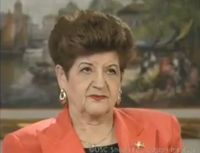
From the collection of the USC Shoah Foundation
Interviews are from the archive of the
USC Shoah Foundation - The Institute for Visual History and Education
For more information:
https://sfi.usc.edu
 Sheryl Tatelman
Today is November 24, 1995. We'll be interviewing Rachel Rosenberg, whose maiden name was Boiman. The interviewer is Sheryl Tatelman. We're in Omaha, Nebraska, in the United States, and we'll be interviewing in English. I'm Sheryl Tatelman, and I will be interviewing Rachel Rosenberg today, November 24, 1995, in Omaha, Nebraska. Could you tell us your name, please?
Rachel RosenbergMy name is Rachel Rosenberg.
Sheryl TatelmanAnd what was your name when you were born?
Rachel RosenbergBoiman.
Sheryl TatelmanBoiman was your maiden name?
Rachel RosenbergYes.
Sheryl TatelmanCould you spell that for us?
Rachel RosenbergB-O-I-M-A-N.
Sheryl TatelmanOkay. And when were you born?
Rachel RosenbergAugust 1st, 1923.
Sheryl TatelmanAnd where were you born?
Rachel RosenbergIn Poland.
Sheryl TatelmanWhere in Poland?
Rachel RosenbergWolanów.
Sheryl TatelmanWould you spell that for us?
Rachel RosenbergW-O-L-N-O-W.
Sheryl TatelmanAnd what were the names of your parents?
Rachel RosenbergRose was my mother. And Mosze was my father.
Sheryl TatelmanAnd did you have a lot of brothers and sisters?
Rachel RosenbergWe had three brothers.
Sheryl TatelmanThree brothers?
Rachel RosenbergMm-hmm.
Sheryl TatelmanAnd were their sisters too?
Rachel RosenbergWell, I have my two sisters live through the war, and they live here in Omaha with me.
Sheryl TatelmanSo there were six of you?
Rachel RosenbergSix children.
Sheryl TatelmanThree boys and three girls.
Rachel RosenbergThree boys and three girls. The girls are the oldest, and the boys were the youngest. So the three of them are here with Omaha.
Sheryl TatelmanAnd what are the names of the sisters?
Rachel RosenbergManya. You want their last name? Friedman. And Bluma Polonski. She's my youngest. I'm in the middle.
Sheryl TatelmanYou're in the middle of the sisters?
Rachel RosenbergYes.
Sheryl TatelmanAnd what were the names of the brothers?
Rachel RosenbergAaron. And they called him [?] in Jewish. And Mottel. He was my youngest.
Sheryl TatelmanAnd they were all younger than the sisters?
Rachel RosenbergThey were all younger, yes.
Sheryl TatelmanAnd this place where you live, Wolanów, was it a large city?
Rachel RosenbergNo. It was a suburb. It was a very small city. There was only, like, very small, like, even smaller than Lincoln, Nebraska. A small city.
Sheryl TatelmanWas it a Jewish city?
Rachel RosenbergIt was a Jewish city. We had a synagogue. And my parents were Orthodox. We had Friday night dinner, religiously. Saturday morning, dressed up, went to the synagogue. And we were very well off. So- and then we had our aunts, uncles, two sets of grandparents. It was like a community, like everybody knew everyone. But it was- we were happy as children.
Sheryl TatelmanYou said that you had Friday night and Saturday morning. What was that like?
Rachel RosenbergSaturday night, we had the most glamorous dinners with fish, with challahs, with the soup, with lighting the candles, fresh flowers. And that was every Friday night. Then we couldn't cook Saturday. So they made up some food Friday for Saturday. They put it in a special place, in an oven, potatoes, and meat. And then Saturday, we all dressed. I remember I did, went with my father. My father was, well, he chanted at the... Yeah, he was davener or whatever. And afterwards, we came home and we had dinner. We changed our clothes and went to the fields and just played and had a good time.
Sheryl TatelmanSo is that something you remember as a special time?
Rachel RosenbergYes, I do. Yeah, that was very special. And they took their time. They worked hard, but Saturday was a day of rest. It was peaceful. And that's what we don't have here.
Sheryl TatelmanWhat kinds of work did your parents do?
Rachel RosenbergMy father was a cattle buyer.
Sheryl TatelmanA cattle buyer?
Rachel RosenbergMm-hmm. And then he had his own butcher shop. There was a little shop. There was my house. And on the same lot, there was a butcher shop. And he sold meat, of course he had people who worked for him. And my mother was a seamstress. She did, like, pillowcases, embroidery with her sisters. Trousseaus, you know, for weddings. And I learned from my- And also, she sold materials.
Sheryl TatelmanShe sold materials.
Rachel RosenbergSold, yeah, sold materials. I think from home, I don't remember a lot. I was alive. I was happy. I was going to school. I was learning the trade, the tailoring, which I do it right now.
Sheryl TatelmanSo you learned from your mother to be a seamstress?
Rachel RosenbergYes. From my mother, then came into the United States. Carl taught me.
Sheryl TatelmanWhat kind of school did you go to?
Rachel RosenbergTo school, to learn how to cut and to sew. I was there for probably two years to learn how to do handwork until they taught me how to cut, how to design, how to crochet. My grandmother taught me how to crochet. And that was my hobby until today.
Sheryl TatelmanSo you learned in school how to do all these things?
Rachel RosenbergYeah. And it was like a home. It wasn't a school, like a seamstress. There was a seamstress. And she took in young children. I was in the third or fourth grade. I was very young. When they put me to her house and you did a little chore for her and just learned a couple hours a day.
Sheryl TatelmanOkay.
Rachel RosenbergBut it wasn't a school. It was just in her own home.
Sheryl TatelmanSo did you have to go to a regular school as well?
Rachel RosenbergYes. Yes. This was after school. Yeah. We went to a Catholic school.
Sheryl TatelmanIt was a Catholic school.
Rachel RosenbergYes. And there was an hour of prayers which the Jewish children went outside for the hour.
Sheryl TatelmanWere there a lot of Jewish children in the school?
Rachel RosenbergYes. Yes. Yes, there was a lot. It was a nice Jewish community.
Sheryl TatelmanWhat other subjects did you learn in the school?
Rachel RosenbergDo you know what? I remember so little from my school. I don't know why. I just remember when the prayers were there. They told us not to stay. But I don't really remember. I read, write, arithmetic.
Sheryl TatelmanBut it was taught in Polish.
Rachel RosenbergIt was taught in Polish, yes. And then I was what. I only had seven grades when none of us went to high school or anything.
Sheryl TatelmanWhat was the relationship between the Jewish children and the gentile children, the Christian children?
Rachel RosenbergWe mostly stayed with the Jewish. I don't know why. I don't know. But I never, I don't remember ever going. Maybe for the holidays we went in. Like Christmas time we saw the trees, the Christmas trees. But I never had a girlfriend who was not Jewish. We were all just kind of like a family, like a clique.
Sheryl TatelmanDid you experience any anti-Semitism from the Christian children?
Rachel RosenbergYes, we did. We were, sometimes we were afraid to tell them we're Jewish. There was a lot... of, yes, we felt that we are like a second-class citizen.
Sheryl TatelmanReally?
Rachel RosenbergYes, ma'am.
Sheryl TatelmanIn what kinds of ways?
Rachel RosenbergWhat kind of way? There was with the, oh, you crucified Jesus, you killed Jesus. I did not understand what was going on. But I know that I felt that we are a second-class citizen.
Sheryl TatelmanAnd you said your father was a cattle buyer and he had a meat market.
Rachel RosenbergYes.
Sheryl TatelmanHe was a kosher butcher then?
Rachel RosenbergKosher, kosher, yes, ma'am. Yes, yes. But I remember that Christmas time, there was another butcher twice. They put up tables, big tables, with meat. I don't know if that part wasn't kosher. I don't remember, but they sold meat outside because it was very, very cold and the meat was frozen. Yes. And they sold to the Gentile the meat. And my father said he had a very good week. I never had to do with money. I never had money in my hand or went to buy anything. Isn't that strange, but I remember it was Mother's Day and the teacher told us we should save five cents a cent. Everybody was poor. Well, in a way, you know, there was no money around like here, to save you money for Mother's Day. And I think I believe, this I will never forget. But I had 36 cents, pennies, I don't remember what the Polish name. And a day before, the teacher gave us the money and she said, well, take that money to a shop and buy something for your mother. How old was I? In the fourth year, fourth grade, I don't... And when I went to my - we had desks - and I went into the desk, and the money was gone. I cried a lot. I came home, went into my father. I said, father, I had 36 cents and somebody took it. So he gave me maybe 50 cents. I went in and I bought a cup and saucer for mom. I don't want to talk about it.
Sheryl TatelmanYou said that you had a lot of relatives, extended family in the area.
Rachel RosenbergYes, yes. We had aunts, uncles.
Sheryl TatelmanDid you see them often?
Rachel RosenbergYes. So and so, you know.
Sheryl TatelmanAnd what kind of a child were you?
Rachel RosenbergI thought I was a very good child.
Sheryl TatelmanWhat kinds of things did you like to do?
Rachel RosenbergI was creative. I liked dolls, to work with dolls. And bride dolls was my favorite. And I played a lot, went to school, read. And then I was sick for about a year and that kind of slowed me down.
Sheryl TatelmanWhen was that? How old were you?
Rachel RosenbergHow old was I? Maybe nine, ten.
Sheryl TatelmanOkay. And it slowed you down in what kind of way?
Rachel RosenbergWell, I was in a hospital, you know, kidney. They didn't have medicine at that time, but they had a diet. So I had to eat only milky things, no meat at all and no salt. And my beautiful mother cooked me special food. And so til today, I don't like milk because I had too much milk. And I was cured. I never had any problem with kidneys.
Sheryl TatelmanDid you have a lot of friends? Were you an outgoing child?
Rachel RosenbergI wasn't, I was a happy child, a lot of friends. But I wasn't, I was shy, very, very shy. Because I was beautiful when I went out to the street. They touched my eyes, they touched my hair, if it's real. And I didn't understand why they doing this to me.
Sheryl TatelmanDid you have long hair?
Rachel RosenbergYes, I had beautiful black, long hair. But I was on the shy side. I wasn't a big mouth like they call it. I was very shy.
Sheryl TatelmanIt sounds like you had a very comfortable life.
Rachel RosenbergVery comfortable and a happy childhood, yes. And two beautiful parents.
Sheryl TatelmanWhen did things start to change for you? When did things start to become more dangerous in Poland?
Rachel RosenbergWell, 1939 when the war broke out.
Sheryl TatelmanDid you ever have a feeling before the war broke out that things were becoming more dangerous?
Rachel RosenbergNo. My mother, my mother preached, she said, the Germans will not hurt us because they're cultured people. Matter of fact, when they made the ghetto, one day they say they're going to put all the Jews from one side into a corner. And it happened to be my home. So we had like 25 people in our house, because they had to leave their homes to come to the- because they had the plan to take us, to corner us. And so we stayed in that ghetto for... But I still, I'm sorry, but I still didn't think that anything like this would ever happen. We stayed there maybe three or four weeks. And then they come in, we have to go to concentration camps.
Sheryl TatelmanBefore you went there, if I could ask you, in 1939 when the war started, when Germany invaded, what happened first? What happened before you even went to the ghetto?
Rachel RosenbergWe were still at the home and had a normal life. We saw a lot of Germans coming around. And we just didn't. And then one day they... I saw German officers with the rifles on them. And then that day they bombed our little city. And there were... I remember I was... I ran out of my house. And not too far, there were mountains. I grabbed my little boy, my middle one, just... And I said, let's go, let's run, because a lot of airplanes were on the air. And do you know, when we ran, a bomb fell. Oh, like, from here, across the street. And we saw that bomb fell. It didn't hit us. And we went into those mountains. And then it was all over. There were so many killed. The blood. I remember my mother took all the sheet, all the beddings, to say that in those beddings... How to say this, was wet with blood. People were cut up in little pieces. But none of my family had any damage. And then from there, maybe a week later or so, they took us to camp. But why I lined up by myself in a camp with my little brother, I don't know. And I asked Carl, do you know why would I lined up in a camp in Strzałków, all by myself? And my sisters, two sisters, my father and one of my brothers, my oldest, went in another camp. But I don't know why I lined up in that camp.
Sheryl TatelmanSo the first thing that happened, after this bombing happened, and then you had to go to the ghetto, or you were actually living in the area that became the ghetto. And how long was that after the invasion that they said you had to stay in the ghetto?
Rachel RosenbergWe stayed in the ghetto maybe for four or six weeks until they got all of them the way they wanted. But why did they split, send me over there and send them over? I don't know.
Sheryl TatelmanYou went with your brother, your one brother.
Rachel RosenbergRight.
Sheryl TatelmanWas this when they started to take people out to the camps?
Rachel RosenbergYes, to the concentration camp.
Sheryl TatelmanDid they take people out gradually, or it was all on one day?
Rachel RosenbergI think gradually.
Sheryl TatelmanWere there people that were taken before you?
Rachel RosenbergI don't know. But I don't remember. That's such a puzzle in my mind. Why did I lined up in a different camp?
Sheryl TatelmanSo you don't remember whether your parents went before you or whether-
Rachel RosenbergNo, I know where my parents, my father, my two sisters, one brother went to that big camp, Wolanów. I lined up in Strzałków with my cousins. My mother says, I'm not going to camp. I have my brother in a little town not too far from Wolanów. And she packed her things with my youngest brother and she said, I'm going to be there.
Sheryl TatelmanWas she hiding there?
Rachel RosenbergNo, there was still, it was still a community in that little town. So she gave me a golden ring and I had that golden ring with me. So I gave the golden ring to German and I said, why don't you take me? I want to get my mother. And I went there. She cooked me my favorite meal. I said, Mom, come with me to that camp. And she said, no, two more days. There was no more. They took them out... That was Yom Kippur. They took them out from synagogue to Treblinka, her and my little brother.
Sheryl TatelmanSo she stayed with your uncle and then they went?
Rachel RosenbergYes, yes, to Treblinka.
Sheryl TatelmanAnd where had you gone?
Rachel RosenbergAnd I went back to my own camp. Yes, to the concentration camp.
Sheryl TatelmanAnd you had been able to get out?
Rachel RosenbergYes, I gave that German that golden ring and I said, would you please take me? And we drove all day. And we came over to Mom's house and of course, she made a package for me. She said take it with you and I did.
Sheryl TatelmanAnd so you were able to try to help her at that time?
Rachel RosenbergYes, I went to get her.
Sheryl TatelmanBut you had to go back to your camp?
Rachel RosenbergYes, I went back to the camp.
Sheryl TatelmanAnd what camp was that?
Rachel RosenbergThat was Strzałków.
Sheryl TatelmanStrzałków. So you had already been from the ghetto to the Strzałków at that time. And when was that?
Rachel RosenbergI don't remember dates.
Sheryl TatelmanBut it was still the beginning of the war.
Rachel Rosenberg40 in the 40s.
Sheryl TatelmanIn the early 40s.
Rachel Rosenberg40s, 40s.
Sheryl TatelmanUh-huh. And...
Rachel RosenbergI'm not supposed to cry, but I do. I don't...
Sheryl TatelmanWell, tell us a little bit about life in Strzałków.
Rachel RosenbergWell, it wasn't as hard as other camps were because we worked. They brought us for a reason, to work. And we worked every single day in the fields, in the corn. So they took us in the morning and they brought us back at night.
Sheryl TatelmanThey took you out into the fields?
Rachel RosenbergIn the fields, yes. And we worked like they cut corn or in vegetable, you know, to...
Sheryl TatelmanCorn and vegetables. Did you have to march out to the fields? Or, they had a truck?
Rachel RosenbergNo, we walked. I think we walked. It was a small... It was like estate. A German owned it. And so he wanted some inmates like us to go and work for him. And that's what... That's the camp I was. But wasn't they like... Wolanów was a terrible camp. So it was more, you know, humanly.
Sheryl TatelmanWas there enough to eat there?
Rachel RosenbergYes, there was enough to... Yeah, we were not hungry in Strzałków, no.
Sheryl TatelmanHow many people were there?
Rachel RosenbergI would say about 250. Not a big camp, a small camp. But it puzzles me why did I lined up over there? That's because I went with my cousins. I don't...
Sheryl TatelmanSo you were with your cousins and the rest of your family went... All other places.
Rachel RosenbergOther places, yes.
Sheryl TatelmanAnd you don't remember why?
Rachel RosenbergI don't remember why. I don't know. But I tried to get my mom. I said, Mom, come with me. She said, give me two more days. And my mother was young. 38 years old. And a beautiful, talented lady. She was kind of like I am. And she just didn't believe that the Germans will do to us what they did.
Sheryl TatelmanIn Strzałków, were there children and adults or was it just working age people?
Rachel RosenbergIt was only working age people. There was one child who died. There was one little boy who... Well, I could tell you, but it's not important. Well, you know, they cooked for us. So there was big kettles. I don't know how they cooked those, you know, for 250 people. And by an accident, there was one little boy from my own town fell into the hot... That was such a tragedy.
Sheryl TatelmanAnd there weren't any other children in this camp?
Rachel RosenbergNo, no. Well, my brother was about 12, but then he worked.
Sheryl TatelmanWas your brother with you?
Rachel RosenbergYes. My brother was always with me.
Sheryl TatelmanWhich brother was this... ?
Rachel RosenbergThis is my middle brother.
Sheryl TatelmanAnd his name. . .
Rachel Rosenbergwas Jacob Yuki.
Sheryl TatelmanSo how did he... did he line up with you when you were with your cousins?
Rachel RosenbergYes, yes, yes, he lined up with me. He lined up with me in Blizyn, in Auschwitz.
Sheryl TatelmanSo how long did you stay in this camp where you were working on the farm?
Rachel RosenbergOh, we stayed maybe a year.
Sheryl TatelmanA year
Rachel RosenbergYeah.
Sheryl TatelmanAnd you wore your own clothes? You didn't have a uniform?
Rachel RosenbergNo, no uniform.
Sheryl TatelmanAnd was there a guard in this camp?
Rachel RosenbergOh, yes, yes. Oh, oh, oh, yes. Guards with dogs.
Sheryl TatelmanSS guards?
Rachel RosenbergYes, guards, yes. But we were free and the guards were very friendly. It wasn't frightened like in Auschwitz or in Theresienstadt. We did not have a fence. There was no fence.
Sheryl TatelmanDid anyone try to escape?
Rachel RosenbergWhere you going to escape? There was no place, I mean . . .
Sheryl TatelmanNovember 24th 1995 with Rachel Rosenberg. You said that you were in Strzałków?
Rachel RosenbergMm-hmm
Sheryl TatelmanAnd you stayed there for how long?
Rachel RosenbergIn Strzałków, we stayed probably like a year or better.
Sheryl TatelmanAnd then what happened?
Rachel RosenbergThen they shipped us to- to... I forgot the camp. I just- Which camp? Blizyn.
Sheryl TatelmanBlizyn; how did you get there?
Rachel RosenbergBy trains, by trains, yes.
Sheryl TatelmanIt was a cattle car, or it was a...?
Rachel RosenbergIt was a cattle car. Am I too early to tell you the way I or shall we talk about a Blizyn first? Okay, Blizyn was a labor camp. We lived in barracks. It was horrible. The clothes we were cold. We were hungry. We were dirty. They took us to work every day. Then one day they had a meeting, they said 'who could sew?' Because they put up a big shop for- to work on the SS uniforms. Of course I'm a seamstress. So I put up my hand. So they said fine. Then a week later, they put us into this shops big shop, maybe a thousand people worked. So we worked on uniforms and there were... maybe a hundred people in one aisle. And I did very well. They liked the way I did the work so we worked like from 8 o'clock to 6 o'clock at night. And, lunch time they took us out and give us a little lunch. So anyway, I was chosen to- they, they give special people maybe from the from the 2,000 people, 100 handed got uniforms. So they called my name, so I thought they're gonna take me out and shoot me. I mean why would they call me my name and I had to put up go over there. So they gave me a new uniform because I was good in sewing.
Sheryl TatelmanAnd was that something good, that you got this uniform?
Rachel RosenbergWell, nothing special but it's a it's a... Yeah, I was kind of proud of it. You know, I so they know I'm a good seamstress or I do good work, so- because they gave me that uniform.
Sheryl TatelmanWhat did it look like?
Rachel RosenbergIt was black, black with some letters on it.
Sheryl TatelmanWas it warmer than the clothes you had?
Rachel RosenbergNo, hon. No, it was just a polyester or who knows, just nothing, nothing special.
Sheryl TatelmanSo you didn't have really enough warm clothes for the winter time?
Rachel RosenbergNo, we didn't have- we were we're always cold and hungry.
Sheryl TatelmanWhat did they give you to eat?
Rachel RosenbergWell, they gave us collard- and they give us special crackers. Do you know I was here in the United States and I went to someplace, and they serve those crackers. I said those crackers are from camp. They give us those crackers to eat. But anyway, I was there maybe for eight, nine months. And... they choose me, to serve- you see everybody had as a scoop of soup. So I was chosen to have a scoop of soup.
Sheryl TatelmanTo... serve the soup?
Rachel RosenbergTo serve the soup.
Sheryl TatelmanOh, how did you get chosen?
Rachel RosenbergWhy... Just, just random.
Sheryl TatelmanWas it something good or something bad that you were serving soup?
Rachel RosenbergIt was good, I had a little more to eat. I could eat two scoops of soup or maybe have a little bit more bread.
Sheryl TatelmanYou said that you- in the beginning you were doing a different kind of work.
Rachel RosenbergYes, we we worked on... They build buildings so we we carried big blocks, like... cement blocks. ... I did this in Blizyn and I did this in Auschwitz.
Sheryl TatelmanIn Blizyn you were carrying these blocks...
Rachel RosenbergThe blocks for the- for the builders. Yes, yes, yes. And of course every morning they took us out and count us. And then I was with the... with- you know with my cousin. And they took her out, special, they took like 15,000 women from Blizyn and put them on a ship, and then they sank them.
Sheryl TatelmanSo you saw people taken- all these women taken out, and one of them was your cousin?
Rachel RosenbergYes, yes, yes, yes. And my cousin who was in Omaha, Rachel, she was among them too, but somebody- she was hiding. Somebody and then after it was over she came along- you know she came and I was so glad to have her. And I was also with that aunt in Blizyn. And she had two boys which were taken away from her and killed. They were like six- four and six, two beautiful little boys. I could see them now. And she lived in Israel and she passed away now. She's no longer with us.
Sheryl TatelmanAnd- so you were still in Blizyn, you were still with- there were cousins with you and an aunt?
Rachel RosenbergYes, yes.
Sheryl TatelmanAnd were there other people from your hometown with you?
Rachel RosenbergYes, they were. Yes, they were. Matter of fact they are in Miami now.
Sheryl TatelmanAnd your brother was he still with you in Blizyn?
Rachel RosenbergYes, he was with me In Blizyn.
Sheryl TatelmanAnd was he doing the same kind of work?
Rachel RosenbergNo, he was- the Germans took him to feed their... ...goose and pigs. And, and he always brought home a little piece of bread, and we were hiding this you know, and you know, we slept on barracks, you know for that was cattle barracks, you know they-. And he was so sweet and so beautiful. Yeah, that's what he did. He worked, but because he was only 12 years old.
Sheryl TatelmanSo he he was only 12 at that time and he was able to help you by giving you a little extra food.
Rachel RosenbergA little extra food, yeah.
Sheryl TatelmanHow big was the barracks that you lived in?
Rachel RosenbergThat- it was big. Well, there was you know, like a- We were we were eight, maybe, in one- What do you call this? I don't- section. And the- at night the lock- the doors were locked, and there were big barrels for the waste, you know, you had to go to the bathroom. And we lived with it like this.
Sheryl TatelmanSo there was big- human waste was a big barrel.
Rachel RosenbergWe hardly, I don't remember whenever we had a shower. I don't remember how we ever kept- I don't know how we ever- I- I really don't remember. How did we wash our hair, or I...? We wore rags.
Sheryl TatelmanYou wore rags?
Rachel RosenbergRags, unfitted shoes, whatever we could find. And everybody was in there and doing nothing. Just talking about what's gonna be tomorrow and who's gonna live through and who's gonna tell and and and and you know, think about the family think about my mother my father my my sister, you know. It was just always was sitting for hours and talk. Especially if it was Yom Kippur. We knew it. I don't know how we knew it was Yom Kippur. And we just sit there, outside the barracks and... And just dreamed and talked and why us and why me? We looked outside. We saw birds people worked in day in in their fields in the corn the Polish people worked in the corn. And we tried to get in so close so I could look to him. I said God if I would only be a bird or or I mean the hurt was so deep. And we could not understand why. Why did they do this to us?
Sheryl TatelmanWere all the people in Blizyn Jewish people?
Rachel RosenbergMostly, yes.
Sheryl TatelmanWere they all Pole- Polish are- they were all from Poland?
Rachel RosenbergPoland, well there were some from Hungary but I have never met any- any of them. I just met Polish. We were all from Poland. Matter of fact, I had a friend and he escaped from Blizyn and then he got killed. I knew but after the war if he would be alive, he would have looked me up, but they killed him.
Sheryl TatelmanBut you know that he escaped?
Rachel RosenbergYes. Yeah, and somehow at least that's what I was told.
Sheryl TatelmanYou said you would sit around and talk and at that point you were thinking about your family. You didn't know where they were?
Rachel RosenbergNo, I did not.
Sheryl TatelmanAnd you were- what other kinds of things would you talk about? Were you afraid?
Rachel RosenbergWe were afraid. But then there's nothing we could do. We only wished I said we're 16 17 18 years old. We never dated. We never knew what that what that- a boy is or- you know, alive. And there's still a world. There's the sky is blue. And there's people well, we didn't see that was-. It wasn't a town, it was out of town- fields. So we saw people working there. And sometimes they threw out a potato or you know through the gate, through the- there was, you know, barbed wires.
Sheryl TatelmanDo you remember anything else from that camp?
Rachel RosenbergYes, I do. One day I came home from work. That's the tru- that's, that's real. I came home from work tired. So they needed people to peel potatoes. And when they grabbed me I just kind of tried to get away from him. And because I did this they put me in a cellar for a whole day. Yeah Because I didn't want to peel the potatoes. Then the next day they let me out and then put me in the kitchen and I had to peel potatoes for a whole day. But then when I left I got one potato hidden. So I had the potato to eat.
Sheryl TatelmanSo that was very important to you that potato.
Rachel RosenbergYes. Yes, they put it that potato saved my life. Was very skinny, right? You know, we just didn't have enough. We didn't have food. They just give us a scoop of food and then some hard bread sometime and the bread had mildew. You know the red mildew but who care?
Sheryl TatelmanSo you ate it anyway.
Rachel RosenbergWe ate it anyway, of course. Yeah, we had very little food very little food. Was hungry for about five years. And I don't know how we made it.
Sheryl TatelmanSo you left Blizyn, when wer- when did you leave Blizyn?
Rachel RosenbergTo Auschwitz? Yeah. I don't remember names- dates. '44 maybe. 1944 Yeah
Sheryl TatelmanDid you leave with other people in the camp? Was- was there a lot of people leaving with you?
Rachel RosenbergWell, they put us in cattle cars and they shipped us to Auschwitz. And when we came to Auschwitz, we had to stay in the line for a long long long long time because they tattooed. They put tattoos on our hands.
Sheryl TatelmanHow long was the ride to Auschwitz from Blizyn?
Rachel RosenbergProbably a couple days.
Sheryl TatelmanIn the cattle car. And then you came to Auschwitz.
Rachel RosenbergAuschwitz, yeah.
Sheryl TatelmanAnd did you know that Auschwitz was a little bit different than Blizyn?
Rachel RosenbergWell, I knew that this is going to be our end. This is where the crematoriums were, the gas chambers were and... the the the living was very bad. Every morning we had to stand in the line to count us and then we have to be naked for Mengele. And we were afraid and we were shivering but there were so many Germans around there we had no... You know; and he choose this go to the right and this goes to the left. So I saw him I saw him.
Sheryl TatelmanSo when you first got to Auschwitz you you had to be naked for Dr. Mengele.
Rachel RosenbergYes, yes, and because he choose a lot of them to you go to work and you go to the gas chamber. Yeah, I saw him in his uniform.
Sheryl TatelmanWhat happened next?
Rachel RosenbergWell, the next, they put us into- to the camp, to the barracks And we stay there and then every morning they took us out to work. But we have to stay like that if they give us food. We have to stay maybe two hours in the line in order to get that scoop of food. You couldn't grab or you couldn't go anyplace or we couldn't there was nothing there. And I don't remember how did we ever? Washed I don't I don't remember honey. I just don't.
Sheryl TatelmanWhat kind of work were you doing in Auschwitz?
Rachel RosenbergWe worked on on buildings. Yeah, and then I did a little sewing. On my- where I stayed so I think a lady she was she was Jewish, but she had the- Mission to do like to watch us or something and she got acquainted with me. And she said she has something some embroidery to do for me. And that's what I did most of the time on the, in my in my in my barracks. And then they took us out in the morning in the snow and cold, in the fields where they built and we had to carry those I carried seven- you know those blocks, what is a 75 pound? I carried those blocks. And, you know, for them to build. Because there were SS around us and you know you couldn't-. Of course I, you know I sewed so I made some, I found some sweaters so I made some stockings. To wear.
Sheryl TatelmanFor yourself to wear?
Rachel RosenbergYeah.
Sheryl TatelmanHow did you find the sweaters?
Rachel RosnebergWell there was a you know from the dead people. There was a big huge building from clothes Like the shawls they wear in the synagogue. Shoes, stockings, so we went there in the morning when nobody was around and I took out this sweater. That's what I- I made- I made stocking for my little brother.
Sheryl TatelmanYou made stockings for your brother. He was with you in Auschwitz?
Rachel RosenbergYes he was.
Sheryl TatelmanHe came with you at the same time?
Rachel RosenbergYes.
Sheryl TatelmanAnd you were able to help him out by making some stockings for him.
Rachel RosenbergThen one day they took him away from me, but I didn't want to let go. I said I want to go with him, and I cried so hard and I begged them please let me go with him, and they took my- I wasn't too too big. So they took my body and just threw me away, far away from him. There was a lot of people around, and then took him away. That's my biggest sin, and you know what? I see him so often walking away from me. I can see it, and I loved him so much. And I put a sweater on him, so he'll be warm. He was the cutest little boy you've ever seen. I'm sorry.
Sheryl TatelmanWhen did this happen?
Rachel RosenbergThat, that happened in Auschwitz.
Sheryl TatelmanWhy did they take him away?
Rachel RosenbergBecause they took away the young the young and he was just in the wrong place. He was just- we were standing there in the wrong place, and they took him and I said why don't you want to take me? And they just grabbed him away from me, and I couldn't do anything. And I and I followed him, followed those trucks. You know that before that he was sick on typhus and he was in the hospital. And I was I was there laying day and night to watch him because they took out every few days they took out the sick.
Sheryl TatelmanHe was in the hospital inside Auschwitz?
Rachel RosenbergIn in Auschwitz before they took him away from me. So they got some- with sirens. Even today, 'til today when I hear that siren I get frightened. I said God, this is that Auschwitz siren. When a rescue squad goes, but they didn't take him he got well, and I hid him and I made him those stockings and I give him a nice sweater and then one day they took him away from me.
Sheryl TatelmanBecause he was-
Rachel RosenbergHe was he was young. And I see him so many times in my life. Walking away from me. This why I was so protective of my children because of him.
Sheryl TatelmanWere your sisters with you in Auschwitz?
Rachel RosenbergNo my sisters were in Auschwitz, but in a different camp. Remember I I had a piece of a loaf of bread. I think that Carl's brother, the youngest... Was on one of the trains which they brought people from Denmark from different- To Treblinka to- no to Auschwitz for the gas chamber. And he had with him, I saw him working on the trains from the far. I recognized him. His youngest brother, Nathan was his name, and he saw me. He threw me a bread and I had that bread with me. Then when I walked in Auschwitz just walked. Must have been in the summer, and I saw a lot of women working in the train. What do you call the- Where the trains go through the-
Sheryl TatelmanThe tracks?
Rachel RosenbergThe tracks! And I looked and I looked and I said this is Bluma and Manya.
Sheryl TatelmanYour sisters.
Rachel RosenbergMy sisters. I went a little bit closer to the gates, to the barbed wire, and I screamed, of course they, but they saw me and they wave to me. And I had that bread cut up in little pieces and I threw them that bread.
Sheryl TatelmanIt was the same bread?
Rachel RosenbergThe same bread. And I also gave some to Carl's mother. She was laying almost dead and I came in I said Aunt Chana, there is a piece of bread. And I brought her a glass of water and that. But when they moved us from Auschwitz to the last camp. She was on the same train. My sisters were on the same train. But when we came to the destiny, I had no sisters, they went someplace else, but his mother was dead, they killed her on the train [unclear]. But going from Auschwitz to that last camp to Czechoslovakia. They took us 10 days. That I remember like it was today. There were a hundred people in the in the box car. And every 12 o'clock the SS opened the door, and give us a spoon of sugar a day. That's a true story. A spoon of sugar a day and a little bit of water. And we lived there for 10 days. How did we do it? Tell me.
Sheryl TatelmanWas it wintertime or summertime?
Rachel RosenbergIt was like fall time, fall. It wasn't winter. It was fall time. And there was 100 people in that car.
Sheryl TatelmanWas it all women?
Rachel RosenbergAll women, yes. Yeah. The men were- in Auschwitz the- the women were not with them. No, no. And then also in Auschwitz every day when I went to work, I went through the crematorium. We saw the... flames, we saw the black dust coming out. And so we said well next time it'll be us.
Sheryl TatelmanSo you didn't really believe that you would survive?
Rachel RosenbergNo, never. Never. We sat and talked, and we said... And who is going to be able to tell what we've been through and why us? It- it just...
Sheryl TatelmanWhat else do you remember from Auschwitz?
Rachel RosenbergHmm.
Sheryl TatelmanWhat else do you remember from Auschwitz?
Rachel RosenbergI- I don't know.
Sheryl TatelmanWere there a lot of people from different countries in Auschwitz with you or were they mostly Polish?
Rachel RosenbergYes, they were, but I never knew people from other countries, I only had the- the Polish. And I kept kind of quiet. I was shy so I kind of kept to my aunt. She was my mother's sister.
Sheryl TatelmanYour aunt was with you.
Rachel RosenbergMy- yes, and I was kind of with her. And she had those two little boys, who they killed. But I didn't venture too much. And took care of my little brother as much as I could, you know.
Sheryl TatelmanWere you and your aunt able to help each other?
Rachel RosenbergYes, yes. Yeah, we were kind of together. Yeah, and then my cousins were there, we were- my cousins and my- matter of fact, I have two- one lady, the same age, her name is Rachel. We worked in the last camp, so I didn't come to this, but she was side by side. I I don't- I don't- I don't remember what I did in Auschwitz. I except working. We worked and we came home and they gave us a little food and then in the morning we have to stay and wait for us to be counted. And then I sewed little things for me, like I went to that to that big thing where there was a lot of clothes. So I picked up some clothes and I had a needle and thread and tried to sew for people or for my aunt to make sure she's you know, she's her feet are warm. And so that that's what I kept busy with with sewing and, and doing things.
Sheryl TatelmanAnd you said the next camp you went to was in Czechoslovakia?
Rachel RosenbergYes.
Sheryl TatelmanWhat was the name of that camp?
Rachel RosenbergI don't remember. That was my last camp.
Sheryl TatelmanBut, you remember that it took ten days on the- in the box car to get there?
Rachel RosenbergRight. 10 days to come. When I came, I thought my sisters would be there. My sister were not. My cousin Rachel. She wasn't they were sent to different camps. So I was alone again. And then when the SS saw me, you know, when I came down. She saw me she took my hand and took me in a little room. Only me.
Sheryl TatelmanWhen you first got there?
Rachel RosenbergWhen I first got there, yes. Because I had beautiful long hair and she didn't like me because of that long hair. And she took me in in a room and then she walked out and I didn't know what to do. I thought well, they're going to kill me. So then she came back with another SS and with big scissors and they shaved off all my hair, and gave me a black scarf to wear. And then in the morning, they took us to ammunition factories, big ammunition factories, where they were men. So she didn't want to- she didn't want us to look like human being. She wanted us to look, you know, horrible, so we all had those those scarf. We had to wear the scarves and I had no hair. After the war, I had very little hair. And so we worked in the factory in the factories and then I remember one day a nice lady, she was a German, and she said, you know what? It won't be long until you're gonna be liberated. I said what? Liberated, I'm going to be free. I couldn't understand the word. And so we stayed there, and then... We were liberated May 8 1945, and we didn't know what to do. We were just- so we worked in cellars, Potatoes, sorting potatoes, big potatoes, small potatoes, little potatoes. So when they told us were free, I said, what does that mean? So I- we went in the cellar, picked up a lot of potatoes, found a bucket, made a fire from wood. And we cooked the potatoes and ate. And then later on they came and they took us to Czechoslovakia, to an orphanage's house.
Sheryl TatelmanNovember 24, 1995, with Rachel Rosenberg. You said you were in a camp in Czechoslovakia, and the conditions there were very difficult.
Rachel RosenbergRight. We were very afraid of that SS. She was very vicious and mean.
Sheryl TatelmanIt was a woman.
Rachel RosenbergIt was a lady, a woman, yes. Yes.
Sheryl TatelmanWas she the head of the camp?
Rachel RosenbergShe was the head of the SS, yes. There was an ammunition factory, a city of ammunition factory. So they put us to work there, and that's where I worked.
Sheryl TatelmanDo you remember this lady's name?
Rachel RosenbergNo, honey. I don't remember. I was afraid to look at her. She wore that uniform. She was tall. She may be 5'8", 5'9", a tall, mean one. But there was some nice, too, that one told me not too long we're going to be liberated. I said, what does that mean? She said, we're going to be liberated. We're going to be free.
Sheryl TatelmanWhat were the conditions as far as food like in this camp?
Rachel RosenbergFood, we were hungry all the time. One day, I passed by a kitchen, or I found a potato, and I had that potato in my hand, I was hiding it, until at night, I sliced it in very- I don't know where I got a knife from, I sliced it in very little pieces, and I lived that potato for about eight days. Just one little slice a day. They gave us very little food... in that last of the last camps.
Sheryl TatelmanYou were working in an ammunition factory.
Rachel RosenbergYes, yes.
Sheryl TatelmanWhat were you doing inside the factory?
Rachel RosenbergThey gave us special tools. They showed me what to do, and then we did every day the same thing, and my friend, who is still alive, she's in Miami, she worked beside me.
Sheryl TatelmanWas she your friend from before the war?
Rachel RosenbergShe was from my hometown. Yeah, it's a coincidence. Yeah, she's from my home town.
Sheryl TatelmanAnd when you said there was a German who told you that you would be liberated soon, was this an SS?
Rachel RosenbergThat was a lady, a lady SS. Yes, a woman came up to me and she said, listen, it's not going to be too long. You're going to be liberated from the Russians. And we heard a lot, well, there was a lot of airplanes around and bombing going around. We could hear it in wherever we lived. Yeah, but we came specially to work in the ammunition factory. We made parts for whatever. They showed us how to make the parts, and we made the part. It was dark in the factory, and we had to stay all day long. They gave us a little break, they gave us a little soup, like 12 o'clock or 1 o'clock, just to keep us alive. Yeah, but there's always SS around us. There was always guards around us. Dogs, with dogs. We were really afraid.
Sheryl TatelmanMore afraid in this camp than in other camps?
Rachel RosenbergJust about the same, yeah. Well, we were kind of hoping, the hope was a little bit better than in Auschwitz. They told us maybe the war will come to an end. And we wished for the partisans to come. I said, maybe a miracle will help. Maybe somebody will take us out from there. But it never happened.
Sheryl TatelmanSo what happened when you were liberated?
Rachel RosenbergOh, when we were liberated, a lot of people were very sick, but I happened to be healthy. So we just, I don't know, we went, we went in a group. We still were afraid to move, so we were in groups. We went to towns, and then the ladies gave us bread, and she gave us butter, margarine, and she gave us food. And then we just waited there for- we were happy, happy and unhappy. Where is our family? Where am I? What are we, what are we going to do, you know, this situation? You know, I was alone since I was about 16 years old without parents. And so there's all kinds of things went through our minds. And then we looked, searched, and they took us from there, they took us to Prague.
Sheryl TatelmanWho was they?
Rachel RosenbergWell, I don't know. There was a special organization who worked for, with the survivors, I don't-
Sheryl TatelmanWas it a Jewish organization?
Rachel RosenbergA Jewish, yes. UNRRA, or United Jewish Appeal. I don't know who. They took us to Czechoslovakia, took us to our home, and they gave us clothes, they gave us food, they gave us a bed the first time in our life. We slept in a, in a [unclear] bed. And from then they told us we had to work. So they took us, and we worked in a restaurant. We washed dishes, we cleaned, there was about 10 of us from 16, 16 years old. So we, we did, we did work. And then we came home, they taught us how to swim, they, they talked to us, taught us a little bit of language. And we worked until I found my sisters, but I don't, I don't remember where I found them. Honestly, I don't. Then we didn't want to stay in Czechoslovakia, we wanted to go to, to Poland. And I think we, we walked and walked and walked for days.
Sheryl TatelmanWith your sisters?
Rachel RosenbergWith my sisters in the woods, with my cousins, through the woods at night to come to Poland. And we were in Poland maybe two days. And I went to my home, and I found a picture of my family, of my dad, but my dad and my mom. But I don't have it, I don't know what happened. And then we started to walk again for days and nights.
Sheryl TatelmanAnd you came back to your, to your,
Rachel Rosenbergyeah, I was,
Sheryl Tatelmanto your home where you had lived before the war. Were there people living there?
Rachel RosenbergI was afraid to go in, yeah, people were living there, and they told us not to stay in Poland for too long because they're going to kill us. So we left. Where did you go? Back to Czechoslovakia. And then we found Carl. And he was in Landsberg am Lech. Then we went to Stuttgart. My sister, Manya, was in Stuttgart. And I was in Landsberg. Manya and Bluma were in Stuttgart, and I was in Landsberg. And then we, our life was a little... better, so everyone looks for a mate, you know, to get married, to have children. I don't know why, but, you know, that's nature. So we got married in 1946 in Germany.
Sheryl TatelmanWere you living- where were you living at that time?
Rachel RosenbergIn Landsberg am Lech.
Sheryl TatelmanWas it a DP camp, or you were living in the city?
Rachel RosenbergYes it was a DP camp, yes. There were soldiers before, German, and then we got in, in a particular blok, B-L-O-K, blok, in a blok. We lived in a blok. And Carl started to sew, and then they gave us care packages. And we sheltered, whoever lived through, we sheltered in that room. I don't know, we had one room or two. All the cousins, all everybody was there with me and Carl and my sisters. And my sister went, then Bluma, I don't know where, Bluma went to... I just said the name and I forgot. Well, I was in Landsberg, and they were in a different town. And then I worked for the UNRRA, and I sewed shirts in Landsberg am Lech, and they gave me care packages. And we stayed there until 1949.
Sheryl TatelmanSo you stayed there about four years?
Rachel RosenbergYeah.
Sheryl TatelmanAnd what was it like there?
Rachel RosenbergI don't remember what, but I know I worked and cooked and conversed, and we had people coming and going all the time and applied for to go to the United States. I did not want to go to Israel. My older sister went to Israel, and Carl wanted to go to Israel. I said, I'm not going. I don't want to suffer any more than I did. I said, I want to go. I knew that the United States should be a good country. We didn't know the language, so I said, we're going to go to the United States, and we did. And before coming to the United States, they gave us $100.
Sheryl TatelmanWho's they?
Rachel RosenbergThe, I don't know, the Jewish organization gave everyone $100, so we bought crystal. Which I have today. All my crystals are from Germany. And Maurice was a year old, maybe a year and a half old.
Sheryl TatelmanThis is your oldest son.
Rachel RosenbergYeah, I was 21. Maurice- Carl was 31.
Sheryl TatelmanWhen he was born or when you came to the United States?
Rachel RosenbergWhen I come to the United States. He was born in Landsberg am Lech.
Sheryl TatelmanMaurice.
Rachel RosenbergMaurice, my oldest.
Sheryl TatelmanSo he was born in the camp in Landsberg am Lech. And what year was he born?
Rachel Rosenberg'48- '48...
Sheryl TatelmanBut he was only a year and a half old?
Rachel RosenbergA year, a year and a half old. Yeah, he couldn't walk. We brought him over on the ship, and he was very ill, you know, and I was ill on the ship. It took 12 days to come to the United States.
Sheryl TatelmanAnd where did you come when you came to the United States? Where did you, where in the United States did you come to?
Rachel RosenbergWe come to New York with the ship, yeah.
Sheryl TatelmanSo how did you end up coming to Omaha?
Rachel RosenbergI like that question. Well, we came to New York, and there was no one to claim us. No relatives. They asked if you have a relative. Someplace they claim you, you go. So they went to New Jersey, they went to Boston, they went all over. But us, we didn't have anybody to claim us. So Omaha claimed us. So the Jewish community brought us into, they put us on train, I think two days, and we came to Omaha. So I asked the question, why me and Omaha? But that's the story. Nobody claimed us, so we came to Omaha. And I'm glad we did, in a way.
Sheryl TatelmanWhat was it like when you first came to Omaha?
Rachel RosenbergWell, when I came to Omaha, a lady picked me up. It was about five o'clock at night. We were tired, hungry, with a baby. Then I saw her with a car, drive a car, and she wore a beautiful mink coat, Mrs. Newman. And I said, oh, ladies, you know, coming from where I went after five years, you just didn't see people, didn't see. I said, a lady drives a car, and a lady, and she had a mink coat. I said, my God. And she took us and bought us a sandwich of salami. I said, God, salami. Then they took us on 16th Street. In Omaha is a very bad street. It's a bad neighborhood. When I walked into that room, I thought it was a palace. But when she picked us up from the train, we had no language, we had no money, we had no clothes, we had no friends, just like that. I mean, here we are.
Sheryl TatelmanAnd what did you do for work when you got here?
Rachel RosenbergSo then she gave us that room, and I thought, God, am I going to live in that room? And they brought us linens. There was bread on the table, and somebody brought me a little plate to cook food, because Maurice was sick from the train and all this. And I said, I'm going to be able to cook my own. It was a dream come true. And then I went to work for Pendleton. So, and I took Maurice six o'clock in the morning to a daycare, and the child cried in my hands. He didn't want to go. He didn't want to let go of me. And then I worked there for about a week. Then I come home. I said, you know, to Carl, I'm leaving you. I don't want that kind of life. I was afraid when I worked. I worked so hard because there was somebody watching me over. I was afraid to get up to the restroom because I thought I have just to work all the time. And I did, and I was very tired. So he said, well, then we have to see what we can do. So we went to Veret. He was the president of the Jewish Community Center, and he found Carl a store. They paid my first rent, and we hired a lady to talk for us because we couldn't talk. We brought our machines with us from Germany. We brought those machines with us. Set up a store. I lived in the back of the store for six months without the nice bucks, without a bed. They gave us an old couch where we lived. I had a little plate to cook with, you know, the facilities were very bad. So I stayed there for eight months. And then in Omaha is a Boy's Town. They heard about us, and they brought me a lot of clothes to repair and to make over for the children from the Boy's Town. And Carl worked from about six in the morning to 10 o'clock at night. And I did, too. And we repaired those clothes, and they gave us the first $250 check. I called Mrs. Newman. I said, Mrs. Newman, we have money. I've got $250 check. And she was a real estate lady. And she bought me a home across the street from Leavenworth Street, where my store was, a big home. And I look at that home. I said, oh, I cannot live. I'm going to live in a beautiful home like this? No. She walked me into those rooms and upstairs and everything. But the first, so I advertised, she helped me, to get somebody to help me to pay the rent because it was about $100. The whole house was $12,000. We only put on $250. So they helped me pay the rent. They lived upstairs, a couple. I let them use my stove to cook. I changed their linens. And they stayed there, and they helped me pay the rent. And then I had my sisters over, and whoever didn't have a home was in my home. And we didn't have a lot, but we were a happy family, just...
Sheryl TatelmanAnd how many children did you have?
Rachel RosenbergI have two boys and a girl.
Sheryl TatelmanAnd their names?
Rachel RosenbergMaurice, Annie, Chana, and Stuart. Shulam is my youngest, and I love them dearly.
Sheryl TatelmanAnd you and your husband have worked together in sewing all these years.
Rachel RosenbergYes, we did. Yes, we worked together. We hired a lady. She would talk maybe for a month. Then I went to school. I went to school to learn. A Jewish lady taught us how to speak a little bit, and then I... And there we are.
Sheryl TatelmanAnd you have grandchildren?
Rachlel RosenbergI have two grandchildren. Adam and Isaac. Five and two. They live in Minneapolis.
Sheryl TatelmanIs there anything else you want to add? Anything else?
Rachel RosenbergWell, I'm trying to be as happy as I can. I'm grateful to be in that great nation. It gave me opportunity to be what I am today. And I loving my children. I love my children. I did the best I could.
Sheryl TatelmanWell, thank you very much for sharing your story with us.
Rachel RosenbergYou're welcome.
To the left is my father. He was about 45 years old. And to the right is his brother.
Sheryl TatelmanAnd what were your- the names?
Rachel RosenbergAbe was his brother's name.
Sheryl TatelmanThe brother was Abe and your father's name?
Rachel RosenbergNo, that's his brother. That's his brother, Abe.
Sheryl TatelmanAnd what was your father's name?
Rachel RosenbergMosze. Mosze Boiman.
Sheryl TatelmanAnd where was the picture taken?
Rachel RosenbergIn Poland.
Sheryl TatelmanAnd how is it that you have this picture?
Rachel RosenbergSomebody brought it from Russia. After the war, they brought me that picture. They had it in their wallet and they wanted me to have it.
This is the picture of me, Rachel. I was 20 years old. And that was done, I believe, right after the war. It must be in Landsberg am Lech. On top is Carl Rosenberg. To the right, I am Rachel Rosenberg, his wife now. And Jacob, he was a tailor working with Carl. And then there was a friend, Lola. She's in Australia. My sister, Bluma. And to the right is my sister, Manya. And my good friend, Harry Wasserman.
Carl RosenbergNot Jacob [unclear.
Rachel RosenbergThat's okay. That's it.
To my left is Bluma, my sister, then Rachel. I'm there. And there is my daughter, Anne, and her cousin, Sonia. Anne Tuvman is Sonia Polonski right now.
Sheryl TatelmanAnd where was this picture taken?
That picture was taken in... Omaha, Nebraska.
This is me, Rachel Rosenberg, in 1946. And my husband, Carl. Right after we got married in Landsberg am Lech.
This is Rachel Rosenberg in 1952, I believe. And my husband, Carl Rosenberg.
This is our first tailor shop in Omaha, Nebraska. And to the left, it's Rachel Rosenberg. This is the coat that was given to me by the Jewish Community Center when I arrived to Omaha. And I did not have any stockings, so I wear white stockings as you see.
Then there's Carl. And there is my oldest son, Maurice. And there is my cousin's son, Sam Seufer, and my cousin, Regina, which is no longer with us. In the back, I believe, is my sister.
In the middle is Rachel Rosenberg. Next to me is Carl Rosenberg. To the left is my beautiful Anne Tuvman, my daughter, and her husband, Ken Tuvman. To the right is my gorgeous Stuart Rosenberg and my wonderful Maurice Rosenberg.
This is my son, Stuart Rosenberg, and his lovely wife, Linda Rosenberg.
This is my gorgeous grandson, Adam Tuvman. And Adam, I love you.
This is my other grandson, Isaac Tuvman. He's about six months old when the picture was taken. And I love you too, hun.
Shall I tell him? To my left is my husband, Carl Rosenberg. Carl, do you want to say something?
Carl RosenbergYes, I want to say. I want to say that I fell in love with Rachel in 1940, the city of Wolanów, where she was 18 years of age. And I lived with that love 'til my liberation. And I still dream about her because she's quick, sharp, and commanding.
Rachel RosenbergWell, we made a life together here in Omaha, worked hard, accomplished a lot, raised two beautiful children, did the best we can. They all have college. And I hope they forgive me if I wasn't the perfect mother. I was only 16 years old when I lost my parents. You want to say something?
Carl RosenbergI would say that love is a strong trouble in the human mind. When you love a person, it's one way, two ways of. You're married once and you die once. That I'm still in love with her. And I hope that we will enjoy life 'til I die.
Rachel RosenbergWell, thank you. Thank you, Carl. That was nice of you. Very nice.
This is the number that was given to us when we walked into Auschwitz. There was a big line, and we had to stay in the line. It was raining. It's 15254, and the number is A, 15254. I was the 15,000th inmate coming into Auschwitz.