Arie Bucheister and Annie Mass Interview (Part 3), July 13, 2025
- Date
- Format
- testimony
- Category
- Stories
- Subcategory
- Testimony
- People
- Moses, Solomon (Shlomech)
- Katz, Esther
- Dotan, Beth
- Max
- Schuchart, Paul A.
- Leah
- Richtman, Dave
- Spielhagen, Otto
- Abe
- Louise
- Amster, Pola
- Margie
- Glass, Alf A
- Bucheister, Joseph
- Lola
- Diamond, Abr I.
- Tiefenbrunner, Hannah
- Katz, Arie
- Bucheister, Arie
- Tiefenbrunner, Lila
- Guss, Joe
- Tiefenbrunner, Herman
- Katz, Dora
- Tiefenbrunner, Pepche
- Amster, Roman
- Moshe
- Mass, Annie Bucheister
- Tiefenbrunner, Gabriel
- Nathan
- Frankl, Viktor
- Richtman, Annie
- Glass, Morton
- Betty
- Tiefenbrunner, Rosalie
- Jacob
- Moses, Malwina
- Schindler, Oskar
- Bucheister, Paula
- Greenberg, Joseph
- Bucheister, Freda
- Benjamin
- Josh
- Kinstlinger, Sol
- Sarah
- Places
- Omaha
- Poland
- Siberia
- Colorado, Chicago
- Beth El Synagogue, Omaha
- Germany
- Krakow ghetto
- Myślenice, Poland
- New Orleans, Louisiana
- St. Louis, Missouri
- Beth Israel Synagogue, Omaha
- Auschwitz concentration camp
- Peony Park, Omaha
- Pleasantville, New York
- Soviet Union
- Haifa, Israel
- Wroclaw, Poland
- Seym river
- Israel
- New York, New York
- Galicia
- Data URI
- soh.sto020.00001.03.xml
- Note
- https://mediahub.unl.edu/media/26377

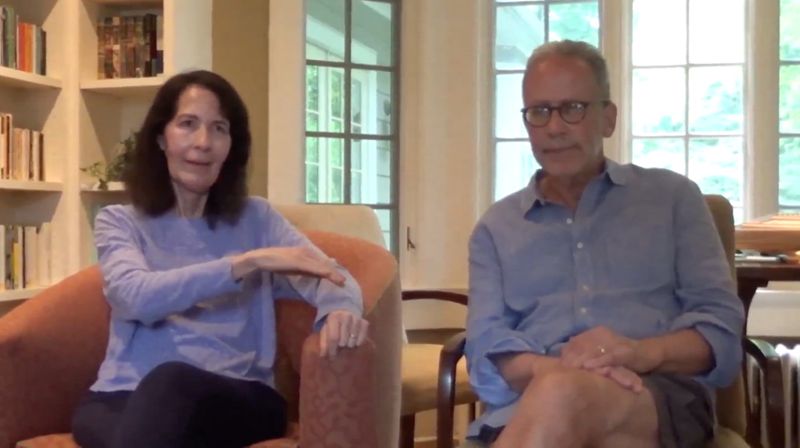 Annie Mass
[unclear] being soft, and she sort of mellowed as she got older, but I think she had to be tough to be able to handle the death of her husband, raise three children. She worked in the butcher shop as well as at home, so it was hard, I mean it was a good life, you know, we were never wanting of anything.
Beth DotanYou had a third sibling, right?
Annie MassPaula. Yes. Paula died recently. Paula was, she was like a breath of fresh air. She was so funny. She had a lot of medical problems, but she never really complained. She tried to joke around and had to, Josh's bar mitzvah. We had a, it was a terrible blizzard, and so Arie and Louise had them, got a tent where the party was, and Paula was, you know, taking a sip of a Manishewitz, and then she started dancing. She loved to dance, but unfortunately she's gone.
Arie BucheisterYeah, I don't know how much you wanted to get into this, but what Annie says kind of prompts in my mind this notion of Paula was really sick. She had a brain tumor, interesting that that's what she had. She also had MS, and early in her life she had brain surgery for the tumor, and not only proportionate to all of the illnesses she had, but I think without knowing she had that many illnesses. She is a person who complained less than anyone I ever knew, and she had plenty to complain about. And you think about what the brothers went through, and specifically Joe Bucheister, as we know him best, he didn't complain ever. Not about the war, not about after the war, not about, his work was not easy. He'd get up early in the, I'm talking about the butcher shop, I mean he loved the fact that he had his own business, he'd get up early in the morning, before the sun came up, he was typically gone, and with back-breaking work, I mean they'd bring in-
Annie MassHalf a cow.
Arie Bucheister-quarters of cattle in there, and into the freezer, and out of the freezer, and he suffered for that later in his life with serious, serious arthritis, and complained, not at all, again, I don't know what went on in the secret language of Polish, just when they spoke with each other, the brothers spoke, but to us, to the kids, I didn't feel it, and there must be something kind of in a line from kind of the hard, difficult life that he led from the beginning to the end, to the life of his daughter Paula, who was named Pepche, after one of his sisters who was killed during the war, because, you know, if anyone deserves to be able to complain about what they had, they certainly did, but, didn't hear it, didn't hear it.
Beth DotanSo tell us about these Tiefenbrunner brothers, if you're able to tell us, you know, something that you know of from their childhood life, and what is it that allowed those brothers who had the insight to go into the forests, how did this happen?
Annie MassGenerally speaking, I would say the brothers, they're similar in terms of, they all had a sense of humor, Uncle, Uncle Poldek always joked around, Uncle Zygmunt always jokes around, Uncle Benek always joked around, I mean he always wanted the least, least one that liked jokes with, I think Herman, he was sort of very, you know, solid, and it was like the patriarch, you know, like, had the family.
Beth DotanWhat's the age difference?
Annie MassHerman?
Beth DotanSo who was the oldest, who was the youngest?
Annie MassHerman was the oldest, I think, Herman was the oldest?
Arie BucheisterYeah.
Annie MassThen, I think it was meant to be two, two of the brothers that died were in between, and then I think it came, when Dad came, and then Dad, Uncle, no, Uncle, yeah, Uncle Zygmunt, Uncle, no, Uncle Poldek, and Zygmunt, I don't remember the order, and then...
Arie BucheisterDavid Richtman was the youngest.
Annie MassYeah, he was the baby.
Arie BucheisterThere is a, one of the things I sent you has a list of the dates of birth, the year of birth, so that, I mean, I defer to that, yeah. You know, I don't know many stories about them altogether, you know, you remember bits and pieces. I know, I know that two of them were in the Krakow ghetto that the Schindler story came out of, and they escaped, that was that.
Annie MassThey escaped, that's right.
Arie BucheisterAnd then there was another, this is going to be real fragmentary, and hopefully others can not only provide more outline, but color it in, and then there's a story where Roman Amster, Poldek, was shot.
Annie MassAnd the brothers, some of them wanted to just leave him, and my dad said, no, you're not going to leave him, you're going to take him back to camp. And this is in the winter, you know, a lot of snow, very cold, and the, there were dogs that were, like, with their masters trying to look for any stragglers, and I think Dad buried, he sort of semi-buried, Uncle Poldek, to hide him til the, you know, things quieted down. He went, and then he got Uncle Poldek, put him on his back. My dad was the skinniest of the brothers, he was like a toothpick, but strong as an ox, and he picked up Uncle Poldek and carried him just a few miles back to their campsite, wherever they were gathering, the, not the underground, the partisans. So that's, that's like, he saved, he saved Poldek's life. Uncle Poldek lived to be 99 years old.
Arie BucheisterHe hit 100, maybe.
Annie MassHe what?
Arie BucheisterI think he hit 100, but maybe not his birthday.
Annie MassI think he was close, he was close.
Arie BucheisterYeah. The other piece of that story is that, so what happened to the bullet? Again, these are fragments, there were no doctors around, or maybe this foreshadowed my dad being an M.D., his own, a meat doctor. In any event, they took the bullet out of Uncle Poldek, wherever they were, wherever they'd been in camp, by using, you know, liquor, whatever, they had hard, hard alcohol, and having him bite down on, you know, who knows what, and actually remove the bullet.
Beth DotanIt was in his leg, right?
Annie MassIn his leg yeah.
Beth DotanBecause he limped in his leg.
Arie BucheisterThere's also a story, again, fragmentary pieces. They had a, I don't know if it was all five of them, probably was. Remember, they were in the Polish Army for the first, what did it take, a couple weeks before the Nazis overran Poland. They had this whistle, which I can't remember.
Annie MassOh, yeah. [singing and whistling]
Arie BucheisterSo they had this whistle in case, in case they were near each other, but to kind of prevent whoever was their enemy in that area from realizing what it was, but only one of the five of them from realizing one of the brothers is in the area. I can't replicate it. Annie just did it, but some of the cousins actually do the whistle.
Annie MassYeah, I can't do it.
Arie BucheisterSo that was kind of their secret sign to notify the others that one of them was around. And there are stories, again, of them kind of hiding in the forest and covering themselves with brush and leaves and meeting up using that whistle.
Annie MassUsing the whistle.
Beth DotanWere they in a particular partisan unit that you know of?
Arie BucheisterRemember, they were broken up, or they broke up. You know, a couple of them were captured and ended up in Plaszow, the Krakow Work Camp, and escaped.
I don't know that any of them were in Auschwitz. I know that Roman Amster's wife, Pola Amster, Tanta Pola, was in Auschwitz. I think they met up and were with whatever partisans were in the area. I mean, it wasn't like the partisans as a group organized and then fought the war together.
Annie MassThere weren't teams.
Arie BucheisterYeah. My recollection of the stories our father told us were that sometimes he'd fight with the Jewish partisans, and they'd do actions, whether it was a Nazi in a town or whatever. And sometimes they'd even team up, and when I say they, one or more than one of them would team up with the Polish partisans who were anti-Semitic. They did whatever they needed to do to survive to the next day.
Beth DotanAnd this was in Galicia area or in the forest?
Arie BucheisterIn the forest of Poland.
Beth DotanOkay.
Arie BucheisterRight. Because remember, they were, the Nazis attacked over in Poland. The Polish Army was there to defend it, so they didn't have them. They weren't traveling far away from where the armies actually were destroyed. Just to show kind of a glimpse of my father's sense of humor. The first time I went to, it's kind of a side issue, I went to New Orleans. I had chicory coffee, chicory coffee and beignets at Cafe du Mont. The chicory coffee is a pretty bitter coffee, but everyone pretends to like it when they're having beignets. So I told my dad, you know, dad, I was in New Orleans, you know, had these beignets, what's a beignet? It's kind of like a donut, you know, fried dough. Then I had coffee, and it was chicory coffee, and he says, what is this chicory? What is that chicory? I said, well, it's kind of like from a bark or something. He says, you know, I had coffee like that too during the war, you know, where they would have hot water and basically take the bark of a tree to give it some flavor. That was his New Orleans experience in the forest of Poland.
Beth DotanMore stories about the brothers and what you remember from childhood, the stories around the family.
Annie MassWell, the family at various events, whether it be a wedding or a bar mitzvah, there would be the obligatory picture of everyone together in a line. And that would be the photo. We have several of those somewhere that he'd probably have them but. . . So the celebrations were definitely celebrated. It was a big deal. I think what's interesting is with each family, there was a certain age range, and they would sort of hang out together. There was like the oldest cousins, you know, Nathan, Abe, and Max. I don't know what you fit in, like above or below. You're the oldest.
Arie BucheisterI didn't fit in anywhere.
Annie MassYou didn't fit in. You're unique, okay.
Arie BucheisterAs I said before, I didn't fit in anywhere.
Annie MassYou know, so like in my generation, it's like my cousin Annie and Margie and I, we're like the same age. And we would hang out, you know, whatever, whoever's ever house we were at, you know, hang out together. I'm just trying to think of specific, I mean, the holidays. We tended to, we didn't go to Her- Uncle Herman's too often.
Arie BucheisterNo, not a lot.
Annie MassI remember having Pat us sukkot, and if he's the other brothers, he's the only one that built us sukkot. And we would go.
Arie BucheisterHe was the most religious from early on.
Annie MassHe was serious, serious. He's the one that went to Siberia. He did not.
Arie BucheisterBut just as a quick thing, I know you're urging us to tell stories about the brothers probably during the war. They didn't talk about the war in those groups, in ways that I remember. I'm sure they talked to themselves about it, but it wasn't something like when we'd sit around, you know, the table, that they kind of raised stories about the war. They joked with each other. Well, they talked about what was happening in Shul, or, you know, if someone asked about the meat market. But they, you know, it just doesn't make sense that they wouldn't talk with each other about what happened. It just, I can't believe that didn't happen. But when the kids were there, when I was there, I don't remember them talking about it. It was all very positive. I mean, not to say talking about that event was negative, but maybe it was that they wanted to protect. Protect us from that. I don't know. But that was not a main...
Annie MassThat was their therapy. That was their way of, you know, how do you handle stress, and that's a big stress. So, you know, you joke around.
Arie BucheisterThe other interesting thing is, I always thought that they were religious, because everyone was religious in Poland in shtetl Poland, right?
Annie MassThey weren't.
Arie BucheisterYeah, they clearly... It was a mix. Two of the brothers became religious after being in the United States for a while. I think that was...
Annie MassTheir sons became religious.
Arie BucheisterYeah, the Richtmans and the Kinstlingers. Amsters, you know, they'd go to Shul on Saturday, but not particularly religious. These aren't judgments. They're just something kind of descriptive. And our family rarely go to Shul on a Friday night, but always Sabbath observers. You know, we'd have long Seders, but, you know, even on Saturdays, we'd drive to the Shul. You know, it was only Yom Kippur where we didn't drive. We walked back and forth.
Annie MassIt was hard for Dad to walk because he had arthritis.
Beth DotanI'm sorry, say that again.
Annie MassIt was hard for Dad to walk because he had rheumatoid arthritis. And he's on his field day. So, you know, the synagogue was a couple miles away.
Arie BucheisterA mile and a half.
Annie MassA mile and a half away. But, you know, synagogue... In our family, the synagogue was like the center of our discussion. That and meat. The store, you know, meat. A lot of talk about meat. And the... I don't know what else did we talk about.
Arie BucheisterWell not so much that.
Beth DotanI have a quick question. Not everybody belonged to the conservative synagogue, Beth El?
Annie MassWe were the only ones.
Arie BucheisterEveryone started at Beth Israel. We thought he was Rabbi Groaner at the time. And then... And we all lived in... what best can be described as a tenement on 19th Street, South 19th Street.
Annie MassOh, that was before...
Arie BucheisterRight...
Annie MassAnd I was little...
Arie BucheisterRight...
Annie MassI was an infant.
Arie BucheisterAnd then... And then... But everyone went to Beth Israel. And then...
Annie MassDad broke off.
Arie BucheisterRight. Dad moved to Hickory, south of Dodge. And we'd go to Beth El. But all the others, all the four others in the family stayed at Beth Israel. And as I said, our observance was a mishmash. You know, we drive on Saturday, but the shul every Saturday.
Annie MassWe went to Peony Park.
Arie BucheisterIn the afternoon.
Beth DotanWell, well, Say that again. Say that again. Where did you go on Shabbat afternoon?
Arie BucheisterOh, Peony Park. To go swimming.
Annie MassYeah. Do you go to Peony Park?
Beth DotanOf course.
Arie BucheisterNo longer there.
Beth DotanThey call the Hy-Vee the Peony Park Hy-Vee.
Arie BucheisterSo it was interesting. I don't know what their practice was in Poland. This is strange. I think... I really... I never thought about it. But when my mother's mother, Esther Katz, came to visit us, she came a few years or a little time before my bar mitzvah and stayed a little time after, she would walk to Shul on Saturday.
Arie BucheisterShe didn't drive. Now, you know, we didn't... I don't know if those days we had milk dishes and meat dishes, but there was a higher sense of observance on her part. But that's just a recollection that came to me.
Annie MassSee, Mom told me that she always kept kosher in our family. Because when Uncle Zygmunt and Uncle Benek became religious, they did so because their sons went to Yeshiva and became religious. And there was a big deal for them. They... We're kosher, you know. And my mother was like, we were kosher before they were kosher. It was... I mean, that's what she said. And I'm assuming that's true, but Arie's right. There were sort of some slight differences in how people observed. Again, the only thing that... I mean, Uncle, again, Uncle Herman had the sukkot. But I don't know of any other observances that we had.
Beth DotanSo, Herman, who came to Omaha first?
Annie MassMy dad.
Beth DotanDo you know what year?
Arie BucheisterI think it was when he went to visit, this is by decudtive reasoning, when he went to visit Freda or Mala, let's say 1952, let's say a couple months after Joseph Greenberg died. He's coming from Omaha, so he must have been there.
Beth DotanHow did he get to Omaha through Joint or whoever it was when they got sent?
Arie BucheisterI think they had people in different cities who would sponsor you. And I don't know, you know...
Annie MassHIAS...
Arie BucheisterHIAS.
Annie MassIs that a group?
Beth DotanYes.
Annie MassI think it was HIAS then.
Beth DotanDo you know who sponsored him? What Omaha family?
Arie BucheisterThe best guess on that is the family of Morton Glass. Morton's father.
Annie MassBecause Morton, they had a meat packing facility, and that's where my dad's first job was. And he spoke no English.
Arie BucheisterThe last time we saw Morton was... He came over after mom died about 12 years ago, so- You had the look like you know the name or you know the person.
Beth DotanThey were very good friends of my parents.
Arie BucheisterOkay
Annie MassThere you go.
Arie BucheisterSo my dad kind of swept the floors of Morton's father's meat packing place, and he met Morton there, who was younger than he was. He, Joe Bucheister, was. And dad was always very kind to Morton, whatever that meant in those circumstances. And Morton was very proud of my father throughout his whole life.
Annie MassThat's right.
Arie BucheisterI just remember because starting those early days when he was this, you know, older guy who was very kind to this young kid, whose father owned the meat packing store.
Beth DotanSo Joe was able to reach out to the other brothers who were situated in different communities and...
Annie MassBrought them to Omaha.
Beth DotanAnd brought them to Omaha.
Annie MassI assume the agency that's... whoever sponsored it, there must have been an agency that dealt with this sort of thing. I just don't know. But again, HIAS is the thing that...
Arie BucheisterYeah, I have this vague memory of some of them being sent to, just because I remember they're saying, Joe, I'm going to Chee-cago.
Annie MassYeah.
Arie BucheisterKind of mispronunciation of whatever the name of the city was. But I remember Chee-cago. But eventually they all ended up at Omaha, and Joe was the anchor, initially. I don't know if he sponsored them or anything like that. He became, himself became a sponsor. But... And I think he must have gotten there... I have this vague recollection of seeing some documentation, late 40s, 48, 49. But again, I'd have to check and see what I have, if anything, on that.
Beth DotanWe have some Jewish Federation records. I have not seen Joe Bucheister's name on that list.
Annie MassSo maybe it's a different...
Beth DotanBut that doesn't mean it's the only list that we have. So they worked for Mort's father's or Joe.
Annie MassHe.
Beth DotanYeah. And then when did they decide to open kosher butcher markets? Because there were two or three?
Arie BucheisterThree.
Beth DotanThree.
Annie MassThe first one they had wasn't that on 24th Street?
Arie BucheisterYeah.
Annie MassSo Jacob opened his grocery store. What's Jacob's last name?
Arie BucheisterDon't know.
Annie MassI forgot. His wife is Lola. They had a son, Moshe, that they couldn't take care of. And they . . . and the Hasidic groups in New York, sort of adopted him.
Arie BucheisterHe worked at their own drugstore on 24th. Kind of the heart of the Omaha ghetto in those days. Did that open with Uncle Benek or the owner himself?
Annie MassI think-
Arie Bucheister-he brought in Uncle Benek.
Annie MassI think he brought in Uncle Benek.
Arie BucheisterSomething to find out. I thought that Joe Bucheister opened Omaha Kosher Meat Market on the 24th and something.
Annie MassThat sounds right. Omaha Meat Market.
Arie BucheisterYeah, it was Omaha Kosher Meat Market to start with. He expanded in name only to Nebraska Kosher Market later on on Cumings. Not Cumings, but Hamilton.
Annie MassHamilton.
Arie Bucheister4950 in Hamilton. But they were in the heart of the ghetto. A lot of break-ins.
Annie MassIt was a dangerous area to be actually.
Arie BucheisterAnd they were still there when that ghetto went on fire.
Annie MassYeah, that's right.
Arie BucheisterThey were able to dodge that bullet. Don't know whether it was because Dad gave out free baloney to whoever came in the store or just fortuity.
Annie MassAnd then after that, when they went to Hamilton, then Dad joined up with Dave and the Nebraska Kosher Meat Market. [unclear] Omaha.
Beth DotanWas it sustainable to have three markets? Was it three brothers who had three different markets?
Arie BucheisterNo, it was. Schuchart's was one of the kosher meat markets. Diamond was the other one. And Omaha, then later Nebraska Kosher Meat Market. Well, sustainable. Our father didn't make a lot of money. I suspect maybe the others didn't either. I don't know. I don't know what relationship they had to each other. The owners of the three meat markets. I don't know.
Annie MassMost competition is what there was.
Arie BucheisterYeah, but sustainable. There were three and now there are none. Didn't make a lot of money. And it was hard work, as we mentioned before. But that's what he did. That was great for him. For nothing.
Beth DotanWhere did he get his kosher meat?
Annie MassChicago.
Arie BucheisterFirst Chicago, then St. Louis.
Beth DotanOh, okay. Let's look at the questions. How are you guys doing?
Annie MassGood.
Beth DotanLet's see.
Annie MassI think that's another point. Each of the, Uncle Bennett, Dave, and my dad were the only ones that were in the meat business. Uncle's Zygmunt was so siding.
Arie BucheisterFor Micklin Home Improvement Company. I think run by Joe Guss, Guss family there.
Annie MassThat sounds right. And Uncle Herman worked for Pepsi Cola. We had one of his gas compressors that we made our own pop with, or soda, however you want to call it. That was Uncle Herman. Uncle Benek we got. And then Uncle Poldek sort of had different jobs. The last one he had, I think, was repairing pallets. Is there another word for pallets?
Arie BucheisterThings you carry other things with, wooden frames.
Annie MassAlthough Dad used to invite Uncle Poldek over and Freddie for a meal when we'd be at steak night. He used to come over. That's true. Actually, none of my cousins in my age group that I spoke to ever talked about stories from the Holocaust that their father told them. I'm sure Annie who's really great at keeping the history correct, she probably knows stories from her father after all of them. Actually, it'd be nice if you could talk to all of them. It'd be different from the other five brother families. Some stories will be the same and some will be different.
Arie BucheisterWell, the hope is it can patch together stuff for the little fragments everyone knows.
Annie MassThat's right.
Beth DotanSo on a holiday or a given Shabbat, did you all get together?
Arie BucheisterNo.
Annie MassNo.
Arie BucheisterEveryone celebrated in their own way. We get together for birthdays. We get together for, oh, it's after Shabbat, let's go over to this brother and their family's house. But Passover, Shabbats.
Annie MassWeddings.
Arie BucheisterAnd weddings yeah.
Annie MassBar Mitzvahs.
Arie BucheisterFriday night dinners, everyone did them within their own family.
Beth DotanSo one of the things, one of the questions I sent is that, you know, many survivors came to Omaha or came to communities or sent to community sponsors and by HIAS or whatever. There were allotments that Jewish communities could take in with the resources.