Interview with Anne Vidaver
- Date
- Format
- testimony
- Category
- Stories
- Subcategory
- Anne Vidaver
- People
- Vidaver, Anne Marie
- Vidaver, George
- Kopecki, Franz
- Kopecki, Klara
- Badura-Skoda, Paul
- Boosalis, Mike
- Kopecki, Rudolph
- Kopecki, George
- Kopecki, Gordon
- Vidaver, Regina
- Places
- Lincoln, Nebraska
- Vienna, Austria
- Shanghei Ghetto, Japanese-occupied Shanghai
- Poughkeepsie, New York
- Bloomington, Indiana
- California
- Mexico
- Rhinebeck, New York
- China
- Belmont, Massachusetts
- Madison, Wisconsin
- Washington, D.C.
- Data URI
- soh.sto023.00001.xml
 Jan Thurnwalder
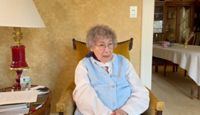
We are here today with Dr. Anne Vidaver. Dr. Beth Dotan and I, Jan Thurnwalder, are here in Lincoln, Nebraska on 31st of March, 2026 and holding the interview with Dr. Anne Vidaver.
Beth DotanAll right, so for the technical side of it, if you could tell us your name, your name before your marriage and your name now and how to spell it.
Anne VidaverI'm Anne Marie Kopecki originally and married George Vidaver and so I'm now Anne Vidaver. A
Beth DotanAnd how do you spell Vidaver?
Anne VidaverV as in Victor, I, D as in Detroit, A, V as in Victor again, E, R.
Beth DotanAll right, thank you.
Jan ThurnwalderOkay, I'll now ask you a few questions at once. Could you please tell us about your parents, their names, where they were born, how did they meet and what was their profession and how was the situation in general before the war, for them?
Anne VidaverWell, my father's name was Franz, Franz Kopecki, F-R-A-N-Z and my mother's name was Klara, K-L-A-R-A, Kopecki, marriage. They both were born and raised in Vienna, Austria. My mother became a seamstress and actually her grandmother worked as a seamstress for royalty. So that was very impressive to me. I never really learned how to sew on a button. And my father grew up and ended up owning a grocery store. So that's in Vienna.
Beth DotanSo what was their life like before the war? What kind of social circles do you know that they may have been in and what kind of family life did they create?
Anne VidaverWell, it was a very nice family. Most of them were killed by the Nazis. And they didn't talk about this very much. I know they went hiking and skiing and certainly to concerts. And I had a cousin, Paul Badura-Skoda, who became a famous pianist. He just died not that long ago. You can probably find records of him, yet. And he traveled all over the world, including not to Lincoln, but to the United States.
Beth DotanHow was he your cousin?
Anne VidaverMy mother's sister's son.
Beth DotanAnd did you stay in touch with him?
Anne VidaverSomewhat, somewhat. So we got to meet, I guess, every few years. Not often enough.
Beth DotanSo how large were your parents' families? And I know you mentioned that many of them perished during the war, but what was the extended family like? And did they get together in Vienna, or were they in Vienna?
Anne VidaverThey got together in Vienna, and I actually don't remember how many there were. Maybe up to a dozen all together. I don't recall the numbers. I mean, when we're talking about Vienna, I was born just after the Nazis came to Austria. So, I would have been less than a year old, and I wouldn't be remembering a lot of those things. Fortunately, my aunt and her husband, who was a very clever man who knew about seven languages, had moved to the country, and we were able to visit them after the war.
Beth DotanWhat were their names?
Anne VidaverThat escapes me at the moment.
Beth DotanThat's fine. If you recall somewhere as we continue to talk, you'll let us know.
Anne VidaverYeah.
Beth DotanSo they were your aunt and uncle on your mother's side?
Anne VidaverYes.
Beth DotanAnd they escaped the war then?
Anne VidaverThey escaped the war. Because my uncle apparently could speak any language that any of the people that came in spoke and appeared to be a countryman rather than an enemy.
Beth DotanWere both of your parents Jewish?
Anne VidaverYes.
Beth DotanAnd did they live a Jewish life in Vienna, or were they assimilated?
Anne VidaverI think they were assimilated. They didn't live a Jewish life in the United States, and there were no indications of a Jewish background in the house, and they never spoke of their religion.
Beth DotanWhy do you think that happened?
Anne VidaverWell, there are people, I think, in any religion that are really intimately involved with the religion, others not, and they would not discuss many things. And I was disappointed in that, but I couldn't force them to do that. We were very fortunate in being able to get to the Shanghai ghetto while the Japanese were being kind to people. Not many people know about the Shanghai ghetto, and that the Japanese were, in fact, showing that they could be very kind to, at least people for some period of time.
Beth DotanSo let's take a step back. That part of your story is so important. I think we'd like to understand what the steps were that happened before. So go ahead.
Jan ThurnwalderSo understanding that your parents didn't speak that much about the war years, what can you share about your parents' experiences during the war?
Anne VidaverThey didn't want to talk about it. They didn't even want to talk about their experience in the Shanghai ghetto. And it was always, don't worry about the past, let's go and think about today and the future.
Beth DotanIn that respect, do you know how they were able to get the necessary documents to get to Shanghai? And where did they stop on the way?
Anne VidaverI don't know about stopping on the way, but it was again my uncle who knew a lot of people in embassies and in government. If it weren't for him, we would not have been able to get the necessary documentation, which was only available for a limited period of time. In fact, my father apparently had a hunting rifle, which the maid reported to the police. No Jew was supposed to have any gun of any kind. So he was actually in prison for some period of time, which he never talked about. And it was my uncle who got him out, but also told them that it was necessary for them to leave. Or else they knew what would happen. And he managed to arrange all that. And I don't know how he did that, and they wouldn't talk about it. And it was just fortuitous in terms of the timing, because you know the Shanghai ghetto, it wasn't there for all that very long, just a few years. And even though we were supposed to come to the United States, as is now currently the case, even if you were going to be killed, you wouldn't necessarily get a visa right away. So it was at least, I think at least 18 months, roughly around that period of time that we were there. There were other members of the family. And it wasn't just for Jews, if you know, it was for supposedly anyone who wanted to escape anything, and for a period of time the Japanese were very kind. So I actually have an uncle in New York who was also there, my mother's brother, one of the family who also escaped. And he became a professional person with regard to furniture upkeep and upholstery and things like that. We got to see them occasionally.
Beth DotanYou saw him in the ghetto?
Anne VidaverI don't know. I mean, I was what. About one years old. So, who knows, who knows, who I saw or not. And so forth. I have no memories of that period of time.
Beth DotanNo memories at all?
Anne VidaverFrom the ghetto, no. My first memory is actually being chased by a rooster when we got to Poughkeepsie and my father first worked as a person on a farm, even though he'd knew nothing about it.
Beth DotanWell, going back to the Shanghai ghetto, you were there for about 18 months, so what would that period of time be, do you think?
Anne VidaverAbout 39 to 40, I think. I mean, I have a date. That was where my parents had me converted to Catholicism by a Jesuit missionary. And that document has proven to be very helpful because my original, I couldn't otherwise prove that I was born and had no other documentation. And I have that still in the safe deposit box. I was raised as a Catholic, so my brothers, they did not participate. We actually came to the United States, apparently on a Japanese ship, before Pearl Harbor. And somewhere, there is a copy of a menu that was done in Japanese and British English. And I remember seeing that and thinking how strange life was, even then.
Beth DotanWhat do you mean by that?
Anne VidaverWell, if they were coming to America, why wouldn't they use American English? Because it was clearly British. On the other hand, I was impressed that they were using English at all. And I don't know how my parents managed on a Japanese ship, or presumably the Japanese. I don't know how many of them spoke multiple languages. I don't know if we were the only, I don't know how many people were on the ship. I doubt that they were all from one place.
Beth DotanWe might be able to find that manifest. We'll look for that. Do you know where the ship landed?
Anne VidaverOn the West Coast. Just where I don't know.
Beth DotanI'm sure I missed a couple of things. I'll let you go ahead.
Jan ThurnwalderSo how did you happen to settle in Nebraska?
Anne VidaverGetting to Nebraska. That was an interesting and complicated situation. Well, I grew up in Poughkeepsie, New York. I would consider it now the slum area, but it was integrated. And I didn't know that that was unusual at that time. We lived, for example, next door to Blacks, as well as people from Hungary and Ireland and in the south of the country and so on. So right across the street was a chicken market. And further down the street was a company that produced some very unpleasant odors from something they made. And I don't remember what it was.
It was fortuitous in the sense of, okay, I was a good student. I didn't know, my parents didn't know anything about the American education system. But I had teachers that encouraged me to go to college, which I didn't know anything about. And I got a scholarship to go to Russell Sage College, which I took because we had no car. And I had to think about how we were going to get to the college. And it was there. And at that time, women were considered to be useful for teaching and for nursing. And it was going to be supposedly one of the other. It turned out I didn't care for either one. And so what was I going to do? Fortunately, I had very supportive professors, both male and female. They encouraged me to go to graduate school, which I knew nothing, absolutely nothing. And I didn't realize that I was at least a good enough student to get into graduate school with a scholarship at Indiana University in Bloomington, Indiana. Where I studied microbiology, I became fascinated with all the things you can't see. While I was at Russell Sage College, a very interesting professor taught microbiology. And that was really my first introduction. Became fascinated with all these things, bacteria, fungi, algae, whatever you couldn't see. So it was in Bloomington, Indiana, where I pursued my microbiology degree fortuitously. And I got both masters and a PhD. And while I was there, my next door neighbor worked in a different lab in a building next to where I work. And that's where my husband worked. So that's how I got introduced to him in her lab. And so we found that we were very much interested in one another. And we got married. And he had the first opportunity to look for a position. And ultimately, decided on Nebraska, and I came along.
I had just gotten my PhD. I was supposed to do a postdoctoral work with a biochemistry professor, which I was prepared to do, encouraged by my husband. But about a month before we were to come, this person let us know that he was leaving and wished me luck. And I had no idea what to do. So I don't remember how I managed to get the names of people who were associated with microbiology, but I did. And the real microbiologist really didn't think too much of having women associated with his program, which was good for me in the end. I mean, I initially volunteered to work for nothing until I figured out what I was going to do. And even with that, he said no, which was good, because the next place I went to, and I don't recall how I found this as the next place, was plant pathology on the east campus. My husband worked on the city campus, and I didn't know at that time that the administration didn't particularly care to have couples work on the same campus. For that matter, they didn't particularly care to have women either. And I did not know until much later that we were the first married couple in the College of Agriculture, not counting home economics. And we were the first couple that I knew of to have children, even for the College of Agriculture. But it was entirely fortuitous that the head of plant pathology was Mike Boosalis. And he knew about the challenges women were facing, because his wife was mayor, and his daughter was going at the law school. So he knew, what challenges they faced and so forth. And so he was very, I would say, very accommodating, especially to my offer to work for nothing so I could prove myself, possibly, or if not, try something else. And so if my recollection is correct, I think they gave me three hundred dollars to start to get materials, to work in a lab. And fortuitously, I worked in an area that they did not have. And fortuitously, one of the faculty members who already had a position there decided that he was going to go to California and that left an open position. And fortuitously, I had proven myself enough that at least the majority of the faculty thought I should be actually hired. And so there's actually, I didn't write much of this up. In a sort of biographical statement, that I was asked to do years later called The Accidental Plant Pathologist. I can get it for you, but presumably you can look that up. There isn't going to be another one like that. And it all happened accidentally. And that's really been the way it has been. I was fortuitous in that I had enough experience, apparently, to get grant money right away. And I think many things were easier then, than they are now.
Beth DotanWhere did you get grant money from?
Anne VidaverNational Science Foundation.
Beth DotanAnd was that a substantial grant?
Anne VidaverWell, it was enough to pay for my research and also to help pay for an assistant and my salary.
Beth DotanOver how many years?
Anne VidaverAt least two or three. I know it was more than one, but I don't recall. You're asking me to remember something now, that's maybe sixty years ago or something.
Beth DotanWell, and I'm sure there were more grants after that.
Anne VidaverOh, yeah. Yes, no, I was very fortuitous and working in an area that was unknown and enough people were interested that I could contribute something to it. And I actually found, fortuitously, some viruses that had been predicted to be in the environment, but nobody could find them. This is bacterial viruses with lipid or fat envelopes. Nobody had predicted that. I hadn't predicted that. I found them accidentally looking for something else. And at first, because it was plant pathology, I guess, a very famous person didn't believe that I had it. I had to show that I had and so forth. Of course, it was published. And interestingly enough, apparently it has become a model for COVID, which is also very interesting, of course. And so I found a lot of things that were novel and very interesting. And I'm still helping a student with work that he has been doing in Mexico, on an organism that I had discovered, it's got to be over 50 years, in Nebraska. And I remember that we thought this was a bacterium that infected corn and that we thought it had perhaps come in, accidentally, of course, from a company that had grown it in some other country, but we couldn't prove it. And it's only been within the last two or three years that the student has found it in Mexico, which is where we think it probably originated and so on. So, very interesting situation.
Beth DotanAmazing, amazing life. I'm going to take you back. We're going to go back a little bit and catch up again with your research and your career. Well, how old were your brothers and were they older and did they remember things during the experience in Shanghai and coming to the United States?
Anne VidaverMy brothers were born in the United States. They're younger, by four and seven years. One became an engineer with IBM and the other became a teacher and both have also been retired for a number of years now. We all spoke German at home because that's what my parents did and I don't know if it was intentional or not and so forth. But I mean my father ended up being able to speak English quite well. My mother still struggled after many, many years.
Beth DotanDid you have written German as well? Could you research in the language?
Anne VidaverNo. I mean, ironically, I mean, now the You're familiar with the OLLI Group at the University. Okay. Has a German group, a discussion group and I go to that and so we read German. We see German movies. We actually have a couple of people who had come from Germany, but I think I'm the only person from Austria.
Beth DotanWonderful. So you read in German as well?
Anne VidaverI read not well. Yeah.
Beth DotanIt's interesting that your parents would continue to speak in German, even though they sort of fled their home in Austria and didn't want to talk about their past. Why do you think that, I mean, I know that they didn't necessarily know English coming here, but did that give you an advantage in learning abilities or interacting with other people in Poughkeepsie.
Anne VidaverOh, I think it went the other way. Because, when I went to school, I didn't know English very well. Some people thought I was demented or something. I mean, fortunately, children learn very rapidly. Most children anyway, and that didn't last very long and so on. But, no, it was just the thing to do is, speak the mother tongue at home.
Beth DotanIn what language did you speak with your brothers?
Anne VidaverEnglish, I think. I don't recall speaking specifically German. They did not want to speak German at all. I mean, they wanted to be American. And I just thought it was interesting I mean, there were children that I went to school with that spoke other languages, but I can't remember. Italian, I think, or there were a few other refugee children.
Beth DotanWhat were your brother's names?
Anne VidaverRudolph and George.
Beth DotanLet's also go back a little bit. Well, I have a question I was going to ask about your childhood in Poughkeepsie, but did your parents manage to take anything with them on their journey to Shanghai and when they came here, to the United States?
Anne VidaverI don't know because they wouldn't talk about. I assume they must because I have things that supposedly came from Austria and China.
Beth DotanLike what?
Anne VidaverWell, Meissen figurines. There's some in the closet. The Chinese man that you saw came from China. And I have to assume that it was my uncle that helped do all that because he knew how and somehow could get the money to do it, because otherwise, refugees had no money. And, I don't know, I still don't know how they arranged for their position. The initial position that I recall was on a farm in Rhinebeck, New York. And I don't know how they managed to do this, but apparently it was so unsatisfactory, managed to leave and get to Poughkeepsie and learn how to repair sewing machines. And so my father became a sewing machine repairman. And my mother became, a seamstress, making undergarments for men and women at the factory. Well, the factory is no longer there. It's a parking lot now. I can't remember at the moment. Begins with an S.
Beth DotanSo, they landed in the West Coast and you came across the United States because your father had, there was an arrangement for him to work on a farm?
Anne VidaverApparently, that I know of.
Beth DotanAny recollection of getting to New York?
Anne VidaverNo, I would have been less than two. Or two or three.
Beth DotanSo, you said that your first memory was about a chicken. Tell us about that experience, where you were and
Anne VidaverWell, on the farm, I mean among other things, I mean they had chickens as well as, raising, I don't know what they actually raised and so forth. And, If I recall, and them talking about it, our first living quarters were in a renovated chicken coop. Which, of course, didn't help in terms of attitude or anything. So, my first recollection of anything really was being chased by a rooster. And I would have been about rooster size, roughly, so.
Beth DotanSo, how old were you when you moved to Poughkeepsie?
Anne VidaverWell, I think probably around two, and lived there until I went to college.
Beth DotanSo, the time on the farm was very brief.
Anne VidaverVery brief. I don't know how brief. It was brief.
Beth DotanWhat community was that in?
Anne VidaverRhinebeck, New York.
Beth DotanOh you said that, ok.
Anne VidaverStardust, that's the name of the company, that they worked for. I always thought that was an interesting name for underwear.
Beth DotanNow, you mentioned that your father also had grocery stores.
Anne VidaverThat was in Austria.
Beth DotanAre there other things about your childhood that you would like to share with us, coming as refugees to the United States?
Anne VidaverI don't know. I guess that, you know, those were days in which essentially we didn't have much in the way of communication, or, or. We were among the last, I think, to get a television. We were almost all one of the last to get a telephone, a real telephone. I know I was intrigued by the fact that there was a library, and you could check out books and so forth, for no fees. And, so, I remember I would always be reading a lot. And somewhere in those days, I learned how to play clarinet and joined the high school band. I also learned piano. And I don't remember how I got a piano teacher, who lived near Vassar College in a very, very nice neighborhood. Besides which she had a very nice piano. So I learned how to play piano and saw a part of the city, that I would not otherwise have seen. And I know when it came time to think about college, Vassar College was certainly a potential place, because it was right there in the city. And it was all women's college at that time. It's now integrated. A beautiful place. If you've never been there, it's very scenic. In fact, I mean, many times we would go there on weekends, nice weekends for picnics, because the grounds were just gorgeous and they had many flowers and so forth. And the girls would essentially leave to see their boyfriends in another city. So there was hardly anybody there on the weekends. And we could get there by bus. As I say, we did not have a car. So that was our, I can remember that as being very much our entertainment while we were growing up. So.
Beth DotanSo what was it like to leave home, after you finished college? And
Anne VidaverYou mean, after I finished college?
Beth DotanWell, you went to Indiana. At what point? Let's go back to that.
Anne VidaverOkay.
Beth DotanAnd what year?
Anne VidaverWell, I went to Indiana after I graduated from college in 1960. Yeah, Russell Sage College was 56 to 60. Indiana was 60 to 65.
Beth DotanWhat year did you get married?
Anne Vidaver62.
Beth DotanAnd tell us about your children.
Anne VidaverWell. One, one is, Gordon. And, one boy, one girl. And the girl is Regina, named after my grandmother. And Gordon now works for a private company in computer science, dealing very heavily in defense contracts and so forth. So whenever he tells me anything, he loses me quickly. And if I have problems, he's always ready to help. And usually he helps me figure out something.
Beth DotanWhere does he live now?
Anne VidaverIn Belmont, Massachusetts, right by Boston.
Beth DotanAnd he's the oldest of the two?
Anne VidaverYeah, yeah.
Beth Dotan[Phone rings] Would you like to get that?
Anne VidaverNo.
Beth DotanOk.
Anne VidaverI get a lot of spam calls and stuff like that. My daughter, Gina, is now in Madison, Wisconsin, and works for the State Department of Health. And she also is a member of the city council and has actually acted as an intermittent mayor and has considered running for mayor. And I've raised the possibility, are you crazy? Only because I don't have to tell you, politically, it's very difficult to be a public servant anymore. I don't know. Or more difficult than it used to be. But, we'll see what happens.
Beth DotanSo they grew up here in Lincoln?
Anne VidaverThey grew up here in Lincoln. Actually, she was very much interested in dancing in ballet and raised the question whether or not she wanted to become a professional ballet dancer. And that was considered for some period of time. In fact, I can't remember now what college she went to, had a place, there moved near Boston, where you could do something like major in, do double major in something like ballet and science, which is very unusual. And so she spent at least a year trying to determine what she would like to do and gave up the ballet. which I thought was prudent, besides which I thought that she wasn't thin enough. For a ballet dancer.
Beth DotanYou can go ahead.
Jan ThurnwalderOkay, so kind of looking back at everything, is there anything you hope younger people like me take away from your parents' experience and what you've learned from that, maybe, and what advice you might have for us?
Anne VidaverWell. Determine what, what, you see happening around you and presumably you believe in certain things and other people do as well and to join with them and determine what is it you would like to have as a life. How would you like to be treated by it? Not just people, by the government. And those things. I have to tell you that I think now is very troubling for the United States.
Beth DotanI would like to know, what prompted you to reach out to us to tell about your history, to acknowledge the fact that your parents had a Jewish home or were Jewish themselves and that you saw yourself as part of this history of the Holocaust and telling your story living in Nebraska?
Anne VidaverWell, I think it goes back to seeing, fortuitously an exhibit at what the Nebraska Department of Art or something or history. What, a couple of years ago, or so? People in Nebraska and so forth and so I raised the question and I don't remember with who, would they like some more information? And I think I was told, well, yes, sometime and been a long time.
Beth DotanGreat. Well, we're so glad that you were able to connect with us at the university to share. This is such an incredible and interesting part of World War II that we don't often hear about. So, is there any other important aspect of your family's history that you think should be remembered before we wrap up?
Anne VidaverWell, nothing else I can think of. Except that hopefully, you know, we've learned a few lessons, along the way. I'm not sure we have. I guess I'm sad and disappointed and so forth and so on. I mean, today, you know, is the world a better place than it was in 1938? Not necessarily.
Beth DotanWell, our hope is that you sharing these things makes it a better place. And sort of along those lines as well, how do you see your contributions to research and working on the university as one of the first women pioneers really? I know you have the article that we will look at, but what kind of legacy do you feel you've left?
Anne VidaverWell, a surprising one. Actually, I mean, I was not aware that I was a pioneer. And if there was antagonism towards women and women scientists, I think I was oblivious because, I mean, fortuitously, there were enough men, who were supportive. I mean, after all, a lot of men had their wives or daughters encountering various kinds of discrimination and so on. So, they knew this. And certainly, the person who hired me, his wife as mayor and his daughter as a lawyer, certainly knew, what they encountered and so on. So, at the time, there really were no other women. So I didn't even know, who I might even talk to, about anything. And, I didn't know about even that kind of situation, until years later. And certainly not the case any longer. Thank goodness. So, I was very fortuitous in being able to, do things and have sufficient number of people help me, that I never considered myself a pioneer. I just, was able to do what I wanted to do, which is actually remarkable in itself, and enjoyed most of it, and so on.
Beth DotanWhat do you think is your most important discovery in your work over the years?
Anne VidaverThe most important discoveries. Was this accidental virus, φ6. And several bacteria that had never been described before. And there's about a half a dozen of those. And other people are making use of that information. So, it's just, just very glad, that I was able to put a lot of that, into print. So I have a number of publications. As well as administration. I spent some time in Washington, D.C. in a high administrative post. Actually, while I was there, we had this invasion of Washington. What was it? 2000-something. Memories leaving me and so forth. It was a very exciting, a very troubling time.
Beth DotanWhat were you doing specifically in Washington?
Anne VidaverWell, I was working with USDA, the United States Department of Agriculture, and trying to enhance agricultural research beyond agriculture. And I think it's still the case that agriculture is the lowest-funded research area in the government. And so, I don't know when I recognize this or something. So the question was, okay, can I get money from other government institutions to help something go further in agricultural research? And I succeeded somewhat, through National Science Foundation, not through the National Institutes of Health, which still could do so. So small, small gains. .
Beth DotanWere there many women among you, who were fighting for these possible rights and advances?
Anne VidaverNot many, but a few, and they were very helpful and very according. So that was just wonderful. And there were several supportive men, otherwise it wouldn't happen at all. And so a few things happened, and I think there's still some reasonably good interaction, which could still be improved upon. There's still a lot to learn.
Beth DotanAnd I guess my last question is, are you still involved beyond the student you mentioned in Mexico? Are you still involved with research that's going on at the university?
Anne VidaverNot directly. I mean, I get asked about things occasionally and reviews, so I help them that way. But not directly.
Beth DotanWhat year did you retire? You don't have to say.
Anne VidaverWhen I was 72, and I'm 88 now, so you can figure that one out.
Beth DotanStill, that's a great long career.
Anne VidaverYes, yes, it was.
Beth DotanWonderful.
Anne VidaverI still have an office, and occasionally I do something useful.
Beth DotanWell, I think we felt this was a very useful and informative interview.
Jan ThurnwalderThank you.
Beth DotanAny last questions? Okay. Thank you very, very much..
Jan ThurnwalderThank you.
Anne VidaverPleased to do so.