Reflection by Jan Thurnwalder, Austrian Service Student
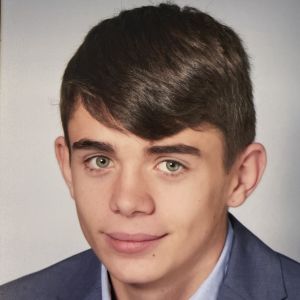
The Nebraska Stories of Humanity Network Portal and Educational Website hosted by the University of Nebraska was the project I worked on for 10 months, as an Austrian Memorial Servant. The goal of the service is to honor the victims of the Holocaust and to remember the atrocities committed by the Nazis.
Every Austrian man is required to complete national service, either in the military, as a civil servant, or as in my case, a service abroad. The Austrian Service Abroad also offers Peace and Social Service programs. In 2025, the association, supported by the Ministry of Social Affairs, sent 111 people, primarily young individuals like myself, to various locations around the globe. There are 140 locations in 66 countries where people can apply to work.
The Norman and Bernice Harris Center for Judaic Studies partnered with the Austrian Service Abroad to hire an Austrian servant to work on the project. The center presented the opportunities and projects that potential Memorial Servants could work on in an online Austrian Service Abroad meeting. I was impressed by the presentation, which covered the Nebraska Stories of Humanity project, the opportunity to attend lectures and courses, and the university environment and its opportunities. The Harris Center also met all my other criteria: I wanted to go to an English-speaking country to improve my speaking abilities and experience North America.
During my time at the University of Nebraska, I had many different experiences and learned a lot. Due to my German-speaking background, I was able to help translate German texts and letters, which required me to learn the old German script, Sütterlin. Sütterlin, the name of the script, was quite challenging to read at first. However, with digital assistance, I improved over time and became proficient in deciphering primary documents. I mainly worked on the collection of Hanna Rosenberg, whose parents fled Nazi Germany in 1937 and settled in Lincoln, Nebraska.
One of my highlights was assisting Dr. Dotan in interviewing Dr. Anne Vidaver. We interviewed her about her experience fleeing with her family from Vienna, Austria, to the Shanghai Ghetto in 1938, and her pioneering work as a female scientist in plant pathology. I also enjoyed holding presentations for students and public audiences about the Austrian Service Abroad and our project. I was able to improve my presentation skills and enjoyed talking with audience members after our presentations. I also had the privilege of regularly attending the classes "Politics of Antisemitism" and "History of the Holocaust." Although these were challenging topics, I always looked forward to the classes and learned a lot from them.
Looking back, it was such a special experience. I learned many things that will help me in the future, how to manage new tasks and the vast amount of knowledge I gained about many different topics. I am extremely grateful to the Harris Center for Judaic Studies, the Austrian Service Abroad, the UNL Center for Digital Research in the Humanities, and all the other parties involved in making this experience possible.